


Rapid Solar Cell Adoption in Thailand: A Blueprint for Sustainable Energy Growth
Thailand's energy landscape is undergoing a remarkable transformation. The nation, once heavily reliant on imported fossil fuels, is now embracing solar power at an unprecedented pace. This surge in rapid solar cell adoption in Thailand is more than just a trend; it's a strategic shift towards energy security, cost savings, and environmental responsibility. For businesses and communities in Europe and the US observing global renewable trends, Thailand's journey offers valuable insights into the challenges and immense opportunities presented by fast-track solar integration, especially when paired with intelligent energy storage solutions.
Table of Contents
- The Phenomenon: Thailand's Solar Surge
- The Data: Quantifying the Boom
- The Inevitable Challenge: Intermittency and Grid Pressure
- The Critical Solution: Energy Storage Systems (ESS)
- Highjoule's Role: Enabling Smart, Stable Solar Integration
- Case Study: A Thai Industrial Park's Success Story
- Global Insights: Lessons for Europe and the US
- Looking Ahead: The Future of Solar-Plus-Storage
The Phenomenon: Thailand's Solar Surge
Driving through Thailand's countryside or observing the rooftops of its bustling industrial estates, you'll see a growing sea of glistening solar panels. This visual change is driven by powerful forces: abundant sunshine, supportive government policies like the Alternative Energy Development Plan (AEDP), and a sharp drop in solar cell prices. But perhaps the most compelling driver is economics. Companies facing volatile energy costs are turning to solar to lock in predictable, lower electricity expenses for decades. This isn't just about being green; it's a sound financial decision.
The Data: Quantifying the Boom
The numbers tell a compelling story. Thailand has consistently ranked among ASEAN's top solar energy producers. According to the International Renewable Energy Agency (IRENA), Thailand's solar PV capacity skyrocketed from just 1.2 GW in 2015 to over 3.6 GW by the end of 2023, with projections showing a steady climb to meet national targets. The government aims for renewables to constitute 30% of final energy consumption by 2037, with solar PV playing a starring role. This growth is happening across sectors: from massive utility-scale solar farms to commercial and industrial (C&I) rooftop installations and even residential projects.
| Year | Installed Capacity (GW) | Key Driver |
|---|---|---|
| 2015 | 1.2 | Initial Feed-in Tariff (FiT) schemes |
| 2019 | 2.9 | C&I rooftop expansion |
| 2023 | ~3.6 | Post-pandemic energy cost focus, net metering |
The Inevitable Challenge: Intermittency and Grid Pressure
However, rapid solar cell adoption in Thailand brings a fundamental technical challenge to the forefront: intermittency. The sun doesn't shine 24/7. Solar generation peaks during midday, often not aligning perfectly with a factory's highest energy consumption periods or the evening grid peak. This mismatch can lead to two issues: first, wasted solar energy that can't be used immediately, and second, potential instability for the local grid as large amounts of solar power flood in and then suddenly drop off.
Think of it like a water supply: solar is a powerful, but unpredictable, tap. Without a reservoir, you either use the water the moment it flows or lose it. For Thailand's modernizing grid and for businesses seeking true energy independence, this is a critical bottleneck. The solution, increasingly recognized worldwide, is the "reservoir" for electricity: the Battery Energy Storage System (BESS).

Credit: Photo by American Public Power Association on Unsplash - Modern industrial solar installation with storage potential.
The Critical Solution: Energy Storage Systems (ESS)
An Energy Storage System is the game-changer that transforms solar from a supplemental power source into a reliable, dispatchable one. By storing excess solar energy produced during sunny periods, a BESS allows users to tap into that clean power on demand—during cloudy weather, at night, or during peak tariff hours when grid electricity is most expensive. This "solar-plus-storage" configuration delivers:
- Enhanced Self-Consumption: Use more of the solar energy you produce, dramatically increasing ROI.
- Peak Shaving: Avoid costly demand charges from utilities by discharging stored energy during high-use periods.
- Grid Stability: For larger installations, storage can provide frequency regulation and support local grid resilience.
- Backup Power: Ensure critical operations continue during grid outages.
Highjoule's Role: Enabling Smart, Stable Solar Integration
This is precisely where Highjoule's expertise becomes vital. Since 2005, Highjoule has been at the forefront of designing and deploying advanced, intelligent energy storage systems tailored for commercial, industrial, and microgrid applications. We understand that successful integration isn't just about bolting batteries to a solar array; it's about sophisticated energy management.
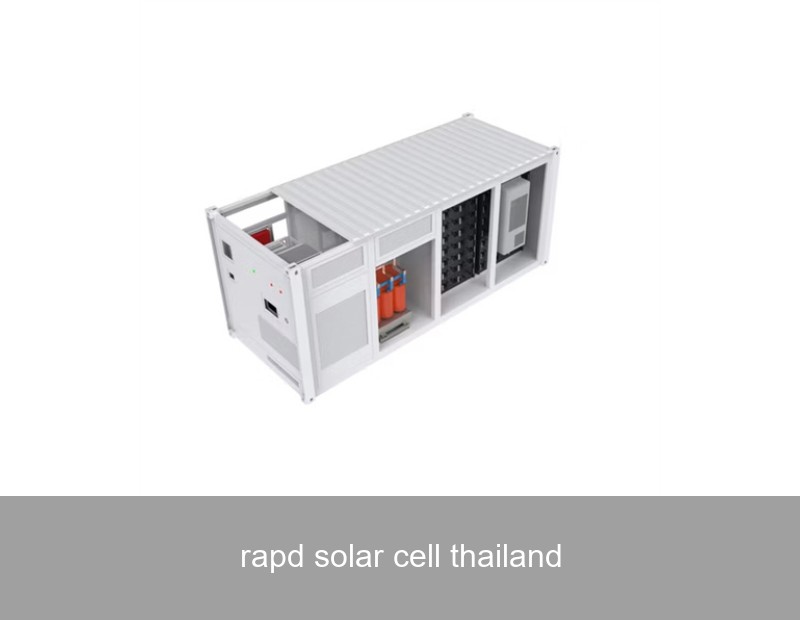
For projects in dynamic markets like Thailand—and equally for our clients in Europe and the US—Highjoule's HPS系列 (HPS Series) containerized storage solutions and HES系列 (HES Series) for commercial buildings offer the perfect complement to rapid solar deployment. Our systems are built with top-tier lithium-iron-phosphate (LFP) battery cells for safety and longevity, integrated with our proprietary Highjoule Energy Management System (EMS). This smart brain optimizes every kilowatt-hour: it predicts solar generation, analyzes consumption patterns, and automates charge/discharge cycles to maximize financial return and system stability.
Whether it's a manufacturing plant in Rayong looking to cut energy costs or a microgrid for a remote community, Highjoule provides the reliable, safe, and intelligent storage backbone that makes solar investments future-proof.
Case Study: A Thai Industrial Park's Success Story
Let's look at a real-world application. A major industrial food processing facility in Chonburi Province, Thailand, installed a 2.5 MW rooftop solar PV system in 2021. While it reduced daytime grid consumption, the plant still faced high demand charges and couldn't utilize about 30% of its solar generation, which was exported to the grid at a low price.
In 2023, they partnered with Highjoule to integrate a 1.5 MW / 3 MWh HPS containerized BESS. The results, monitored over one year, were significant:
- Solar Self-Consumption Rate Increased from ~70% to over 95%.
- Peak Grid Demand Reduced by 40%, slashing monthly demand charges.
- Annual Energy Cost Savings rose by an additional 28% on top of the original solar savings.
- ROI for the Storage System is projected to be under 5 years, thanks to the combined value streams.
This case, echoed in projects from studies by NREL on solar-plus-storage economics, demonstrates the multiplicative effect of pairing rapid solar rollout with strategic storage.

Credit: Photo by Michael Fousert on Unsplash - Advanced control systems are key to managing solar-plus-storage assets.
Global Insights: Lessons for Europe and the US
Thailand's experience is a microcosm of a global shift. While markets differ, the core principles remain. In Europe and the US, where grid constraints, time-of-use rates, and corporate sustainability goals are intensifying, the "solar-only" approach is increasingly seen as incomplete. The integration of storage is becoming standard for maximizing value.
Highjoule's solutions are designed for this global reality. Our systems help businesses in Germany navigate grid feed-in limitations, assist data centers in Texas with peak shaving and backup power, and enable renewable microgrids in California. The lesson from Thailand is clear: planning for storage from the outset, or retrofitting it intelligently, is the hallmark of a resilient and economically optimized energy strategy.
Looking Ahead: The Future of Solar-Plus-Storage
As solar cell technology continues to advance and battery costs decline, the synergy between the two will only deepen. We're moving towards AI-driven energy ecosystems that not only manage a single site but can interact with virtual power plants (VPPs) and provide grid services.
Highjoule is actively developing these next-generation capabilities, ensuring our clients' assets are not just isolated solutions but active participants in the future smart grid. The rapid adoption in markets like Thailand is proving the model and accelerating innovation worldwide.
Is your organization evaluating a solar project, and wondering how to ensure it delivers maximum resilience and return in the face of evolving energy markets? What role could intelligent energy storage play in your decarbonization roadmap?
 Inquiry
 Online Chat