


Solar Energy Storage Cabinet Comparison: Finding Your System's Perfect Match
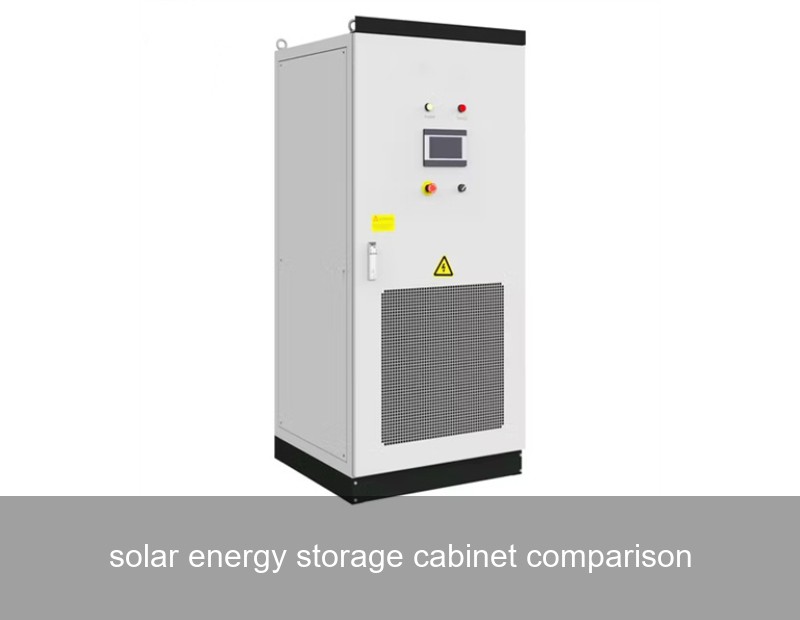
You've made the smart decision to invest in solar panels. They're gleaming on your roof, diligently converting sunshine into clean power. But here's a thought that often hits as the sun sets: "Where's all that beautiful energy I made today going?" This is where the solar energy storage cabinet steps into the spotlight. Think of it not just as a big battery, but as the intelligent heart and brain of your modern energy system. Choosing the right one is crucial, and a thorough solar energy storage cabinet comparison goes far beyond just price and kilowatt-hours. It's about safety, longevity, integration, and ultimately, maximizing your energy independence.
Let's navigate this essential decision together, moving from the common frustrations homeowners face to the clear data and smart features that should guide your choice.
Key Factors in a Solar Energy Storage Cabinet Comparison
When you begin your solar energy storage cabinet comparison, it's easy to get lost in a sea of technical specifications. To make an informed decision, break it down into these critical categories. A high-quality cabinet is more than a container; it's a unified system designed for performance and safety.
1. Capacity & Power: The "Size" and "Muscle"
These are two distinct but equally important metrics:
- Usable Energy Capacity (kWh): This is the "size of your fuel tank." How much energy can the system store? A typical home system ranges from 5 kWh to 20+ kWh. To estimate your needs, look at your evening and nighttime electricity usage on your utility bill.
- Continuous Power Rating (kW): This is the system's "muscle." How much power can it deliver at any given moment? A higher rating (e.g., 5 kW vs. 3 kW) means you can run more high-power appliances (like an air conditioner, heat pump, and oven) simultaneously on battery power.

Image: A modern, wall-mounted energy storage system. Source: Unsplash
2. Round-Trip Efficiency & Depth of Discharge
Not every watt you put in comes back out. Round-trip efficiency (e.g., 90%, 95%) tells you the percentage of energy you get back after charging and discharging losses. A higher efficiency means more of your solar harvest ends up powering your home.
Depth of Discharge (DoD) indicates how much of the battery's total capacity you can safely use. If a 10 kWh battery has a recommended 90% DoD, you should only use 9 kWh of it regularly. Using more can significantly shorten its life.
3. Safety & Thermal Management
This is non-negotiable. The cabinet must be designed to prevent, contain, and manage risks. Look for:
- Robust Enclosure: Metal cabinets (like steel) offer superior mechanical protection and fire resistance compared to some plastic enclosures.
- Advanced Thermal Management: Passive cooling (heat sinks) is simple but can struggle in hot climates. Active cooling (internal fans or liquid cooling systems) maintains optimal battery temperature, which is critical for performance and lifespan. As a report from the National Renewable Energy Laboratory (NREL) notes, battery temperature is a primary factor in degradation.
- Certifications: Look for UL 9540 (standard for energy storage systems) and UL 1973 (standard for batteries) in the US, or equivalent IEC standards in Europe.
The Core: Battery Chemistry Deep Dive
Inside every cabinet, the battery cells are the core. Your choice here defines the long-term performance and value proposition.
| Chemistry | Pros | Cons | Best For |
|---|---|---|---|
| Lithium Iron Phosphate (LFP) | Excellent safety (thermally stable), long cycle life (6,000+ cycles), good DoD, cobalt-free. | Slightly lower energy density than NMC, can be sensitive to low-temperature charging. | Homeowners prioritizing safety, longevity, and total cost of ownership. |
| Nickel Manganese Cobalt (NMC) | High energy density (compact size), good all-weather performance. | Historically higher thermal runaway risk than LFP, shorter lifespan than LFP, uses cobalt. | Applications where space is extremely limited. |
The industry trend, particularly for stationary home storage, is decisively moving towards LFP chemistry due to its superior safety profile and longevity. At Highjoule, our ResiCore Ultra series storage cabinets are built exclusively with premium LFP cells, housed in a rugged, steel enclosure with an intelligent liquid-cooling system. This ensures not only peak safety but also maintains the cells at their ideal temperature, unlocking their full cycle-life potential even in demanding climates.
Real-World Performance: A Case Study from Bavaria
Specs on paper are one thing; performance in a real home tells the full story. Let's look at data from a project in southern Germany, where a family of four installed a 15 kW solar array in 2021.
The Challenge: High self-consumption was the goal. Despite a large solar system, their grid feed-in during summer was high, while winter reliance on the grid (and high电价) remained significant.
The Solution & Data: In early 2023, they installed a 16 kWh Highjoule ResiCore Ultra storage system. The system's high continuous power (7.2 kW) and intelligent energy management software were key. Here's the impact one year later:
- Self-Consumption Rate: Increased from 35% to 92% annually.
- Grid Independence: Achieved 83% energy autonomy over the year (measured as percentage of total household load met by solar + storage).
- Financial Impact: Reduced their annual electricity bill by €1,850, projecting a full system payback in under 8 years.
- Performance Note: The integrated liquid cooling maintained cell temperature within a 3°C band even during a record-hot July, whereas a passively cooled unit on a neighboring property saw temperature swings over 15°C, which can accelerate capacity fade.
This case underscores that an effective solar energy storage cabinet comparison must consider the system's software intelligence and thermal management, not just the raw battery capacity.
The Highjoule Approach: Integrated Intelligence
As a global leader since 2005, Highjoule's philosophy is that a storage cabinet should be a seamlessly integrated energy manager. Our systems are designed for the smart home and the evolving grid.
Our ResiCore Ultra cabinet is the culmination of this approach:
- Adaptive AI Software: The system learns your consumption patterns and weather forecasts to optimize charging and discharging cycles, maximizing self-use and preparing for grid outages.
- Grid Services Ready: In many regions, our systems can participate in virtual power plant (VPP) programs, where you can earn incentives by allowing your battery to support the grid during peak demand, as discussed in this U.S. Department of Energy article on grid resilience.
- Modular & Scalable: Start with a base capacity and add more battery modules as your needs evolve (e.g., adding an electric vehicle).
- Professional Monitoring & Support: Every Highjoule system includes remote monitoring and proactive alerts, with a network of certified installers across Europe and North America for local service.

Image: Monitoring and controlling your energy system via a smart app. Source: Unsplash
Making the Right Choice for Your Home
So, how do you move from a generic solar energy storage cabinet comparison to the right decision for your home?
- Audit Your Energy Goals: Is it backup power during outages? Maximizing financial return? Future-proofing for an EV? Your goal dictates the capacity and power you need.
- Prioritize Safety & Longevity: Look for LFP chemistry, robust UL/IEC certifications, and advanced thermal management. The safest system is the one that lasts the longest.
- Demand Smart Software: The hardware stores energy; the software maximizes its value. Ask about learning algorithms, grid interaction features, and user-friendly monitoring.
- Evaluate the Total Ecosystem: Consider the manufacturer's track record, warranty (both years and throughput guarantee), and the strength of their installer network in your area.
Your solar panels are your personal power plant. The right storage cabinet is what transforms that intermittent resource into reliable, controllable, and truly valuable energy independence. It's an investment in resilience, sustainability, and taking control of your energy future.
What's the first question you'll ask your installer when they present you with a storage system proposal?
 Inquiry
 Online Chat