


Unlocking Solar Potential: A Guide to Surya Urja Rooftop Yojana and Modern Energy Storage
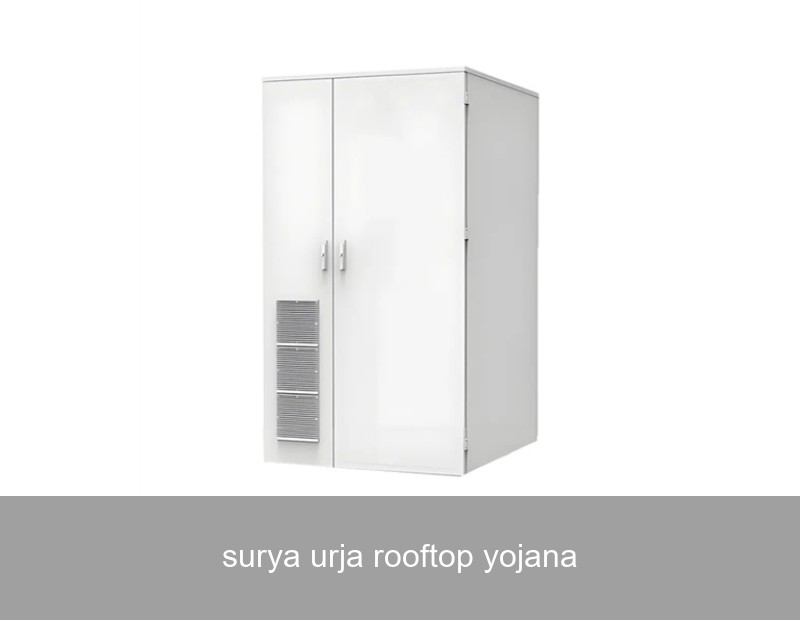
Imagine your rooftop not just as shelter, but as a silent, powerful energy generator. This vision is becoming a reality for millions, thanks to initiatives like India's groundbreaking Surya Urja Rooftop Yojana (SURYA). While this specific program is a catalyst in India, the global shift towards rooftop solar paired with intelligent storage is a universal trend, reshaping energy landscapes from Europe to the United States. This article dives into the mechanics and immense potential of rooftop solar systems, explores the critical role of advanced energy storage, and examines how global leaders like Highjoule are making this technology reliable and accessible for commercial, industrial, and residential applications worldwide.
Table of Contents
- The Rooftop Solar Revolution: More Than Just Panels
- The Storage Imperative: Why Solar Needs a Battery
- Highjoule's Intelligent Storage: The Brain Behind the Power
- A Global Case Study: Stability for a European Manufacturing Plant
- The Future of Energy is Distributed: What's Your Role?
The Rooftop Solar Revolution: More Than Just Panels
Programs like Surya Urja Rooftop Yojana brilliantly address the initial barrier: upfront cost. By providing financial assistance, they accelerate the adoption of solar photovoltaic (PV) systems. The principle is simple—convert sunlight directly into electricity. However, the real-world operation introduces complexity. Solar generation is intermittent; it peaks during midday and drops to zero at night. This creates a fundamental mismatch with most energy consumption patterns.
Think about it: a household uses energy in the morning and evening, while a factory may run 24/7. Without a solution, excess solar energy produced at noon is either fed back to a sometimes-unreliable grid or, worse, wasted. This is where the conversation evolves from simple solar generation to comprehensive energy management.

Credit: Photo by Vivint Solar on Unsplash
The Storage Imperative: Why Solar Needs a Battery
This is the pivotal moment in our energy story. An advanced Battery Energy Storage System (BESS) acts as a reservoir for your solar power. It stores the surplus energy generated during sunny periods and releases it when you need it most—during peak tariff hours, at night, or during a grid outage. The benefits are transformative:
- Maximized Self-Consumption: Use more of your own cheap, green solar energy, sometimes increasing self-consumption rates to over 80%.
- Enhanced Resilience: Maintain power during grid failures. For businesses, this means avoiding costly downtime.
- Grid Support: Stabilize the local grid by managing demand peaks, a feature increasingly valued by utilities.
- Financial Optimization: In markets with time-of-use pricing, store energy when it's cheap (or free from your panels) and use it when it's expensive.
According to the International Energy Agency (IEA), the global capacity of battery storage is set to multiply exponentially, becoming a cornerstone of secure and sustainable energy systems.
Highjoule's Intelligent Storage: The Brain Behind the Power
At Highjoule, we've moved beyond just providing battery cells. Since 2005, we have focused on delivering intelligent, efficient, and sustainable power solutions. Our systems are designed for the nuanced needs of global markets, including grid-stable Europe and the diverse landscapes of the United States.
Our product philosophy centers on integration and intelligence. A Highjoule BESS is not a silent box; it's an active energy manager. Our systems feature:
- Adaptive AI Software: Our platform learns your energy consumption patterns and automatically optimizes charging and discharging cycles for maximum savings and efficiency.
- Scalable Architecture: From a compact residential unit like our HomePower Hub to a containerized megawatt-scale GridMax Industrial system, our solutions grow with your needs.
- Unmatched Safety: We incorporate multi-layered protection systems, including advanced thermal management and cell-level monitoring, ensuring safety is never compromised.
- Seamless Hybrid Integration: Our systems are designed to work flawlessly with virtually any existing or new solar inverter, making retrofits and new installations straightforward.
For a program like Surya Urja Rooftop Yojana to deliver its full promise, pairing it with such intelligent storage is the logical next step. It transforms a solar installation from a cost-reduction tool into a robust, independent, and smart energy asset.
A Global Case Study: Stability for a European Manufacturing Plant
Let's look at a real-world application that mirrors the challenges and solutions relevant globally. A mid-sized automotive parts manufacturer in Bavaria, Germany, faced two issues: volatile energy prices impacting their bottom line and a need for ultra-reliable power for precision machinery.
They had a 500 kW rooftop solar array, but much of its daytime output was being exported at low feed-in tariffs while they bought expensive power from the grid in the early morning and evening. They partnered with Highjoule to install a 250 kWh GridMax Industrial BESS.
| Metric | Before Highjoule BESS | After Highjoule BESS Installation |
|---|---|---|
| Solar Self-Consumption | 35% | 89% |
| Grid Energy Cost (Monthly) | €12,500 | €6,800 |
| Power Resilience | Vulnerable to grid dips | 2 hours of full backup for critical loads |
The system was programmed to charge from the solar surplus and discharge during peak price windows (4 PM - 9 PM). Within the first year, the plant reduced its grid energy costs by over 45% and achieved a return on investment in under 5 years. Furthermore, during a brief regional grid disturbance, their critical production line continued uninterrupted, saving an estimated €50,000 in potential spoiled materials and downtime. This case, documented in part with data from the Fraunhofer Institute for Solar Energy Systems, exemplifies the tangible value of pairing solar with smart storage.

Credit: Photo by American Public Power Association on Unsplash
The Future of Energy is Distributed: What's Your Role?
The journey from a policy like Surya Urja Rooftop Yojana to a fully optimized, resilient energy system highlights a clear path. The future is not about massive, centralized power plants alone; it's about a distributed network of intelligent microgrids and self-sufficient homes and businesses. The technology is here, proven, and economically viable.
Whether you are a homeowner in California looking to gain energy independence, a factory manager in Italy aiming to lock in energy costs, or a community planner envisioning a sustainable microgrid, the question is no longer "if" but "how" to integrate storage.
What is the first step you will take to assess how intelligent energy storage could transform your energy profile and build your resilience against an uncertain energy future?
 Inquiry
 Online Chat