


Reliable Power Supplier: Your Partner in Navigating the Modern Energy Landscape
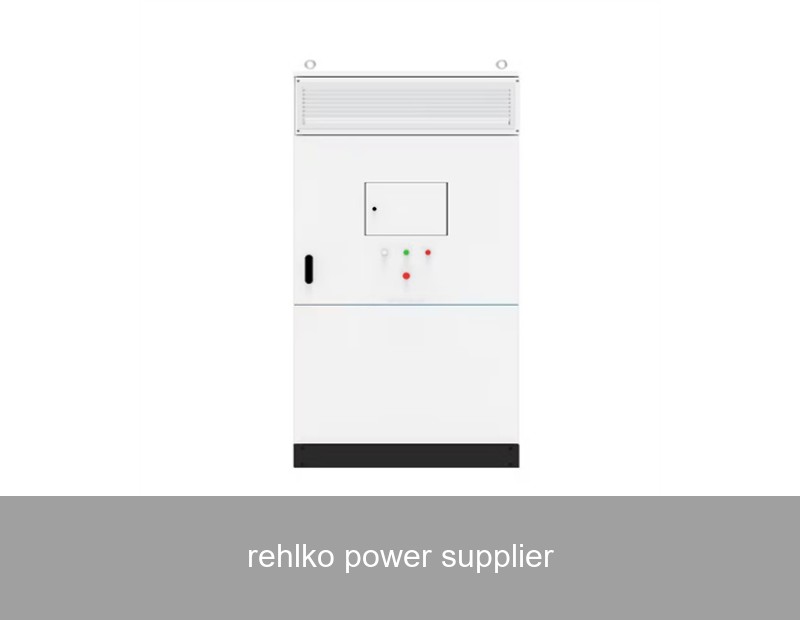
Have you ever wondered what truly makes a power supplier reliable today? It's no longer just about keeping the lights on 99.9% of the time. In an era of volatile energy prices, increasing grid instability, and the urgent push for decarbonization, a reliable power supplier must be a partner in resilience, cost control, and sustainability. This article explores the evolving role of the reliable power supplier and how innovative energy storage solutions are redefining reliability for businesses and communities across Europe and the US.
Table of Contents
The New Challenge for Reliability: Intermittency Meets Demand
Traditionally, reliability was a grid-centric concept. Your utility or power supplier managed vast networks of centralized power plants, and reliability was measured by frequency and duration of outages. The energy transition has added profound layers of complexity. The rapid integration of renewable sources like solar and wind—which are inherently intermittent—creates new challenges for grid balance. Simultaneously, electrification of transport and heating increases demand. This dual pressure creates a phenomenon known as "duck curves" and "net load ramps," where grid operators must scramble to meet rapidly changing supply and demand. In this context, the old model of reliability is insufficient. True reliability now requires intelligent management of when and how you consume, store, and even generate power.

Image Source: Unsplash - A modern grid integrating diverse renewable sources.
The Data Reality: Grids Under Pressure
The statistics paint a clear picture of why a new approach is needed. According to the U.S. Energy Information Administration (EIA), the U.S. experienced a record high of 1.3 billion customer-hours of power interruptions in 2020, with a significant portion attributed to extreme weather events exacerbated by climate change (Source: EIA). In Europe, the European Network of Transmission System Operators for Electricity (ENTSO-E) reports on the increasing frequency of grid congestion and balancing challenges as renewable penetration grows. Furthermore, wholesale electricity prices in markets like the German EPEX Spot have shown unprecedented volatility, with prices occasionally swinging from deep negative to over €500 per MWh within short periods. This volatility directly impacts any business or community that is a passive price-taker from their power supplier.
Key Pain Points for Energy Consumers:
- Cost Volatility: Unpredictable energy bills due to spot market exposure.
- Operational Risk: Production halts or data center downtime from even millisecond grid disturbances.
- Sustainability Goals: Difficulty in maximizing the use of on-site renewables and reducing carbon footprint.
- Grid Dependency: Lack of control during public safety power shutoffs or brownouts.
Case Study: A Bavarian Auto Parts Manufacturer Secures Its Future
Let's look at a concrete example from Southern Germany. "Teilefertigung GmbH" (a pseudonym) is a mid-sized automotive supplier with an energy-intensive production line. Their core reliability concerns were: 1) Protecting sensitive CNC machinery from micro-outages, 2) Shielding against soaring German industrial electricity rates, and 3) Meeting corporate ESG mandates.
Their previous solution was a diesel generator for backup. It was noisy, polluting, only activated during outages, and did nothing for daily costs. In 2022, they partnered with their forward-thinking energy consultant and Highjoule to implement a turnkey solution: a 500 kW / 1 MWh Battery Energy Storage System (BESS) integrated with their existing rooftop solar PV.
| Metric | Before Highjoule BESS | After Highjoule BESS (12-month period) |
|---|---|---|
| Energy Cost Savings | Baseline market rate | 22% reduction via peak shaving & arbitrage |
| Renewable Self-Consumption | 35% of solar generation used on-site | Increased to 85% |
| Backup Power | Diesel generator (2-3 minute start) | Seamless < 20ms transition for critical loads |
| CO2e Reduction | -- | Estimated 145 tonnes annually |
The Highjoule H4 Industrial Stack system now automatically charges with cheap solar or off-peak grid power, then discharges during expensive peak hours (a process called peak shaving). It also provides instantaneous frequency regulation to the grid, creating an additional revenue stream. For this manufacturer, their reliable power supplier is now a hybrid entity: the public grid, their own solar panels, and their intelligent Highjoule storage system, managed as one cohesive asset.
The Storage Solution: The Brain and Battery of Modern Energy Resilience
So, what transforms a static battery into a cornerstone of reliability? The answer lies in the intelligence layer. Advanced Battery Energy Storage Systems (BESS) are not just containers for electrons; they are sophisticated energy assets. A modern BESS, like those engineered by Highjoule, combines three critical components:
- High-Fidelity Battery Packs: Using premium Li-ion NMC or LFP chemistry for longevity and safety.
- Advanced Power Conversion System (PCS): The bidirectional inverter that manages AC/DC conversion with exceptional efficiency.
- Intelligent Energy Management System (EMS): The "brain" that makes real-time decisions based on weather forecasts, price signals, consumption patterns, and grid needs.
This EMS is what allows a storage system to wear multiple hats: a cost-saver, a backup power source, a grid supporter, and a sustainability enabler. It's the technology that empowers you to become an active manager of your energy destiny, rather than a passive customer of a traditional power supplier.

Image Source: Unsplash - Inside a modern battery energy storage system.
How Highjoule Enables the Next-Generation Reliable Power Supplier
At Highjoule, with nearly two decades of experience since 2005, we see ourselves as the foundational technology partner for those building the new paradigm of reliability. We don't just sell hardware; we provide intelligent, integrated systems that become the core of your energy resilience strategy.
Our product suites are designed for scalability and application-specific needs:
- For Commercial & Industrial (C&I): Our H4 Industrial Stack and H2 Commercial Series offer modular, containerized or skid-mounted solutions for peak shaving, backup power, and demand charge management. They integrate seamlessly with existing solar installations and building management systems.
- For Residential & Community Energy: The Highjoule Home+ system allows homeowners to maximize self-consumption of rooftop solar, gain backup power security, and even participate in virtual power plant (VPP) programs, effectively becoming part of a decentralized, reliable power network.
- For Utilities and Microgrids: Our large-scale H8 Grid-Scale Platform is deployed to provide grid services like frequency regulation, renewable firming, and transmission deferral, directly enhancing the stability and reliability of the public grid for everyone.
Our systems are governed by Helios OS, our proprietary energy management platform. Helios OS uses AI-driven forecasting to optimize every kilowatt-hour, ensuring your system delivers the highest possible financial return and operational reliability. Think of Highjoule as providing the "digital and physical infrastructure" that allows energy consultants, solar developers, and forward-thinking facilities managers to act as truly comprehensive reliable power suppliers to their end clients.
Future-Proofing Your Energy Supply: Questions to Ask Your Provider
The landscape is shifting. As you evaluate your energy strategy, the questions you ask your current or potential power supplier or energy partner must evolve.
- Beyond uptime, how do you help me manage and predict my energy costs?
- What is your roadmap for integrating storage and renewable generation into my supply plan?
- Can you provide solutions that offer both economic and resilience benefits, rather than just backup?
- How will your proposed systems adapt to future changes in energy markets, regulations, and technology?
The most reliable power strategy is one that is adaptive, intelligent, and puts you in control. It moves from a purely procurement-based relationship to a partnership in managing a critical operational asset—your energy.
Ready to Redefine What Reliability Means for Your Operations?
What would a 20% reduction in your energy costs, coupled with bulletproof backup power, do for your business's bottom line and competitive edge? The technology to achieve this is not a future concept; it's operational today in facilities across Europe and North America. The first step is to start the conversation about moving from a passive consumer to an active energy manager.
 Inquiry
 Online Chat