


Exploring Your Renewable Energy Options: A Guide to a Sustainable Power Future
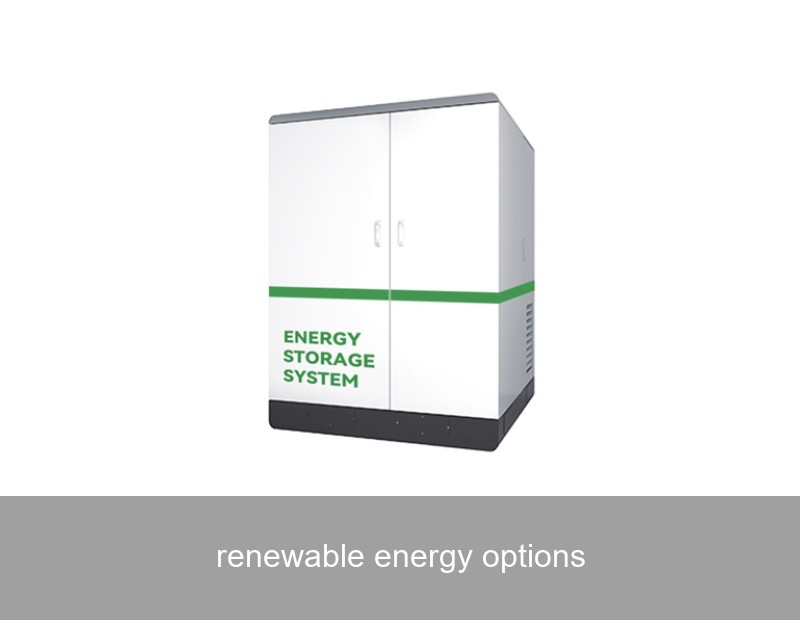
As energy bills fluctuate and climate concerns grow, more homeowners and businesses across Europe and the US are actively exploring their renewable energy options. The shift from curiosity to commitment, however, brings up crucial questions: Which technology fits my needs? How do I ensure a reliable power supply when the sun isn't shining or the wind isn't blowing? The answer lies not just in generation, but in intelligent storage and management. This is where modern energy solutions truly empower your transition to sustainability.
Table of Contents
The Phenomenon: From Passive Consumer to Active Prosumer
Gone are the days when electricity simply flowed one-way from the grid. Today, technology allows us to generate, store, and manage our own power. This transforms energy users into "prosumers"—both producers and consumers. The initial driver is often solar panels on a roof, but many soon encounter a common reality: generation and consumption are rarely in sync. You produce most of your solar energy midday, but your highest consumption might be in the evening. Without a solution, excess energy is sent to the grid for minimal compensation, leaving you still dependent on it at night. This gap highlights the critical next step in evaluating renewable energy options: integrating a battery energy storage system (BESS).

Image Source: Unsplash - A modern home equipped with solar panels, the first step for many prosumers.
The Data: Why Storage is the Missing Link
Let's look at the numbers. According to the International Energy Agency (IEA), global renewable capacity is set to expand dramatically, with solar PV leading the charge. However, they emphasize that storage is key to unlocking the full potential of these variable sources. Consider this: a typical residential solar system without storage might only directly satisfy 30-50% of a household's total electricity needs. Adding a properly sized battery can increase this self-consumption rate to 70% or more, dramatically reducing grid reliance. For businesses, this isn't just about savings; it's about power resilience during outages and hedging against volatile energy prices.
The Case Study: A German Bakery's Recipe for Energy Independence
Let's make this concrete with a real-world example. Bäckerei Schmidt (name changed for privacy), a mid-sized bakery in Bavaria, Germany, faced steep and unpredictable energy costs. Their ovens, refrigerators, and lighting created a high, constant demand. They installed a 100 kW solar PV system, which helped but left them exposed during early morning baking hours (before sunrise) and cloudy days.
Their solution was to integrate a Highjoule Commercio 100 battery storage system. Here are the results after one year:
| Metric | Before Highjoule System | After Highjoule System |
|---|---|---|
| Grid Electricity Purchased | 100% of needs | 35% of needs |
| Solar Self-Consumption | ~40% of solar output | >90% of solar output |
| Energy Cost Savings | Baseline | €8,200 annually |
| CO2 Emissions Reduction | Baseline | Approx. 42 tonnes annually |
The bakery now uses its solar energy more effectively, storing excess daytime power to fire its ovens during the early morning peak. The Highjoule system's intelligent energy management software automatically optimizes for cost and consumption patterns. This case exemplifies how exploring renewable energy options must move beyond generation to include smart storage—a principle at the core of Highjoule's solutions for commercial and industrial clients.
Deep Dive: Core Renewable Energy Options & The Storage Imperative
When planning your energy transition, it's helpful to view your system in three integrated layers: Generation, Storage, and Management.
1. Solar Photovoltaic (PV) Power
The most accessible option for many. Modern panels are efficient and durable. The key insight? Their value is multiplied by storage. Highjoule's systems are designed for seamless integration with new or existing solar arrays, ensuring not a watt of your investment is wasted.
2. Wind Power
More site-dependent, wind can be an excellent complement to solar, especially in regions with strong seasonal patterns. The intermittent nature of wind makes pairing it with a robust BESS like Highjoule's GridSynergy series for microgrids essential for providing stable, dispatchable power.
3. The Enabler: Battery Energy Storage Systems (BESS)
This is the heart of a modern energy setup. It's not just a battery; it's an intelligent platform. Highjoule's storage solutions, such as the Residio Home for residences and the scalable Industrio line for large-scale applications, use advanced lithium-iron-phosphate (LFP) chemistry for safety and longevity. They come with proprietary software that allows you to:
- Maximize Self-Consumption: Automatically store surplus solar/wind energy.
- Provide Backup Power: Keep critical loads running during grid outages.
- Optimize for Time-of-Use: Charge from the grid when rates are low, discharge when they are high.
- Enable Grid Services: For larger systems, participate in grid stability programs for additional revenue.

Image Source: Unsplash - Inside a containerized battery storage system, similar to Highjoule's industrial solutions.
The Future of Your Energy: Integration and Intelligence
The most advanced renewable energy options today are about creating a cohesive, resilient energy ecosystem. Imagine a system where your EV charger, home appliances, solar panels, and battery are all communicating. Your EV charges using excess solar, your battery powers your home during peak tariff periods, and everything is managed through a simple app that learns your habits. This isn't science fiction; it's the level of integration Highjoule's Neuralight Energy Management Platform delivers. By treating your energy assets as a unified network, we help you achieve unprecedented efficiency and control.
For communities and businesses, this scales up to form microgrids—localized grids that can operate independently from the main grid. Highjoule is a leader in this space, providing turnkey microgrid solutions that combine solar, storage, and advanced control systems for universities, factories, and remote communities. As noted by the National Renewable Energy Laboratory (NREL), such integrated systems are crucial for a resilient and decarbonized energy future.
Making the Right Choice for You
So, how do you navigate these options? Start by asking:
- What are my primary goals? (Cost savings, backup power, sustainability?)
- What is my site's generation potential? (Roof space, wind resource?)
- What are my daily and seasonal energy consumption patterns?
Partnering with an expert who can look at the whole picture is vital. Since 2005, Highjoule has been guiding customers through this exact journey, providing not just hardware but a long-term partnership for energy independence.

Image Source: Unsplash - A family monitors their home energy consumption, a key part of managing renewable systems.
As you evaluate your path forward, consider this: Which aspect of your current energy situation—cost, reliability, or environmental impact—motivates you most to explore a comprehensive solution that ties all your renewable energy options together?
 Inquiry
 Online Chat