


Renewable Energy in Singapore: Powering a Sustainable Future Against the Odds
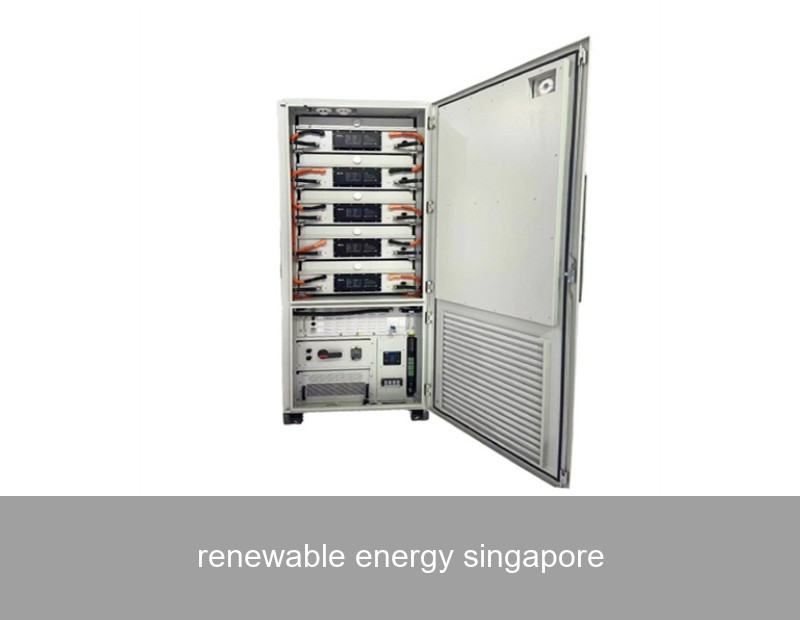
When you think of global renewable energy leaders, Singapore might not be the first country that comes to mind. A densely populated city-state with limited land, no natural wind farms, and often cloudy skies, it faces unique and significant challenges. Yet, Singapore is on a determined mission to transform its energy landscape. The drive for renewable energy in Singapore is a fascinating story of innovation, focusing intensely on its most abundant natural resource: sunlight. This journey isn't just about installing panels; it's about intelligent integration, advanced storage, and rethinking how a modern metropolis can achieve energy security and sustainability. Companies like Highjoule, with nearly two decades of expertise in smart energy storage, are pivotal in turning these ambitions into a stable, reliable reality.
Table of Contents
- The Singaporean Energy Challenge: A Unique Landscape
- The Solar Surge: Data and Targets
- The Critical Piece: Why Energy Storage is Non-Negotiable
- Case Study: Stabilizing a Commercial Hub with BESS
- Highjoule's Intelligent Solutions for Singapore's Market
- Future Horizons: Integration and Innovation
- What's Your Organization's Energy Resilience Plan?
The Singaporean Energy Challenge: A Unique Landscape
Singapore's energy dilemma is clear. With over 5.6 million people in an area of just 730 square kilometers, vast solar or wind farms are impractical. The nation has historically relied on imported natural gas for about 95% of its electricity generation. This creates a dual vulnerability: exposure to global fuel price volatility and strategic energy security concerns. The government's response is the Singapore Green Plan 2030, an ambitious roadmap that puts solar energy at its core. But here's the catch—solar is intermittent. What happens during monsoon seasons or at night? This is where the conversation moves from generation to management, and that's the key to unlocking Singapore's renewable future.

Image: Rooftop solar is key in land-scarce environments. Source: Unsplash
The Solar Surge: Data and Targets
The numbers tell a story of rapid growth. According to the Energy Market Authority (EMA), Singapore's solar photovoltaic (PV) capacity has grown exponentially, from about 30 megawatt-peak (MWp) in 2015 to over 1 GWp by the end of 2023. The target is to reach at least 2 GWp by 2030, which could power over 350,000 households annually. This deployment isn't on open fields but on available surfaces: rooftops of HDB housing blocks, industrial estates, commercial buildings, and even reservoirs and offshore sea spaces.
But this growth introduces grid stability challenges. A sudden cloud cover can cause a sharp drop in solar output, while excess midday generation can lead to voltage fluctuations. Managing this variability is not just an engineering task; it's essential for preventing blackouts and ensuring every watt of clean energy is effectively used.
The Intermittency Problem in Numbers
| Challenge | Impact on Grid | Needed Solution |
|---|---|---|
| Rapid Ramps (Cloud Cover) | Frequency drops, need for instant backup | Sub-second response storage |
| Midday Peak Generation | Potential for curtailment (wasted energy) | Energy time-shifting |
| Zero Night-time Generation | Reliance on fossil fuels after dark | Long-duration discharge storage |
The Critical Piece: Why Energy Storage is Non-Negotiable
Think of the electricity grid like a lake. Power plants add water (generation), and our homes and factories drain it (demand). Solar is like an unpredictable river feeding the lake—sometimes a torrent, sometimes a trickle. An energy storage system (ESS) acts as a massive dam and reservoir. It captures the solar "torrents" at noon, stores that energy, and releases it during the "trickle" periods in the evening or during cloudy weather. This smooths out the flow, balances the lake, and prevents both floods (grid overload) and droughts (power shortages).
For Singapore, Battery Energy Storage Systems (BESS) are particularly crucial. They provide the fast frequency response that the grid needs to handle solar's sudden changes, all within milliseconds. This isn't just an add-on; it's the enabling technology that makes high solar penetration feasible and safe.
Case Study: Stabilizing a Commercial Hub with BESS
A concrete example from Singapore illustrates this perfectly. In 2022, a large commercial-industrial facility in Jurong with a 4 MW rooftop solar array faced a dual challenge: managing its own significant solar generation and participating in the national grid's ancillary services to generate revenue and support stability.
The Problem: The facility's solar output was causing local voltage spikes during peak generation, risking equipment and leading to occasional curtailment (switching off panels), which meant lost energy and money. They also wanted to provide frequency regulation services to the grid.
The Solution: The facility integrated a 2.5 MWh / 1.25 MW containerized BESS alongside its solar infrastructure. This system was specifically designed for tropical climates with advanced liquid cooling.
The Results (Data-Driven Impact):
- Solar Self-Consumption Increased: The facility boosted its consumption of its own solar energy from 68% to over 95%, drastically reducing peak demand charges from the grid.
- Ancillary Services Revenue: By allowing the BESS to bid into Singapore's wholesale market for frequency regulation, the system generated an additional ~SGD $120,000 in annual revenue.
- Grid Support: The BESS provides automatic frequency response, helping to stabilize the local grid for over 5,000 connected customers in the area.
Highjoule's Intelligent Solutions for Singapore's Market
At Highjoule, we understand that projects like the one in Jurong require more than just hardware. Since 2005, we've specialized in intelligent, software-driven energy storage systems that are built for the specific demands of tropical, urban environments like Singapore. Our approach is holistic:
- Highjoule H-Series Commercial BESS: Our flagship product for C&I applications features industry-leading energy density and an integrated thermal management system designed for 100% operation in high ambient temperatures. This ensures reliability and long battery life in Singapore's climate.
- Aurora AI Energy Management Platform: The true brain of the operation. This platform doesn't just store and release energy; it optimizes it. Using predictive analytics and real-time market data, it makes autonomous decisions—whether to store solar energy for evening use, sell power to the grid during peak pricing, or provide frequency regulation—maximizing financial return and operational efficiency.
- Microgrid Controllers: For larger campuses or industrial parks looking for energy independence, our controllers seamlessly integrate solar, storage, and backup generators into a resilient, self-optimizing microgrid. This is particularly valuable for critical infrastructure in Singapore, ensuring continuity even during broader grid disturbances.

Image: Intelligent control systems are vital for ESS performance. Source: Unsplash
Future Horizons: Integration and Innovation
The future of renewable energy in Singapore will involve even deeper integration. Imagine "virtual power plants" (VPPs)—networks of distributed solar-plus-storage systems across thousands of buildings, aggregated and controlled as a single, flexible power plant. Highjoule's technology is already VPP-ready, allowing our systems to participate in these large-scale grid support schemes. Furthermore, innovations like floating solar on reservoirs, combined with storage, and the exploration of new battery chemistries for longer duration storage, will continue to push the boundaries of what's possible in a land-constrained nation.
What's Your Organization's Energy Resilience Plan?
Singapore's journey proves that geographical constraints are not insurmountable barriers but catalysts for innovation. The synergy between solar generation and advanced, intelligent storage is the definitive path forward. Whether you're managing a commercial building, an industrial facility, or a utility-scale project, the question is no longer if you should integrate storage, but how and when. How will your energy strategy adapt to not only reduce costs and carbon footprint but also become an active, stabilizing participant in the new energy landscape? The technology is here, and the time for planning is now.
 Inquiry
 Online Chat