


Unlocking 24-Hour Solar Power: Your Guide to True Energy Independence
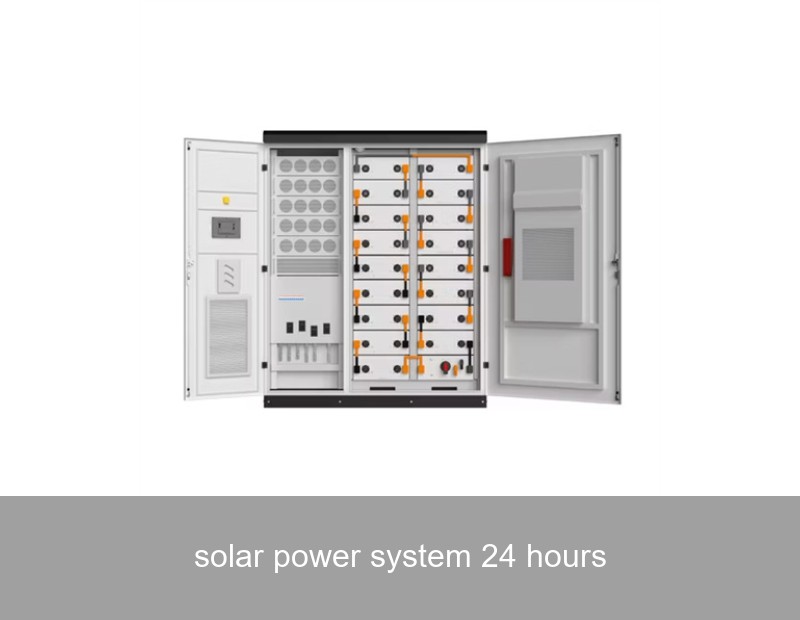
Imagine a world where your lights, appliances, and business operations run on clean, solar energy—not just when the sun is shining, but around the clock. The dream of a solar power system for 24 hours is no longer science fiction; it's a practical, cost-effective reality for homes and businesses today. This isn't about oversized solar arrays, but about intelligent energy storage. By pairing solar panels with advanced battery storage systems, you can capture excess daytime energy and use it at night, during peak grid rates, or even during outages. This guide will explore how a 24-hour solar solution works, its undeniable benefits, and how companies like Highjoule are making energy independence accessible and reliable.
Table of Contents
- The Challenge: Solar's Intermittent Nature
- The Solution: Battery Energy Storage Systems (BESS)
- How a 24-Hour Solar Power System Works
- Real-World Impact: A Case Study from California
- Highjoule's Role in 24/7 Solar Energy
- Key Components for Your System
- Future Trends and Your Next Step
The Challenge: Solar's Intermittent Nature
Let's face it: the sun is a brilliant but part-time power plant. Traditional solar panel systems have a fundamental limitation—they generate electricity only during daylight hours. This creates a mismatch between energy production and consumption. For most households, energy demand peaks in the early morning and evening, precisely when solar production is low or zero. This means you're either drawing expensive power from the grid or missing out on the full value of your solar investment.
The data underscores this gap. According to the U.S. Department of Energy, managing the variability of solar resources is a key focus for grid modernization. Without storage, a typical home solar system might only directly cover 30-50% of a household's total electricity use, depending on location and consumption patterns. The rest is imported, leaving you vulnerable to fluctuating utility rates.

Image Source: Unsplash - Solar panels at sunset highlight the need for storage.
The Solution: Battery Energy Storage Systems (BESS)
This is where the magic happens. A Battery Energy Storage System (BESS) is the heart of any 24-hour solar power setup. Think of it as a high-tech energy bank. During the day, your solar panels often produce more electricity than your home immediately needs. Instead of sending all that excess back to the grid (often for a minimal credit), you divert it to charge your battery bank. Later, when your panels are asleep, your home quietly draws from this stored, clean energy reserve.
The technology, primarily lithium-ion phosphate (LFP) batteries, has seen dramatic improvements in safety, lifespan (often 10+ years), and affordability. The global energy storage market is booming, a clear signal that pairing solar with storage is becoming the new standard for a resilient and efficient energy system.
How a 24-Hour Solar Power System Works: A Day in the Life
Let's break down a typical cycle:
- 6 AM - 9 AM (Morning Ramp): The sun rises. Solar production begins but may not yet meet full home demand. The system intelligently uses a combination of solar and a small amount from the battery to cover your morning peak (coffee makers, showers, etc.), avoiding expensive grid power.
- 10 AM - 4 PM (Peak Production): Solar generation is at its peak, likely exceeding home consumption. Excess energy flows to charge the battery system to 100%. Once full, any further excess can be exported to the grid.
- 5 PM - 10 PM (Evening Peak): Solar production falls to zero. This is when grid demand and prices are highest. Your home automatically switches to drawing 100% of its power from the charged batteries, shielding you from high time-of-use rates and providing seamless power.
- 10 PM - 6 AM (Overnight Base Load): Energy demand is lower (refrigerator, internet, etc.). The battery continues to power these loads until sunrise, when the cycle begins anew. A well-sized system can achieve near-total energy self-sufficiency.
Real-World Impact: A Case Study from California
Theory is good, but real data convinces. Consider the case of a medium-sized commercial warehouse in Fresno, California, operating with Highjoule's IntelliStore Commercial BESS.
Phenomenon: The facility had a 250 kW solar array but faced crippling "demand charges" based on its highest 15-minute power draw from the grid each month, often occurring after sunset when solar was offline.
Data & Solution: Highjoule engineers installed a 500 kWh IntelliStore system. The intelligent energy management software was programmed to "peak shave," meaning it discharged the batteries during short periods of very high demand, capping grid draw.
| Metric | Before Installation | After Installation | Change |
|---|---|---|---|
| Monthly Demand Charge | ~$4,200 | ~$1,100 | -74% |
| Grid Energy Consumption | 65% of total load | 28% of total load | -57% |
| System Payback Period | N/A | 4.2 years | N/A |
Insight: This case clearly shows that a 24-hour solar power system isn't just about energy; it's a strategic financial asset. For businesses, it directly attacks the largest line items on utility bills. For homeowners, it provides similar protection against rising rates and power outages, ensuring comfort and continuity.
Engineered for Continuity: Highjoule's Role in 24/7 Solar Energy
As a global leader in advanced energy storage since 2005, Highjoule specializes in turning the 24-hour solar dream into a dependable, user-friendly reality. Our systems are designed with the end-user in mind, integrating seamlessly with both new and existing solar installations.
For residential clients, our HomePower Series offers scalable storage solutions (from 10 kWh to 30+ kWh) with an intuitive app that lets you monitor production, consumption, and storage in real-time. You can choose to optimize for self-consumption, backup power, or grid cost savings with a few taps.
For commercial and industrial applications, our IntelliStore Platform goes beyond simple storage. It's an integrated energy management system that performs peak shaving, load shifting, and can even participate in grid services programs. Its modular design allows for expansion as your energy needs grow.
Highjoule's core philosophy is that storage must be smart, safe, and sustainable. Our battery units use stable LFP chemistry, come with comprehensive monitoring and safety protocols, and are backed by industry-leading warranties. We don't just sell hardware; we provide a complete power solution tailored to your specific energy profile and goals.

Image Source: Unsplash - A modern home battery storage unit, clean and compact.
Key Components for Your 24-Hour Solar Power System
- Solar PV Array: The primary energy generator. Size matters, but with storage, optimal sizing focuses on covering your annual consumption rather than just daytime load.
- Battery Storage Unit: The cornerstone. Key specs are usable capacity (kWh), power rating (kW), depth of discharge, and cycle life. Highjoule systems are designed for daily, deep cycling.
- Hybrid Inverter or AC Coupling: The brain and nervous system. This device manages the flow of energy between solar panels, batteries, your home, and the grid. It converts DC to AC and vice-versa efficiently.
- Energy Management System (EMS): The intelligence. Highjoule's proprietary EMS uses algorithms and weather forecasts to predict energy production and consumption, optimizing battery usage for your financial or resilience priorities.
Future Trends and Your Next Step
The journey towards 24-hour renewable energy is accelerating. We're moving towards integrated solar-plus-storage microgrids and vehicle-to-home (V2H) technology, where your electric car battery can power your house. The core principle remains: control over your energy creates security and savings.
So, what does your current energy bill reveal about your vulnerability to grid outages or price spikes? How much of your self-generated solar energy are you truly using, and how much are you giving away?
Exploring a 24-hour solar power system starts with a detailed look at your energy data. Highjoule's experts can help you analyze this and model the perfect system for your needs. The question isn't whether you can afford a battery storage system, but can you afford to keep paying for uncertainty?
 Inquiry
 Online Chat