


Harnessing the Full Potential of Renewable Resources of Energy
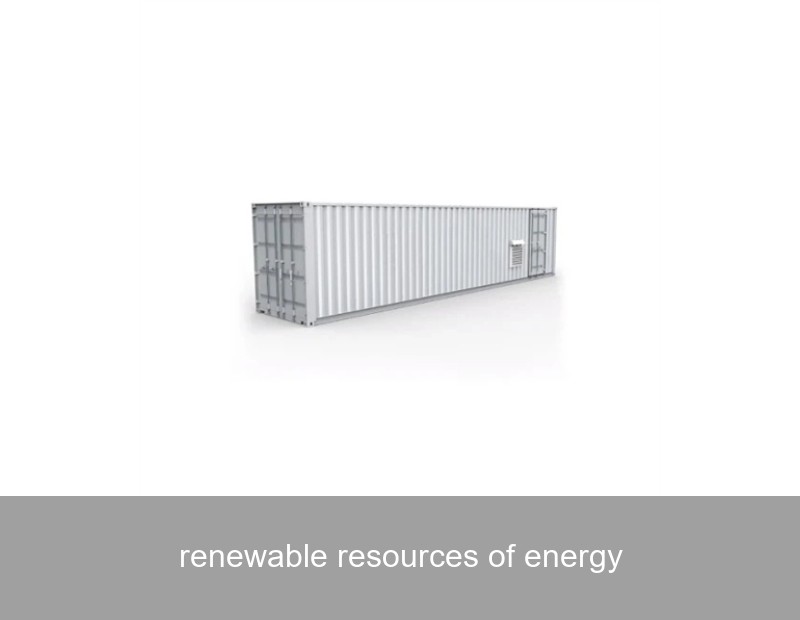
Let's talk about a modern-day paradox. Across Europe and the United States, we're installing solar panels and wind turbines at a record pace. The sun shines, the wind blows—clean, abundant, renewable resources of energy are right there for the taking. So why do headlines still warn of grid strain and potential blackouts during a calm, cloudy week? The answer lies not in the generation of clean energy, but in its mastery. The true challenge of our energy transition is transforming these intermittent flows into a reliable, on-demand power source. That's where the conversation gets interesting, and where advanced technology steps in to bridge the gap.
What Are Renewable Resources of Energy?
In essence, renewable resources of energy are natural sources that are replenished at a higher rate than they are consumed. Unlike fossil fuels, which are finite, these sources are virtually inexhaustible on a human timescale. The primary pillars include:
- Solar Energy: Captured via photovoltaic (PV) panels or concentrated solar power plants.
- Wind Energy: Harnessed using turbines, both onshore and offshore.
- Hydropower: Generated from the flow of water in rivers or dams.
- Geothermal Energy: Tapped from the Earth's internal heat.
- Biomass: Derived from organic materials.
According to the International Energy Agency (IEA), renewables are set to contribute 80% of new power capacity globally by 2030. But this rapid growth unveils a core technical reality: their output isn't constant. This variability is the central puzzle we must solve to achieve a truly resilient, clean grid.

Image Source: Unsplash - Showing solar and wind, two key renewable resources.
The Intermittency Challenge: A Real-World Problem
Think of it like this: the grid is a meticulously balanced scale. Supply must always match demand, second by second. Traditional power plants act as the adjustable counterweights. Now, imagine replacing a heavy, steady weight with a series of powerful but unpredictable gusts of wind. Solar energy follows a daily curve, dropping to zero at night. Wind patterns can change rapidly. This isn't a flaw—it's the nature of these resources. The result? The phenomenon known as the "duck curve," where net demand plunges during peak solar production hours and then spikes sharply as the sun sets. This creates immense operational challenges for grid operators, who must ramp up other generation sources rapidly, often relying on less efficient and more polluting "peaker" plants.
The Data Behind the Demand
In California, the non-profit grid operator CAISO has seen the depth of the "duck curve" increase dramatically. The need for rapid ramping capability—sometimes over 10,000 megawatts in a few hours—has become a critical metric for grid stability. This isn't a localized issue; from Germany's Energiewende to the UK's increasing offshore wind capacity, managing this variability is the paramount task for a decarbonized grid.
Energy Storage: The Keystone for a Renewable Future
This is where the story pivots from challenge to solution. To make renewable resources of energy truly dispatchable, we need a buffer. That buffer is advanced energy storage, particularly Battery Energy Storage Systems (BESS). Think of BESS as a "time machine" for electricity. It captures excess energy when the sun is blazing and the wind is howling, stores it efficiently, and releases it precisely when needed—during evening peaks, calm periods, or grid emergencies.
| Storage Benefit | Impact on Renewables |
|---|---|
| Energy Time-Shifting | Moves solar energy from midday to high-demand evening hours. |
| Frequency Regulation | Stabilizes grid frequency within milliseconds using stored power. |
| Capacity Firming | Makes a wind or solar farm's output predictable and reliable for grid contracts. |
| Black Start Capability | Helps restore power after an outage without relying on traditional plants. |
Case Study: Stabilizing the Texas Grid with Solar + Storage
Let's look at a real-world application. Texas, a leader in U.S. wind power, also faces extreme weather events that test grid resilience. In 2023, a major utility-scale project combining a 150 MW solar farm with a 100 MW / 200 MWh battery storage system came online in West Texas. This hybrid facility was designed to address local reliability concerns and provide critical grid services to ERCOT, the Texas grid operator.
The Data & Results: During a heatwave-induced demand surge in August 2023, while other generation assets were strained, this facility's storage system discharged its full capacity for two consecutive hours during the evening peak (6 PM - 8 PM). It delivered 200 MWh of stored solar energy, enough to power approximately 15,000 homes during the most critical period. Crucially, the battery's rapid response capability (sub-second) helped stabilize local grid frequency, preventing potential brownouts. This project exemplifies how pairing renewables with storage transforms them from variable sources into reliable grid assets, mitigating the very intermittency challenges we discussed.

Image Source: Unsplash - Engineers inspecting a battery storage system.
How Highjoule Powers the Renewable Transition
At Highjoule, we've been at the forefront of this solution since 2005. Our mission is to provide the intelligent, efficient, and sustainable storage systems that unlock the full value of renewable resources of energy. We don't just see batteries; we see the central nervous system for a modern grid.
Our flagship product, the Highjoule H-Series Commercial & Industrial (C&I) BESS, is engineered for this exact purpose. It features:
- Advanced Lithium-Ion Chemistry: Optimized for long cycle life and high round-trip efficiency, ensuring more stored renewable energy makes it to the grid.
- Integrated Energy Management System (EMS): The brain of the operation. Our AI-driven EMS doesn't just store and release; it predicts generation patterns, analyzes market prices, and autonomously optimizes dispatch to maximize economic return and grid support.
- Scalable Architecture: From a single containerized unit for a factory to multi-megawatt installations for utilities, our systems are modular by design.
- Grid-Forming Inverter Technology: This is a game-changer. Unlike traditional grid-following inverters, our systems can "form" a grid voltage and frequency. This means they can help restart sections of the grid (black start) and provide stability in areas with high renewable penetration, essentially acting as a virtual power plant.
For residential and small commercial applications, our Highjoule Home+ system seamlessly integrates with rooftop solar, allowing homeowners to maximize self-consumption of their solar energy, achieve greater energy independence, and provide backup power during outages.
The Future Outlook: Integration and Intelligence
The next frontier isn't just about adding more storage capacity; it's about deeper integration and smarter control. We're moving towards Virtual Power Plants (VPPs)—networks of decentralized storage systems, solar panels, and even smart appliances that are aggregated and controlled as a single, flexible power plant. Highjoule's platform technology is pivotal here, enabling the orchestration of thousands of assets to provide grid services without the need for building new fossil-fuel infrastructure. Furthermore, research into next-generation technologies like solid-state batteries and flow batteries, as noted by the National Renewable Energy Laboratory (NREL), promises even greater safety, longevity, and efficiency for the long-duration storage needed for seasonal shifts.
So, as we continue to build our renewable future, the question shifts from "Can we generate enough clean power?" to "How do we build a grid that's intelligent and resilient enough to use it all?" The answer lies in the sophisticated synergy between generation and storage. What role could a smart storage system play in stabilizing your local community's energy supply or in your business's sustainability and cost-saving strategy?
 Inquiry
 Online Chat