


Choosing the Right Solar Charge Controller: Why a 40 Amp Model Might Be Your Perfect Fit
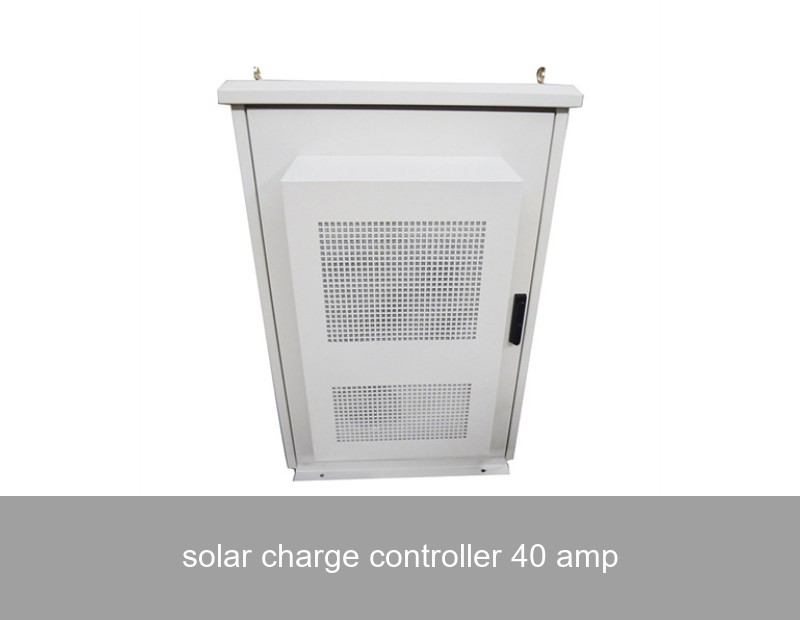
Have you ever wondered how the energy captured by your solar panels is safely and efficiently stored in your batteries? The unsung hero of this process is the solar charge controller. And if you're designing a robust residential or small commercial solar system, the solar charge controller 40 amp often emerges as the ideal workhorse. This article will guide you through its importance, applications, and how choosing the right one, like those integrated into Highjoule's smart systems, can maximize your renewable energy investment.
Table of Contents
What is a 40 Amp Solar Charge Controller?
In simple terms, a solar charge controller is the gatekeeper between your solar panels and your battery bank. Its primary job is to regulate the voltage and current flowing from the panels to the batteries, preventing overcharging, which can severely damage batteries and create safety hazards. The "40 amp" rating specifies its current-handling capacity—it can manage a maximum continuous current of 40 Amps from the solar array.
This makes a 40A controller a versatile choice for medium-sized systems. It's commonly paired with 12V or 24V battery banks and solar arrays ranging from approximately 500W to 1000W, depending on the system voltage. For homeowners, small businesses, or remote installations like agricultural sheds or vacation cabins, this capacity often hits the sweet spot between power, cost, and practicality.
The Core Functions: More Than Just a Regulator
Modern 40 amp controllers, especially Maximum Power Point Tracking (MPPT) types, perform critical tasks:
- Voltage Regulation: Steps down the higher voltage from panel strings to the optimal battery charging voltage.
- Multi-Stage Charging: Implements bulk, absorption, and float stages for faster, healthier battery charging.
- Protection: Offers safeguards against reverse polarity, short circuits, and overloads.
- Monitoring: Many provide data on energy harvested, battery status, and load control.
Why Controller Amperage Matters: The Data Behind Efficiency
Selecting the wrong amperage isn't just a technical misstep; it impacts safety and your return on investment. An undersized controller will constantly overload, potentially shutting down or failing. An oversized one is an unnecessary upfront cost.
Let's break it down with math. For a 24V battery system, a 40 amp controller can handle a maximum solar array power of roughly: 24V x 40A = 960 Watts. For a 12V system, it's about 12V x 40A = 480 Watts. This clearly defines its territory. According to the U.S. Department of Energy, proper sizing of all components, including the charge controller, is critical for system longevity and achieving payback periods.
This is where integrated solutions from providers like Highjoule shine. Our Highjoule H-Energy Hub for residential and commercial storage often features seamlessly integrated, optimally sized MPPT charge controllers. We eliminate the guesswork—the controller is pre-matched to the inverter and battery bank, ensuring all components communicate flawlessly for peak efficiency and safety.

Image Source: Pexels (Free for use)
MPPT vs. PWM: Choosing the Right 40 Amp Technology
Not all 40 amp controllers are created equal. The two main technologies are Pulse Width Modulation (PWM) and Maximum Power Point Tracking (MPPT).
| Feature | PWM Controller | MPPT Controller |
|---|---|---|
| Efficiency | ~70-80% (effectively pulls panel voltage down to battery voltage) | ~90-98% (harvests maximum available power from panels) |
| Best For | Smaller systems where panel voltage closely matches battery voltage | Larger systems, colder climates, or when panel voltage is significantly higher |
| Cost | Lower upfront cost | Higher upfront cost, but greater energy harvest |
| ROI | Good for budget-conscious, low-power apps | Superior long-term ROI due to extra energy yield |
For a 40 amp application seeking to maximize output, an MPPT controller is typically the recommended choice. The efficiency gain, especially on cloudy days or in variable weather, can be substantial. Highjoule's systems exclusively employ advanced MPPT algorithms within our controllers. This ensures that whether it's a residential Highjoule HomePower system in Spain or a commercial Highjoule GridTie setup in California, every possible kilowatt-hour is captured and stored.
Real-World Application: A German Farmstead Case Study
Let's look at a concrete example from Bavaria, Germany. The Huber family farm operates a small dairy and cheese production facility. Their goal was to reduce grid dependence for their cooling systems and workshop, using an existing 2.4 kW rooftop array.
The Challenge: Their old PWM controller couldn't handle the array's output efficiently, especially during cold, sunny mornings when panel voltage spiked. Energy was being wasted.
The Solution: They installed a Highjoule energy storage system featuring a robust 40 amp MPPT charge controller as part of the integrated power management unit. This controller could efficiently convert the higher panel voltage (up to 150V input) into optimal charging current for their 48V lithium-ion battery bank.
The Data-Driven Outcome: After one year:
- Energy Harvest Increase: The MPPT controller provided a 22% increase in harvested energy compared to the old PWM unit during the winter months, as logged by the system's monitoring platform.
- Self-Sufficiency: The farm's grid electricity consumption for the affected loads decreased by 68%.
- Payback: The improved efficiency shortened the calculated payback period for the entire storage system by an estimated 1.5 years.
This case, documented in a Fraunhofer ISE report on decentralized storage, illustrates that the choice of controller technology is not just a spec sheet detail—it has real, measurable economic impacts.

Image Source: Pexels (Free for use)
Selecting and Integrating Your 40 Amp Controller
When considering a solar charge controller 40 amp, ask these questions:
- What is my battery bank voltage? (12V, 24V, 48V?) This defines your system voltage.
- What is my solar array's maximum power output? Ensure it falls within the controller's limits for your system voltage.
- What is the maximum open-circuit voltage (Voc) of my panel string? This must be below the controller's maximum input voltage, especially important in cold climates.
- Do I want a standalone unit or an integrated solution? Standalone units offer flexibility; integrated systems offer optimized communication and control.
For those seeking a hassle-free, high-performance solution, Highjoule's approach to integrated energy storage is worth exploring. We design our Highjoule H-Energy Hub with the charge controller as a core, intelligent component that constantly communicates with the battery management system (BMS) and inverter. This holistic design, backed by our global service network, ensures reliability and maximizes the lifespan of your entire investment, not just the batteries.
The Future of Charge Control
The role of the charge controller is evolving from a simple regulator to an intelligent energy manager. Future iterations will play a bigger role in grid services, dynamic load balancing, and even more sophisticated weather-predictive charging algorithms. The core principle, however, remains: precise, efficient regulation is the foundation of any durable solar-plus-storage system.
Your Energy, Intelligently Managed
Choosing a component like a 40 amp solar charge controller is a critical step in your energy independence journey. It represents the crucial link that determines how much of the sun's free energy you actually get to use. By understanding its function and opting for advanced, integrated technology, you're not just buying a device—you're investing in the overall health and yield of your power system.
Given the rapid advancements in battery technology and smart grid demands, what role do you think such intelligent power management components will play in the next generation of every home and business becoming a proactive energy node?
 Inquiry
 Online Chat