


Understanding the Riello Sentinel Dual SDH 3000: A Deep Dive for Modern Power Protection
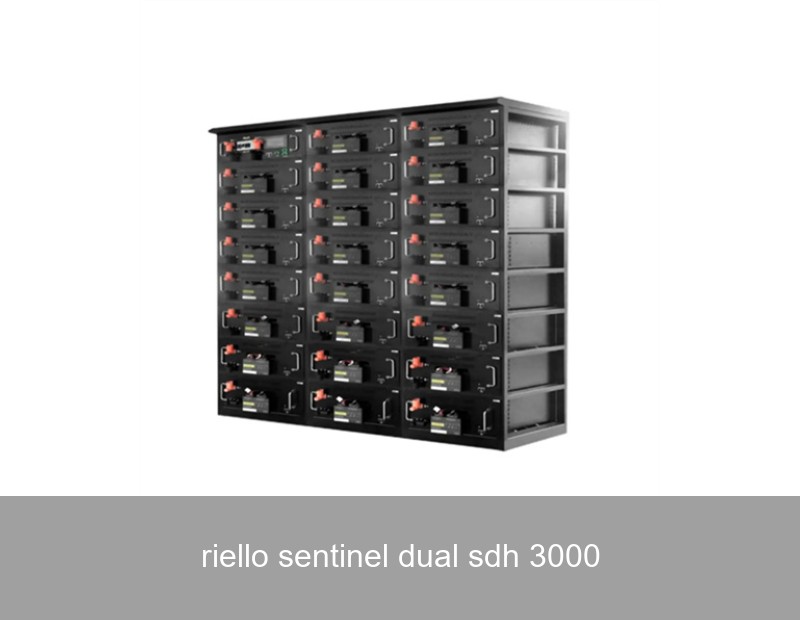
In our increasingly digital and energy-intensive world, a momentary flicker in the power supply is no longer just an inconvenience—it can mean lost data, halted production, and significant financial damage. For facility managers, IT directors, and business owners, ensuring uninterruptible power is a critical operational pillar. This is where advanced Uninterruptible Power Supply (UPS) systems come into play, and one name that consistently stands out in the European and American markets is the Riello Sentinel Dual SDH 3000. This robust 3kVA/3kW online double-conversion UPS is engineered to provide seamless power protection for sensitive equipment. But what makes it a preferred choice, and how does it fit into the broader landscape of energy resilience? In this article, we’ll explore the technology behind it, its key applications, and how it complements modern energy storage solutions from leaders like Highjoule.
Table of Contents
- The Silent Threat: Why Clean, Continuous Power is Non-Negotiable
- Demystifying the Riello Sentinel Dual SDH 3000: Core Technology & Features
- Data & Performance: What the Specs Tell Us
- A Real-World Case Study: Securing a German Data Center
- Beyond the UPS: Integrating with a Holistic Energy Strategy
- The Future of Power Protection: Smart and Sustainable
The Silent Threat: Why Clean, Continuous Power is Non-Negotiable
Think about the last time your home lights dimmed for a second. Now, imagine that same event in a server room, a medical lab, or an automated manufacturing line. The consequences are vastly different. Power problems—sags, surges, harmonics, and complete outages—are more common than most businesses realize. According to the U.S. Department of Energy, power outages cost the American economy an estimated $150 billion annually. In Europe, increasing grid volatility due to the energy transition adds another layer of complexity.
This isn't just about keeping the lights on. It's about protecting the heartbeat of modern business: data integrity, process continuity, and equipment longevity. An online double-conversion UPS like the Riello Sentinel Dual SDH 3000 acts as a "power firewall." It continuously converts incoming AC power to stable DC power and then back to clean, regulated AC power, isolating connected equipment from all grid-born impurities and providing instant battery backup during a blackout.

Image Source: Unsplash - A modern data center, a prime application for the Riello Sentinel Dual SDH 3000.
Demystifying the Riello Sentinel Dual SDH 3000: Core Technology & Features
So, what's under the hood? The Riello Sentinel Dual SDH 3000 is a workhorse designed for professional environments. Let's break down its key features:
- Online Double-Conversion Technology: The gold standard for power protection. It ensures a zero-transfer time to battery, meaning connected equipment never experiences a break in power, even for a millisecond.
- High Efficiency in Eco Mode: It can operate in a high-efficiency "Eco" mode (>98%) when input power is stable, significantly reducing energy costs and operational expenditure (OPEX) without compromising protection.
- Dual Input and Output: This is a standout feature. It offers flexible connection options, allowing for redundancy in power feed sources, which is crucial for critical applications.
- Scalable Runtime: The base unit provides backup for critical minutes. However, by connecting external battery cabinets, runtime can be extended to hours, offering flexibility to meet specific operational needs.
- Advanced Communication & Management: With slots for network management cards (like SNMP, USB, RS232), it integrates seamlessly into existing monitoring systems, allowing for remote management and proactive alerts.
This combination of robustness and intelligence makes it ideal for protecting network closets, telecom installations, industrial PLCs, and point-of-sale systems.
Data & Performance: What the Specs Tell Us
Let's look at the hard data that defines its performance envelope. The following table summarizes the key specifications of the Riello Sentinel Dual SDH 3000:
| Parameter | Specification |
|---|---|
| Power Rating | 3 kVA / 3 kW (Output power factor 1.0) |
| Topology | Online Double Conversion |
| Input Voltage Range | 160 - 276 VAC (without using battery) |
| Output Voltage Regulation | ± 1% |
| Efficiency at Full Load | Up to 93% (Double Conversion); >98% (Eco Mode) |
| Form Factor | Tower or 2U Rack-mountable |
| Standard Communications | USB, RS232, Dry Contacts |
These numbers translate to real-world benefits: wide input voltage tolerance means it can handle poor grid conditions without constantly switching to battery, preserving battery life. The tight output regulation guarantees that sensitive electronics receive perfect sine wave power.
A Real-World Case Study: Securing a German Data Center
Theory is one thing, but let's examine a practical application. A mid-sized colocation data center in Frankfurt, Germany, was experiencing several short-duration voltage sags per month due to local grid construction. These "micro-dips" were causing occasional reboots on non-protected racks, leading to customer complaints and SLA (Service Level Agreement) penalties.
Their Solution: They deployed Riello Sentinel Dual SDH 3000 units in a 2U rack configuration for each of their customer cabinet suites. The dual input feature was connected to two separate PDUs sourced from different distribution paths, adding an extra layer of redundancy.
The Results (12 Months Post-Installation):
- 100% Elimination of downtime events related to power quality.
- Reduced operational stress on in-row cooling systems, which were also protected.
- Estimated €45,000 saved in potential SLA credits and emergency service calls.
- Energy savings of approximately 5% on the protected circuits due to the high-efficiency Eco Mode, a welcome bonus in a high-energy-use facility.
This case highlights how a targeted UPS deployment isn't just a cost but a revenue-protecting and reputation-saving investment.
Beyond the UPS: Integrating with a Holistic Energy Strategy
While a UPS like the Riello Sentinel Dual SDH 3000 is perfect for short-term bridging power, the modern energy landscape demands a broader view. What happens during prolonged outages? How can businesses reduce their grid dependence and energy costs overall? This is where the conversation evolves from pure power protection to comprehensive energy resilience and sustainability.
As a global leader in advanced energy storage, Highjoule provides the next piece of the puzzle. Imagine a system where your critical loads are protected by a robust UPS, and your entire facility's energy backbone is supported by a scalable Battery Energy Storage System (BESS). Highjoule's commercial and industrial energy storage solutions are designed to do exactly that.
Our IntelliBESS platform can be integrated with on-site generation like solar PV. During the day, it stores excess solar energy. During a grid outage, it can provide backup power for hours or even days, far beyond the scope of a standard UPS. Furthermore, during normal operation, it can perform peak shaving—reducing demand charges from the utility—and provide grid services, turning your energy infrastructure into a cost-saving asset. For residential and microgrid applications, Highjoule's systems offer similar intelligence and reliability, ensuring clean power for homes and communities.

Image Source: Unsplash - Commercial solar plus storage, a synergy where UPS and BESS work together.
The Future of Power Protection: Smart and Sustainable
The trajectory is clear. The future lies in intelligent, interconnected energy systems. A UPS is a vital component, but its true potential is unlocked when it's part of a smarter ecosystem. The next generation of systems will feature deeper communication between the UPS, battery storage, renewable sources, and building management systems, all orchestrated by AI-driven software for optimal performance and cost efficiency.
This integrated approach is at the core of Highjoule's mission. We don't just see batteries; we see intelligent nodes in a flexible and sustainable energy network. Whether it's ensuring a server stays online during a 30-second glitch with a Riello Sentinel Dual SDH 3000 or powering a factory through a 4-hour demand response event with a Highjoule BESS, the goal is the same: resilient, efficient, and controllable power.
Is your current power protection strategy just a standalone defense, or is it an integrated part of your broader energy resilience and sustainability roadmap? What would a prolonged outage tomorrow cost your business, and do you have a plan that extends beyond the first few minutes?
 Inquiry
 Online Chat