


How to Safely Store Lithium Batteries: A Complete Guide for Businesses
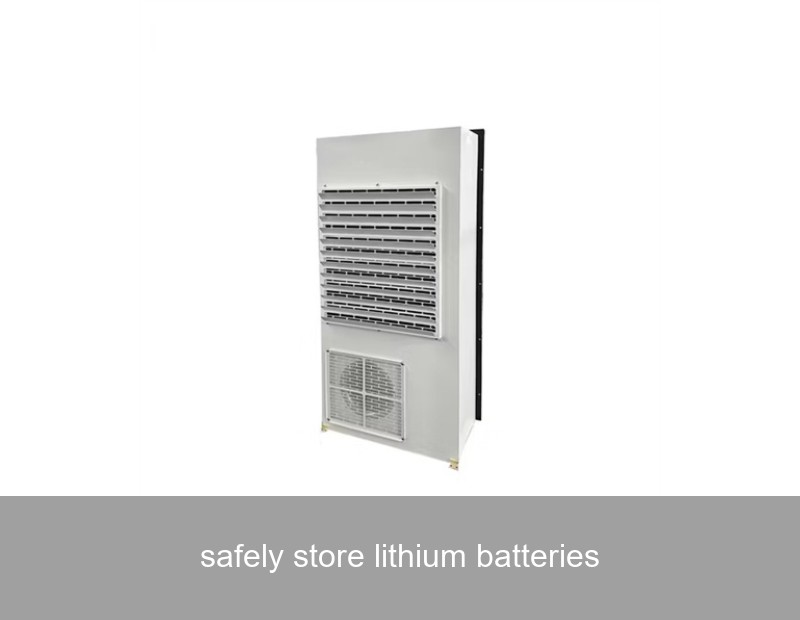
Let's be honest: the lithium-ion battery is the quiet powerhouse of our modern world. From powering electric vehicles and smartphones to backing up data centers and storing solar energy, these energy-dense cells are everywhere. But with great power comes a critical responsibility—safe storage. Whether you're a warehouse manager storing EV pallets, a facility operator with a battery energy storage system (BESS), or a homeowner with a solar-plus-storage setup, knowing how to safely store lithium batteries is non-negotiable. It's not just about protecting an asset; it's about ensuring the safety of people, property, and the continuity of your operations. This guide will walk you through the science, the strategies, and the smart solutions that make safe lithium battery storage achievable.
Why Battery Safety Isn't Just a Feature—It's a Foundation
The imperative to safely store lithium batteries is driven by both risk and regulation. A single thermal event in a poorly managed storage facility can lead to catastrophic fires that are difficult to extinguish, releasing toxic fumes and causing millions in damage. The U.S. Environmental Protection Agency notes that battery-related incidents are a growing concern, urging proper management to prevent fires and environmental contamination (source). Beyond the obvious physical risks, improper storage accelerates battery degradation, slashing the lifespan and return on investment of expensive energy assets. For businesses, this isn't just an operational checklist item; it's a core component of risk management and sustainability pledges.
The Core Challenges: What Makes Storing Lithium Batteries Tricky?
To understand safe storage, we must first understand the adversary. Lithium batteries are not inert blocks; they are complex electrochemical systems.
Thermal Runaway: The Chain Reaction
This is the primary risk. Thermal runaway is an uncontrolled self-heating state. If a cell is damaged, overheated, overcharged, or has an internal fault, it can start to heat up. This heat can propagate to neighboring cells, creating a domino effect that leads to fire or explosion. The goal of safe storage is to prevent the initiation of this chain and, if it starts, to isolate it immediately.
Environmental Factors: Heat, Cold, and Humidity
- High Temperatures: Accelerate chemical aging and increase the risk of thermal runaway. Storage above 30°C (86°F) is considered risky for prolonged periods.
- Extreme Cold: While it slows reactions, storing batteries below 0°C (32°F) can cause permanent capacity loss and internal plating.
- Humidity: Moisture can corrode battery terminals and electronics, leading to short circuits and failures.
The State of Charge (SoC) Conundrum
Storing a lithium battery at 100% charge or at 0% charge is stressful for its chemistry. The sweet spot for long-term storage is typically between 30% and 50% SoC. This minimizes internal pressure and slows degradation. A major challenge is managing this SoC across hundreds or thousands of cells in a warehouse or within a large-scale BESS.

Proper infrastructure, like climate-controlled spaces with clear spacing, is the first step in safe battery storage.
A Blueprint for Safety: How to Safely Store Lithium Batteries
Moving from challenges to solutions, here is a multi-layered framework for creating a safe storage environment.
1. Master Environmental Controls
The storage area must be a dedicated, controlled environment.
| Parameter | Ideal Range | Rationale |
|---|---|---|
| Temperature | 10°C to 25°C (50°F to 77°F) | Minimizes chemical degradation and thermal stress. |
| Relative Humidity | 30% to 60% | Prevents corrosion and condensation. |
| Ventilation | Continuous, passive or active | Disperses any off-gassing and prevents flammable vapor buildup. |
2. Implement a Smart Battery Management System (BMS)
This is the digital guardian. A high-quality BMS is not optional; it's essential. It continuously monitors:
- Individual cell voltage and temperature
- Overall state of charge and health
- It automatically balances cells, enforces safe charge/discharge limits, and can initiate cooling or disconnect the battery in case of anomalies.
3. Invest in the Right Physical Infrastructure
- Fire Suppression: Standard water sprinklers can be ineffective or even dangerous for lithium battery fires. Consider clean agent systems (like NOVEC) or dedicated battery fire suppression systems that cool and flood the unit to stop chain reactions.
- Containment: Store batteries on non-combustible shelves with adequate spacing (per fire codes like NFPA 855). For larger systems or warehouses, consider fire-rated rooms or containers.
- Signage & Accessibility: Clearly mark storage areas, keep them free of clutter, and ensure easy access for emergency responders.
4. Establish Rigorous Operational Protocols
Technology needs human oversight. Protocols should include:
- Regular visual inspections for swelling, leaks, or damage.
- Strict procedures for handling damaged batteries (using dedicated quarantine containers).
- Staff training on lithium battery hazards and emergency response.
- Documented logs of battery inventory, state of charge, and inspection dates.
Case Study: A Berlin Logistics Hub's Proactive Approach
A real-world example underscores the value of this blueprint. A large logistics company in Berlin, Germany, operating a fleet of over 200 electric forklifts and pallet jacks, faced a growing challenge: how to safely store lithium batteries for its entire fleet, including spares. They partnered with Highjoule to implement a turnkey solution.
- Challenge: Storing 250+ large-format Li-ion batteries in a central charging room, managing charge cycles, and mitigating fire risk.
- Solution: Highjoule installed a dedicated, ventilated storage room with:
- Climate control maintaining a steady 20°C (68°F).
- Smart charging stations integrated with Highjoule's Sentinel BMS, which automatically charged batteries to 80% for daily use and reduced them to 50% for weekend storage.
- Thermal imaging cameras and a dedicated aerosol fire suppression system.
- A central dashboard providing real-time SoC, health status, and charge scheduling for all batteries.
- Result (18 Months Later): Zero safety incidents. A 15% reduction in peak energy demand from smart, staggered charging. Projected battery lifespan increased by an estimated 20%, significantly reducing total cost of ownership. This case shows that investing in safe storage directly boosts operational efficiency and bottom-line savings.
The Highjoule Difference: Safety Engineered into Every System
At Highjoule, our mission is to provide more than just storage—we provide peace of mind. Since 2005, we've designed safety into the DNA of our commercial, industrial, and residential energy storage solutions. For businesses looking to safely store lithium batteries, either as part of a stationary energy storage system or for fleet management, our approach is holistic:
- Highjoule Sentinel BMS: Our proprietary system goes beyond basic monitoring. It uses predictive algorithms to detect subtle voltage inconsistencies that precede failure, allowing for proactive maintenance.
- Containerized & Rack-Mounted BESS: Our pre-engineered battery energy storage systems, like the Highjoule CORE series, come with built-in, multi-layer safety: passive fire barriers between modules, integrated cooling and ventilation, and suppression system readiness. They are designed to meet stringent international standards like UL 9540 and IEC 62619.
- Energy Management Software: Our platform allows facility managers to set automated storage protocols, monitor environmental conditions remotely, and generate compliance reports—all from a single interface.

Professional installation and integrated safety systems are critical for large-scale battery storage.
The Future of Safe Storage: Beyond the Box
The field of battery safety is evolving rapidly. Researchers are working on solid-state electrolytes that are less flammable, and "smart" batteries with internal self-healing materials. The National Renewable Energy Laboratory (NREL) continues to publish vital research on battery safety and second-life applications (source). For businesses today, the key is to adopt systems that are not only safe by current standards but are also adaptable to future advancements. This means choosing modular platforms with updatable software and safety protocols.
As you evaluate your own needs to safely store lithium batteries, what's the first risk factor—thermal management, charge control, or staff training—that you need to address to build a truly resilient energy strategy?
 Inquiry
 Online Chat