


Your Practical Guide to Saving Energy in Your Home: From Smart Habits to Smart Systems
You've likely felt the pinch. That monthly energy bill arrives, and the number seems to climb a little higher each season, doesn't it? You're not imagining it. Across Europe and the US, households are grappling with rising electricity costs and a growing desire to reduce their environmental footprint. The good news is that saving energy in your home has evolved far beyond just turning off lights. It's now a smart, integrated journey that combines simple behavioral changes with advanced technology, leading to significant financial savings and a more sustainable lifestyle. This guide will walk you through that journey, from immediate no-cost actions to long-term investments that can transform your home into an efficient, resilient power hub.
The Phenomenon: Why Home Energy Management is Now Critical
For decades, home energy use was a largely invisible process. Power flowed in, we used it, and we paid the bill. Today, three converging factors have made it a front-of-mind issue. First, volatility in energy markets has led to unprecedented price spikes, making efficiency a direct financial defense. Second, increasing extreme weather events have exposed the fragility of centralized grids, prompting homeowners to seek reliability. Third, there's a powerful cultural shift towards sustainability. People want to know their carbon footprint and actively reduce it. Saving energy at home is no longer just about frugality; it's about resilience, independence, and responsibility.
The Data: Where Your Energy (and Money) Really Goes
To save effectively, you need to know what you're saving from. According to the U.S. Energy Information Administration (EIA), the average American home's energy consumption breaks down roughly as follows:
| Home System | Approximate Energy Share | Primary Drivers |
|---|---|---|
| Heating & Cooling (HVAC) | 50-55% | Poor insulation, old equipment, thermostat settings |
| Water Heating | 14-18% | Tank type, temperature setting, insulation |
| Lighting & Appliances | 25-30% | Inefficient models, "phantom load" from standby power |
The picture in Europe is similar, with space heating often claiming an even larger share. This data reveals a clear target: your HVAC system is the biggest player. Addressing this, along with your "always-on" appliances, is where the most impactful savings lie.

Image Source: Unsplash. Understanding your usage is the first step to saving energy in your home.
The Actionable Steps: A Logic Ladder to Home Energy Efficiency
Think of your journey like climbing a ladder. You start with simple, foundational steps that require only behavior change. Then you move to upgrades that require modest investment. Finally, you reach the top rung: transformative technology that redefines your home's relationship with energy.
Step 1: The No-Cost Habit Shift (Phenomenon)
This is about mastering the basics. These actions cost nothing but attention and can shave 5-15% off your bill.
- Thermostat Discipline: Adjusting your thermostat by 7-10°F (4-6°C) for 8 hours a day can save up to 10% annually. Use a programmable schedule or get into the habit before bed and when leaving home.
- Conquer Phantom Loads: Devices like game consoles, chargers, and coffee makers draw power 24/7. Use advanced power strips or simply unplug them when not in use.
- Laundry Smarts: Wash clothes in cold water (90% of the energy goes to heating water) and ensure you run full loads.
Step 2: The Low-Cost Upgrade (Data)
Here, you use data to guide small investments with fast returns.
- Seal and Insulate: The DOE states that sealing leaks and adding insulation can save an average of 15% on heating and cooling costs. Focus on attics, ducts, and around windows/doors.
- LED Revolution: Swap all bulbs to LEDs. They use at least 75% less energy and last 25 times longer than incandescent lighting.
- Smart Power Strips & Plugs: These automatically cut power to devices in standby mode, making Step 1's habit automatic.
Step 3: The High-Impact Investment (Case Study)
This is where modern technology delivers a paradigm shift. The ultimate step in saving energy in your home is to generate, store, and manage your own power intelligently.
Case Study: The Schmidt Residence, Bavaria, Germany
The Schmidt family lived in a 180 sqm detached home with high electricity costs and concerns about grid reliability. In 2022, they installed a 10 kW rooftop solar PV system paired with a Highjoule H2 Residential Energy Storage System (15 kWh capacity). Here are their 18-month results:
- Grid Independence: Increased self-consumption of solar power from ~30% to over 85%.
- Financial Savings: Reduced their annual electricity bill by €1,850. With incentives, the system payback period is estimated at 7-8 years.
- Resilience: During a 12-hour grid outage, the Highjoule system seamlessly powered essential loads (refrigeration, lights, internet, heating circulation pump) without interruption.
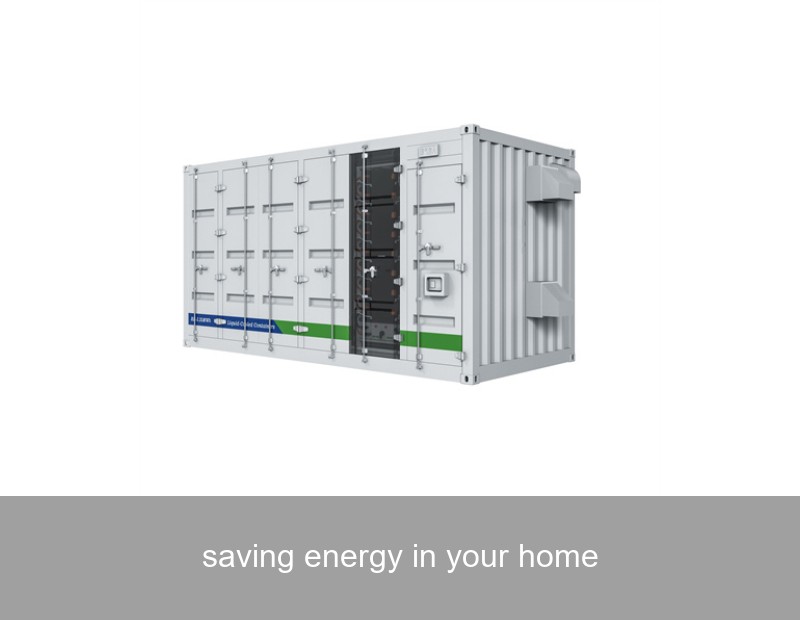
The key wasn't just solar panels; it was the intelligent storage system. The Highjoule H2 uses advanced lithium-iron-phosphate (LFP) battery chemistry for safety and longevity. Its integrated energy management software learns the household's usage patterns, automatically deciding when to store solar energy, power the home, or even sell limited excess back to the grid for optimal savings. This is the core of what companies like Highjoule provide: not just hardware, but a complete smart, efficient, and sustainable power solution.

Image Source: Unsplash. Modern home battery systems, like those from Highjoule, are compact, safe, and intelligent.
The Future: Your Home as a Personal Power Plant
The journey of saving energy culminates in a vision of your home as an active node in the energy ecosystem. With a solar-plus-storage system like those offered by Highjoule, you achieve more than just lower bills. You gain:
- Energy Security: Peace of mind during outages, knowing your home has a backup.
- Time-of-Use Optimization: In regions with variable pricing, your system can avoid drawing expensive grid power during peak hours.
- Grid Support: In advanced configurations, your system can help stabilize the community grid, contributing to broader renewable energy adoption.
Highjoule's expertise, developed since 2005 in providing systems for commercial, industrial, and microgrid applications, is now directly applied to residential solutions. This means homeowners benefit from the same robust, grid-tested technology and software intelligence used in larger installations.
What's Your Home's Energy Personality?
Every home is unique. An older Victorian in London has different needs than a new-build in Arizona. The first step towards your high-impact investment is understanding your specific consumption profile. Which consumes more in your household: the constant hum of the HVAC, the electric vehicle charging overnight, or the pool pump? What one data point from your energy bill would most motivate you to start your energy-saving ladder climb today?
 Inquiry
 Online Chat