


The Ultimate Guide to the Selection of Solar Panels for Your Energy System
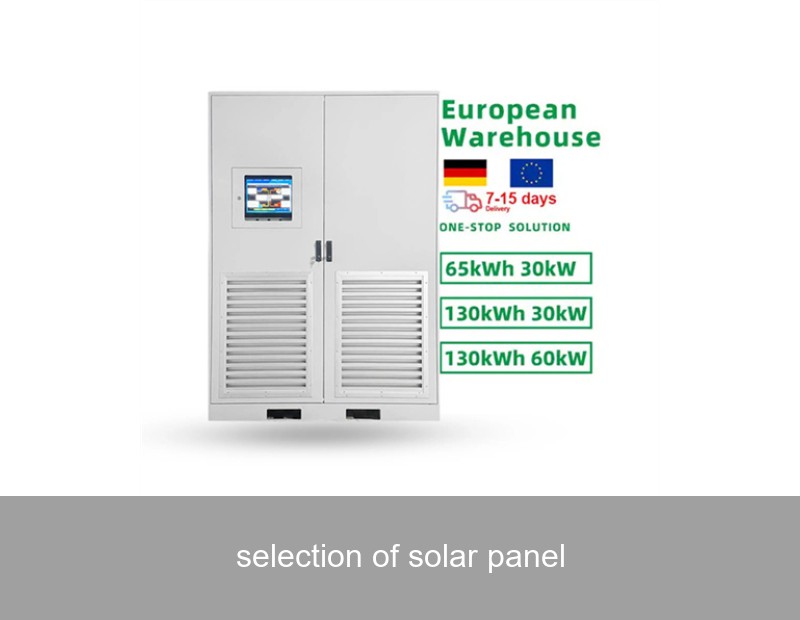
So, you've decided to harness the sun's power. Congratulations! But now you're faced with a crucial question: how do you navigate the complex selection of solar panels? With dozens of brands, varying efficiency ratings, and a sea of technical jargon, choosing the right panel can feel overwhelming. This guide will cut through the noise. We'll explore why the right panel matters more than ever, especially when paired with a smart energy storage system, to maximize your investment and energy independence.
Table of Contents
- The Phenomenon: More Than Just a Roof Decor
- Key Data Points in Your Solar Panel Selection
- The System View: Why Your Inverter and Battery Matter
- Case Study: A German Dairy Farm's Strategic Choice
- Highjoule's Role: Optimizing Your Entire Energy Ecosystem
- Final Considerations for Homeowners and Businesses
The Phenomenon: More Than Just a Roof Decor
Gone are the days when solar panels were a simple, uniform commodity. Today, the selection of solar panels is a strategic decision that impacts your system's performance for 25 years or more. The phenomenon we see across Europe and the U.S. is a shift from viewing panels in isolation to understanding them as the "fuel source" for a broader, intelligent energy ecosystem. The right panel generates more electricity in limited space and performs better in low-light conditions, directly affecting the payoff of your complementary storage system.
Key Data Points in Your Solar Panel Selection
Let's demystify the spec sheet. Here are the non-negotiable metrics to compare.
1. Panel Efficiency
This percentage tells you how effectively a panel converts sunlight into electricity. Higher efficiency means more power from the same roof area. While premium panels may exceed 22%, most quality models sit between 19-21%.
2. Temperature Coefficient
Panels get hotter in the sun, and heat reduces their output. The temperature coefficient (expressed as %/°C) indicates how much power is lost per degree above 25°C. A lower (closer to zero) negative number is better, especially in hot climates like Southern Europe or the American Southwest.
3. Degradation Rate
Solar panels slowly lose output over time. A quality panel will have a first-year degradation of around 2% and a subsequent annual rate of about 0.55% or less, guaranteeing 90%+ output after 10 years and 85%+ after 25 years.
4. Warranty Terms
Look for two warranties: a product warranty (typically 12-15 years) covering defects, and a performance warranty (25-30 years) guaranteeing a minimum power output at the end of its term.
| Selection Factor | What It Means | Why It Matters | Good-to-Great Range |
|---|---|---|---|
| Efficiency | Sunlight-to-electricity conversion rate | Maximizes energy production per square meter | 19% - 22%+ |
| Temperature Coefficient | Power loss per degree Celsius rise | Crucial for performance in hot climates | -0.26%/°C to -0.35%/°C |
| Performance Warranty | Guaranteed output after 25 years | Protects your long-term investment | 85% - 92% of original output |
The System View: Why Your Inverter and Battery Matter
Think of your solar panel as the heart, but it needs a circulatory system. The inverter is the brain, converting DC to AC power, and the battery is the reservoir, storing excess energy. Your selection of solar panels must be compatible with these components. For instance, some advanced systems use DC-optimized setups where power from each panel is managed individually before reaching the battery, mitigating shading issues and maximizing harvest.
This is where a holistic provider like Highjoule adds immense value. Founded in 2005, Highjoule designs systems where the panels, inverter, and battery communicate intelligently. Our H-Energy Hub is a prime example—a modular battery storage system that seamlessly integrates with a wide array of premium solar panels. It doesn't just store energy; it uses AI-driven energy management to decide when to store, when to use, and when to send back to the grid, ensuring every kilowatt-hour your carefully chosen panels produce is used optimally.

Image Source: Unsplash - A modern rooftop solar installation.
Case Study: A German Dairy Farm's Strategic Choice
Let's look at a real-world example from Bavaria, Germany. The Müller dairy farm had high, consistent energy demands for cooling and automation. Their goal was 85% self-sufficiency.
- Challenge: Limited south-facing roof space, frequent partial shading from a large silo.
- Panel Selection: They chose high-efficiency monocrystalline panels (21.8%) with a superior temperature coefficient of -0.29%/°C. This was critical for capturing maximum morning and evening light.
- System Integration: The panels were paired with a Highjoule H-Energy Hub 15kWh storage system and a compatible hybrid inverter.
- Result: The system achieved 92% self-sufficiency in its first year. The intelligent battery management stored excess midday production to power evening milking and cooling, reducing grid reliance. The precise selection of solar panels for their specific conditions, combined with smart storage, led to a projected payback period of under 8 years, well below the German average for commercial installations (Fraunhofer ISE, 2023).
Highjoule's Role: Optimizing Your Entire Energy Ecosystem
At Highjoule, we believe the selection of solar panels is a critical first step, but it's only the beginning. Our expertise lies in architecting the complete solution. For our commercial and industrial clients, our Microgrid Controller can orchestrate multiple energy sources—solar arrays, battery storage, and even backup generators—into a resilient, cost-saving microgrid. For homeowners, our residential systems are designed for scalability, allowing you to start with a solar array and add battery storage when you're ready, without compatibility headaches.
We provide more than hardware; we offer a long-term partnership. Our monitoring software gives you real-time insights into each panel's performance and your battery's status, empowering you to make informed energy decisions.

Image Source: Unsplash - A modern battery energy storage system installation.
Final Considerations for Homeowners and Businesses
As you embark on your selection of solar panels, ask yourself these questions:
- Space vs. Output: Is my roof space limited, making high-efficiency panels a must?
- Climate: Do I experience extreme heat or frequent cloudy weather? (Check that temperature coefficient!).
- Future-Proofing: Am I likely to add an electric vehicle or battery storage in the next 5 years? Choose a system and a partner that can grow with you.
- Total Cost of Ownership: Look beyond the price per panel. Consider degradation rates and warranty terms that protect your yield decades from now.
Remember, the cheapest panel per watt may end up being the most expensive over its lifetime if it degrades faster or isn't optimized for your specific site and energy goals. The true value is unlocked when your panels are part of a cohesive, intelligent system.
Ready to See How the Right Panel Selection and Smart Storage Can Transform Your Energy Profile?
What's the one energy goal you have—be it slashing your utility bill, achieving backup power, or reducing your carbon footprint—that a perfectly harmonized solar and storage system could help you achieve faster?
 Inquiry
 Online Chat