


Finding the Right Server Rack Supplier: A Critical Component for Modern Data and Energy Infrastructure
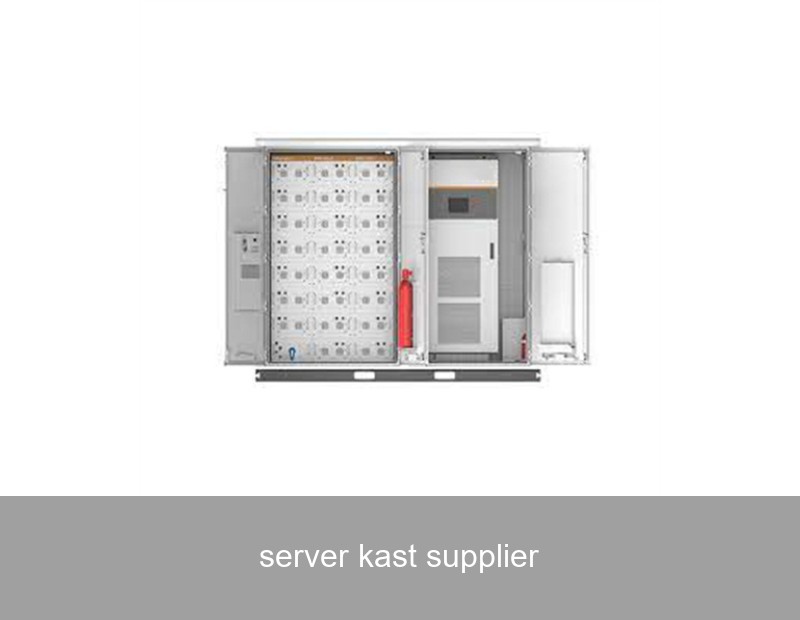
When you think of a server rack supplier, your mind likely jumps to data centers humming with IT equipment. But in today's world, the role of these critical infrastructure components has dramatically expanded. The surge in renewable energy, electric vehicles, and advanced battery storage has created a new, demanding customer: the energy sector. Selecting a server rack supplier is no longer just about housing servers; it's about securing the physical backbone for the intelligent systems that manage our power grid. This article explores why the right enclosure partner is vital for the reliability, safety, and scalability of both data and modern energy storage solutions.
Table of Contents
- Beyond IT: The Evolving Role of Server Racks
- The Energy Sector's Unique Challenge: More Than Just a Box
- Key Criteria for Choosing a Server Rack Supplier in Energy Applications
- The Highjoule Approach: Engineered Enclosures for Power Resilience
- Case Study: Grid Stability in Southern Germany
- Future-Proofing Your Infrastructure
Beyond IT: The Evolving Role of Server Racks
Traditionally, a server rack's job was straightforward: provide a standardized frame to mount servers, switches, and cables while ensuring proper airflow. However, the digital and energy revolutions have converged. Modern Battery Energy Storage Systems (BESS), solar inverters, and grid management systems are packed with sensitive power electronics, controllers, and communication hardware that require robust protection. These components are the "brains" and "nervous system" of any renewable energy installation. They don't just process data; they control megawatts of power. Housing them in a substandard enclosure isn't an option—it's a single point of failure risk for entire power systems.
The Energy Sector's Unique Challenge: More Than Just a Box
Why can't you just use a standard IT rack for energy equipment? The environmental and operational demands tell the story.
- Thermal Management: Power electronics generate significant heat. Inadequate cooling leads to efficiency losses and premature failure. Unlike a data center with controlled ambient air, an industrial or outdoor site may face extreme temperatures.
- Physical Robustness: Enclosures in containerized BESS or industrial sites must withstand vibration, potential corrosion (especially in coastal or harsh environments), and mechanical stress.
- Safety & Compliance: Housing high-voltage components requires strict adherence to safety standards (e.g., UL, IEC). This includes proper segregation, fire resistance, and arc flash mitigation.
- Accessibility & Serviceability: Maintenance crews need safe, logical access to components without risking downtime or safety. Cable management is critical for both safety and airflow.
This is where the choice of your server rack supplier becomes a strategic engineering decision, not just a procurement task.
Key Criteria for Choosing a Server Rack Supplier in Energy Applications
Selecting a partner requires a checklist that goes beyond price per unit. Here’s what to evaluate:
| Criteria | Standard IT Supplier | Specialized Energy Supplier (e.g., Highjoule) |
|---|---|---|
| Design Philosophy | Optimized for data center environments. | Engineered for harsh, industrial, and outdoor conditions. |
| Thermal Solutions | Passive or basic forced air cooling. | Advanced, scalable cooling (fans, air conditioners, liquid-assisted) designed for high heat loads. |
| Safety & Certification | Focus on EMC and basic safety. | Designed with integrated safety features, compliant with regional energy & grid codes. |
| Integration Expertise | Limited to IT hardware. | Deep understanding of BESS components, inverter systems, and SCADA controls. |
| Scalability | Rack-by-rack expansion. | Modular designs that scale from a single cabinet to multi-rack systems within larger containers. |
The Highjoule Approach: Engineered Enclosures for Power Resilience
At Highjoule, our experience as a global provider of advanced energy storage systems directly informs our approach to enclosures. We don't just source racks; we engineer them as integral parts of our smart BESS solutions. For our commercial, industrial, and utility-scale projects, we require enclosures that meet the highest benchmarks for reliability.
Our standard and custom rack solutions are built to house the delicate ecosystem of a storage system: battery management systems (BMS), power conversion systems (PCS), fire detection and suppression controls, and communication hubs. We prioritize:
- Sealed & Filtered Options: To keep out dust, moisture, and corrosive elements in challenging environments.
- Dynamic Cooling Configurations: Using intelligent thermal management that adjusts to load and ambient conditions, maximizing component lifespan and system efficiency.
- Modular & Service-Friendly Design: Swing frames, removable panels, and standardized mounting ensure technicians can perform maintenance quickly and safely, minimizing system downtime.

Credit: ThisisEngineering Raeng / Unsplash. Serviceability is a key design criterion for energy sector enclosures.
Case Study: Grid Stability in Southern Germany
Let's look at a real-world application. In 2022, a municipal utility in Bavaria, Germany, faced grid congestion issues due to high solar PV penetration. Their solution was a 5 MW / 10 MWh battery storage system to provide frequency regulation and peak shaving.
The Challenge: The system's container needed to house over 20 racks of control and power conversion equipment. The local site experienced temperature swings from -15°C to 35°C annually. A standard IT rack setup risked overheating in summer and condensation in winter, threatening the 24/7 grid service contract.
The Solution with Highjoule: We supplied a customized rack solution featuring:
- IP54-rated enclosures for dust and water protection.
- An integrated, redundant cooling system with humidity control.
- Custom busbar and cable routing for high-current applications, improving safety and reducing on-site assembly time by an estimated 30%.
The Result: Since commissioning, the system has achieved >99% availability. The intelligent thermal management has reduced the auxiliary power consumption for cooling by approximately 25% compared to a baseline design, as reported in the utility's internal performance review. This translates directly to higher operational revenue and lower costs. The right server rack supplier partnership was foundational to this success.

Credit: American Public Power Association / Unsplash. Containerized BESS units rely on internally robust rack systems.
Future-Proofing Your Infrastructure
The energy transition is accelerating. Technologies like Virtual Power Plants (VPPs) and AI-driven grid optimization will place even greater demands on the hardware at the edge. The enclosures you choose today must be adaptable. Can they accommodate future communications hardware (e.g., 5G, fiber)? Are they designed for easy component upgrades?
Partnering with a server rack supplier that understands these trajectories—like Highjoule, which designs with future grid services in mind—provides a significant long-term advantage. It's about building resilience into the very frame of your energy assets.
An Open Question to Consider
As you plan your next data or energy infrastructure project, ask yourself: Is my current enclosure strategy merely a cost item, or is it a calculated investment in the longevity, safety, and profitability of my entire system? What single failure in your rack infrastructure would cause the most costly downtime?
 Inquiry
 Online Chat