


How Much Do Solar Panels Cost? A Realistic Breakdown for 2024
So, you're thinking about going solar. It’s a smart move. The idea of clean energy, lower bills, and energy independence is incredibly appealing. But the first question that pops into almost everyone's mind is a practical one: how much do solar panels cost? The answer, like many good things, is "it depends." But don't worry—we're here to demystify the price tag. The true cost isn't just about the panels on your roof; it's about creating a complete, intelligent energy system that delivers value for decades. Let's break it down.
Table of Contents
- The Real Price Tag: Beyond the Panels
- Key Factors That Determine Your Solar Investment
- The Storage Imperative: Why Your Solar Quote Needs a Battery
- Case Study: A Berlin Bakery's Recipe for Savings
- The Highjoule Solution: Intelligent Energy, Predictable Costs
- Making the Decision: Your Path to Solar
The Real Price Tag: Beyond the Panels
When you ask "how much do solar panels cost," most initial quotes focus on the photovoltaic (PV) modules and their installation. In the U.S., the average gross cost for a residential system hovers around $20,000-$30,000 before incentives, according to the National Renewable Energy Laboratory (NREL). In Europe, prices vary by country but follow a similar scale. However, this is just the starting point.
Think of it like buying a car. The sticker price is one thing, but the long-term cost of ownership—fuel efficiency, maintenance, insurance—is what truly impacts your wallet. Solar is similar. The panels generate power when the sun shines, but what about evenings, cloudy days, or during a grid outage? This is where the conversation shifts from simply buying panels to investing in an energy ecosystem.

Image: Solar panels are the starting point of a modern energy system. (Source: Unsplash)
Key Factors That Determine Your Solar Investment
Your final investment is influenced by a combination of location, system design, and components. Here are the primary levers:
- System Size (kW): Driven by your energy consumption. A larger home or business needs a larger system.
- Panel Efficiency & Quality: High-efficiency panels cost more upfront but produce more power in limited space.
- Roof Characteristics: Complexity, material, and angle can affect installation labor.
- Inverter Technology: The brain of your solar system, converting DC to AC power. Microinverters often offer better performance than string inverters.
- Battery Storage: The game-changer. Adding a battery increases initial cost but dramatically increases value and ROI.
- Local Incentives & Regulations: Tax credits (like the U.S. ITC), feed-in tariffs, and local rebates can slash net cost by 30% or more.
| System Component | Cost Consideration | Impact on Value |
|---|---|---|
| Solar Panels | ~25-35% of total system cost | Foundational power generation. |
| Inverter(s) | ~10-15% of total cost | Determines efficiency and monitoring capabilities. |
| Battery Storage | Significant added investment | Enables self-consumption, backup power, and grid services. |
| Installation & Balance of System | ~20-30% of total cost | Quality ensures safety, longevity, and performance. |
The Storage Imperative: Why Your Solar Quote Needs a Battery
Here's the pivotal insight: a solar-only system often leaves 40-60% of the energy it produces to be exported to the grid, frequently at a low buy-back rate. You're generating power at noon but paying high rates to draw from the grid at night. This mismatch caps your savings and leaves you vulnerable to outages.
Integrating a battery storage system transforms the economics. You store your excess solar energy and use it when you need it most. Suddenly, your solar panels' "how much do they cost" question evolves into "how much can they save me?" The answer: much, much more.
- Maximize Self-Consumption: Use your own solar power around the clock, reducing grid dependence by up to 80% or more.
- Backup Power: Keep critical loads running during grid failures—a growing concern in many regions.
- Energy Arbitrage: In areas with time-of-use rates, store cheap solar energy to avoid buying expensive grid power at peak times.
Case Study: A Berlin Bakery's Recipe for Savings
Let's look at a real-world example. A family-run bakery in Berlin, Germany, faced rising energy costs and an unreliable grid that threatened their refrigerated goods. Their 50 kW solar rooftop system was underutilized, exporting most of its afternoon yield.
In 2023, they installed a Highjoule H2.IntelliStore commercial battery system (120 kWh capacity). The results after one year:
- Grid Independence: Increased self-consumption of solar from 35% to 92%.
- Cost Savings: Reduced their overall energy bill by €8,400 annually, accelerating their ROI.
- Risk Mitigation: Provided seamless backup for cold storage during two grid outages, preventing thousands of euros in spoilage.
"The solar panels were a good first step, but the Highjoule battery made the system truly intelligent," the owner noted. "It's not just an expense; it's an asset that protects our business."

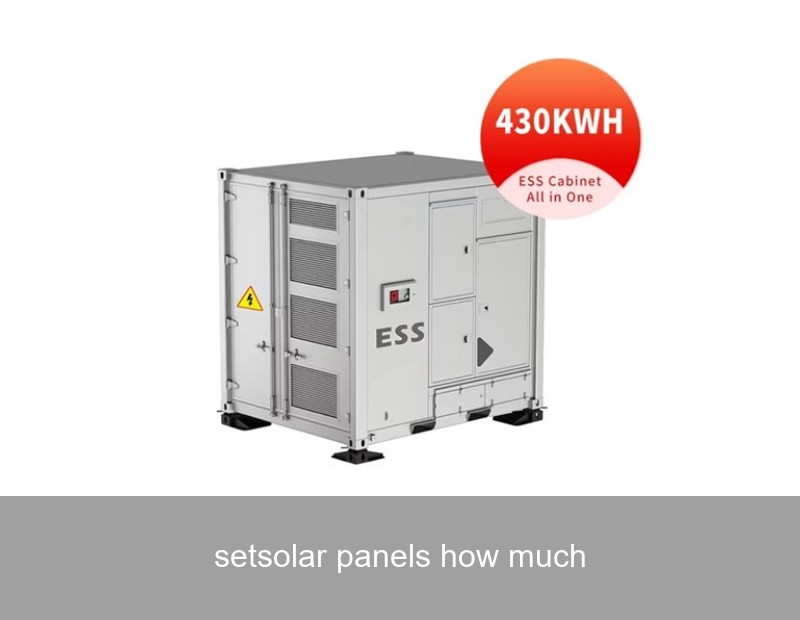
Image: Modern battery storage systems, like those from Highjoule, are key to unlocking solar's full value. (Source: Unsplash)
The Highjoule Solution: Intelligent Energy, Predictable Costs
At Highjoule, we believe the right question isn't simply "how much do solar panels cost," but "what is the total cost and value of a resilient, intelligent energy system?" Since 2005, we've specialized in integrating high-performance solar with advanced battery storage and smart energy management software.
Our approach ensures your investment is optimized from day one:
- Highjoule H2.IntelliStore: Our flagship lithium iron phosphate (LFP) battery systems are built for safety, longevity (10,000+ cycles), and seamless integration with new or existing solar arrays.
- Adaptive Energy OS: Proprietary software that learns your energy patterns, automatically deciding when to store, use, or (where beneficial) sell energy back to the grid, maximizing your financial return.
- Tailored Solutions: From residential homes in California to industrial microgrids in Scandinavia, we design systems that meet specific load profiles, regulatory environments, and financial goals.
By bundling intelligent storage with solar, we help customers lock in a predictable, long-term energy cost, shielding them from volatile utility rates. The initial investment is comprehensive, but the long-term savings and security are unequivocally greater.
Making the Decision: Your Path to Solar
So, how much do solar panels cost? As we've seen, the net price after incentives is more accessible than ever, but the real value is unlocked when you pair them with storage. Your next step is to move from a generic quote to a personalized energy plan.
This requires a detailed analysis of your past energy bills, your physical site, your local utility's rate structure, and available incentives. A reputable provider will offer this audit and present a clear picture of your upfront cost, financing options, and projected 20-year savings.
What specific challenge is driving your interest in solar—is it unpredictable bills, a desire for sustainability, or concern about grid reliability? Understanding your primary goal is the key to designing the right system for your needs.
 Inquiry
 Online Chat