


Setting Up a Home Solar Power System: A Practical Guide for Energy Independence
Have you ever looked at your electricity bill and wondered, "What if I could generate my own power?" You're not alone. Across Europe and the United States, more homeowners are turning to the sun for a reliable, clean, and ultimately cost-effective energy solution. Setting up a home solar power system is no longer a futuristic concept; it's a practical home upgrade that offers control over energy costs and a tangible step towards sustainability. But where do you start? This guide will walk you through the key considerations, from initial planning to long-term benefits, and show how modern technology makes energy independence more achievable than ever.
Table of Contents
- The Rise of Home Solar: More Than Just Panels
- Key Components of a Modern Solar Power System
- The Planning Phase: Site, Size, and Savings
- Beyond Panels: The Critical Role of Energy Storage
- How Highjoule Empowers Your Solar Journey
- Your Path to Power: What's Your First Step?
The Rise of Home Solar: More Than Just Panels
The journey to setting up a home solar power system begins with understanding the "why." The phenomenon is clear: volatile energy prices and growing climate awareness are driving adoption. Let's look at the data. According to the International Energy Agency (IEA), solar PV is on track to become the largest source of installed power capacity globally by 2027. In the U.S., residential solar installations have seen consistent double-digit growth for years.
But here's the insight many miss: today's solar installation is an intelligent energy ecosystem. It's not just about panels on your roof producing power when the sun shines; it's about managing that energy smartly throughout the day and night, maximizing self-consumption, and providing backup during outages. This holistic approach is what turns a simple installation into a true home power station.
Image: A modern home solar array. Source: Unsplash
Key Components of a Modern Solar Power System
Understanding the core parts demystifies the process. A robust system consists of several integrated components:
- Solar Panels (PV Modules): Convert sunlight into direct current (DC) electricity. Efficiency and durability are key.
- Inverter(s): The brain of the operation. Converts DC electricity from the panels into usable alternating current (AC) for your home. Modern systems often use module-level power electronics (MLPEs) like microinverters for better performance.
- Mounting System & Racking: The secure, engineered framework that attaches panels to your roof or ground.
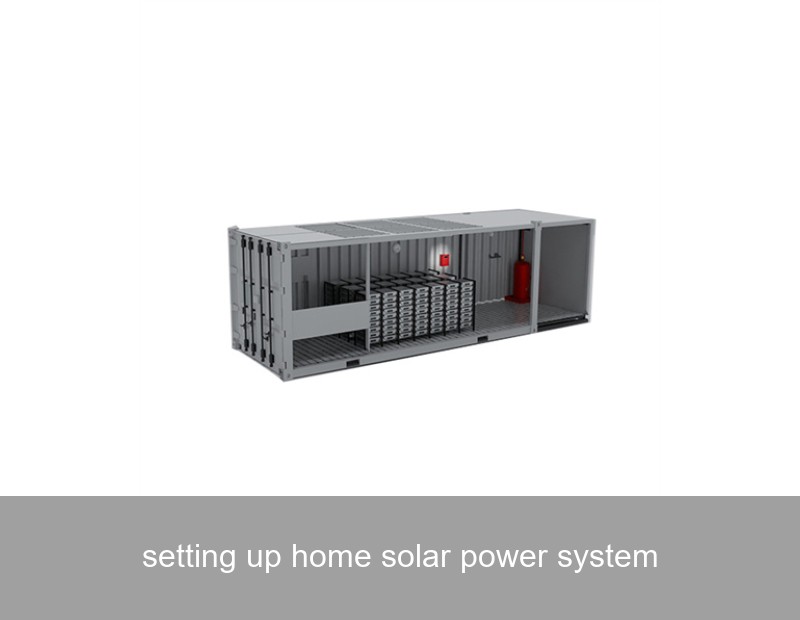
- Energy Storage System (Battery): The game-changer. Stores excess solar energy for use at night, during cloudy days, or grid outages.
- Energy Management System (EMS): Intelligent software that optimizes energy flow between panels, battery, home, and the grid.
Think of it this way: the panels are your power plant, the inverter is the translator, and the battery with EMS is your personal energy bank and manager.
The Planning Phase: Site, Size, and Savings
Successful setting up of a home solar power system hinges on careful planning. This phase answers three critical questions.
1. Site Assessment: Not all roofs are created equal. A south-facing roof (in the Northern Hemisphere) with minimal shading is ideal. Professionals will analyze your roof's pitch, orientation, and structural integrity. Tools like Google's Project Sunroof can provide a preliminary estimate.
2. System Sizing: How big should your system be? This isn't about filling the roof, but matching your energy profile. Installers examine your past utility bills (usually 12 months) to calculate your average consumption (measured in kilowatt-hours, kWh). The goal is often to offset 70-100% of your usage. A typical home in Europe might need a 4-8 kW system, while a larger U.S. home might require 8-12 kW.
3. Financials & Incentives: The cost has fallen dramatically, but incentives sweeten the deal. In the U.S., the federal Investment Tax Credit (ITC) allows you to deduct a significant percentage of the system cost from your taxes. Many states offer additional rebates. In Europe, while feed-in tariffs are phasing out, high self-consumption rates and rising grid prices make storage-coupled systems highly economical. The financial model shifts from selling power back to the grid to using as much of your own cheap, clean power as possible.
Case Study: A Real-World Look at Savings in Hamburg, Germany
Let's make this concrete. The Müller family in Hamburg, Germany, installed a 7.2 kWp solar system coupled with a 10 kWh battery in early 2022. Their goals were to reduce their reliance on the volatile grid and increase their self-sufficiency.
| Metric | Before Installation (2021) | After Installation (2023) |
|---|---|---|
| Annual Grid Electricity Purchased | 5,800 kWh | 1,200 kWh |
| Self-Consumption Rate (using their own solar) | 0% | 82% |
| Annual Electricity Cost | €2,200 (at ~€0.38/kWh) | €456 (grid) + System Financing |
| Energy Independence During 1-Day Grid Outage | 0 hours (no backup) | Fully powered for 24+ hours |
Their system paid for itself in under 7 years, and they now enjoy predictable energy costs and peace of mind. This case highlights the transformative impact of combining solar with storage, a combination we at Highjoule believe is essential for modern energy resilience.
Beyond Panels: The Critical Role of Energy Storage
This brings us to the most crucial evolution in setting up a home solar power system: the battery. Without storage, excess solar energy produced at midday is exported to the grid (often at low rates), and you draw power back at night (at high rates). A battery breaks this cycle.
- Maximizes Self-Consumption: Store your excess solar for use when you need it most.
- Provides Backup Power: Keeps essential loads running during grid failures—a concern growing in both California and parts of Europe.
- Enables Time-of-Use (TOU) Optimization: In regions with TOU rates, you can avoid drawing power during expensive peak hours.
Choosing the right battery involves looking at usable capacity (kWh), power rating (kW), depth of discharge, cycle life, and the intelligence of its built-in management system. It's the cornerstone of a truly resilient home.

Image: A modern home battery storage unit. Source: Unsplash
How Highjoule Empowers Your Solar Journey
This is where Highjoule's expertise becomes your advantage. Since 2005, we've been at the forefront of advanced energy storage technology, and we design our solutions with the homeowner in mind. For those setting up a home solar power system, our products integrate seamlessly to create a smarter, more efficient whole.
Our EverHome Series of residential battery storage systems is built for safety, longevity, and simplicity. With a compact design, modular scalability (from 5 kWh to over 30 kWh), and our proprietary Adaptive Energy Operating System (AEOS), the EverHome doesn't just store energy—it learns and adapts to your household's patterns. AEOS intelligently prioritizes solar self-consumption, can be configured for backup power, and even allows for future participation in virtual power plant (VPP) programs, potentially generating additional revenue.
We support homeowners and our network of certified installers across Europe and North America with comprehensive technical design support, ensuring your system is optimized for your specific needs and local climate. Think of Highjoule as the partner that provides the core intelligence and resilience for your solar investment, long after the panels are installed.
Your Path to Power: What's Your First Step?
Setting up a home solar power system is a significant decision, but it doesn't have to be overwhelming. The journey begins with a single, actionable step: understanding your own energy story. Pull out your last year's electricity bills. What's your average monthly consumption? When is your usage highest? Do you have an electric vehicle or plan to get one?
Armed with this information, you can start having informed conversations with qualified installers. Ask them not just about panel brands, but about their experience with integrated storage systems and how they plan to design for your 24/7 energy needs, not just your daytime production.
So, we leave you with this question to ponder: If your grid power went out tomorrow, what would you want to keep powered in your home, and how would a personal energy system change your sense of security and independence?
 Inquiry
 Online Chat