


Unlock Your Solar Potential: How a Solar Energy Simulator Can Guide Your Investment
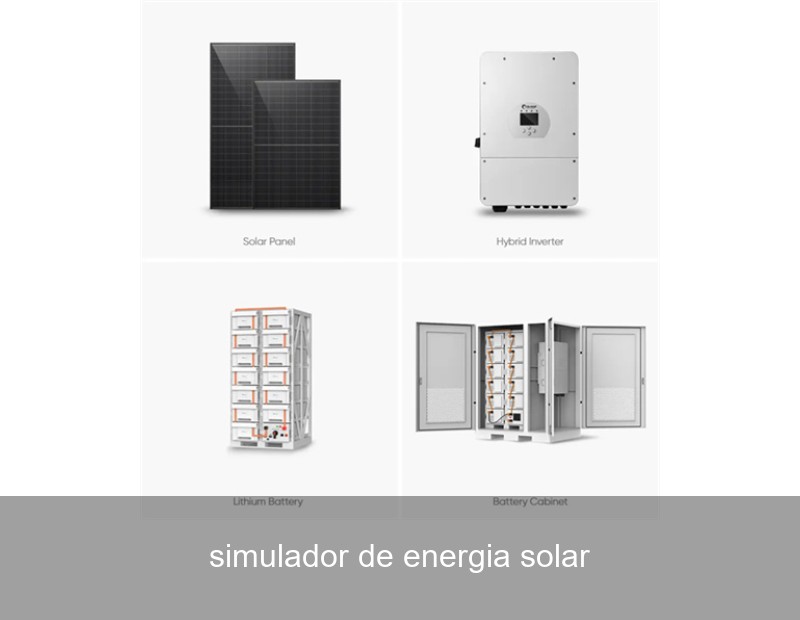
Have you ever looked at your rooftop and wondered, "How much solar power could I really generate?" Or perhaps, as a business owner, you're considering a solar-plus-storage system but are unsure about the financial returns. You're not alone. The leap to renewable energy is exciting, but it's often clouded by uncertainty. This is where a solar energy simulator becomes your most valuable tool. By modeling your unique situation, it transforms guesswork into a clear, data-driven roadmap for energy independence and savings. Let's explore how this technology works and why it's the critical first step for any solar project.
Table of Contents
What is a Solar Energy Simulator?
Think of a solar energy simulator as a sophisticated digital crystal ball for your power needs. It's a software platform that uses complex algorithms and vast meteorological databases to predict the performance of a photovoltaic (PV) system at a specific location. By inputting details like your address, roof dimensions, electricity consumption patterns, and local utility rates, the simulator generates a detailed report. This report typically includes:
- Estimated Annual Energy Production (kWh): How much electricity your system will generate.
- Financial Savings & Payback Period: Projected reduction in your electricity bills and the time it takes for the system to pay for itself.
- System Size Recommendation: The optimal number of panels and inverter capacity for your needs.
- Environmental Impact: An estimate of your carbon footprint reduction.
For businesses and industries, advanced simulators go further, modeling complex load profiles, demand charges, and the integration of battery storage systems. This level of analysis is crucial for maximizing return on investment (ROI) and ensuring grid stability.
The Data Gap: Why Simulation Matters
The old way of sizing a solar system often relied on rough estimates and generic rules of thumb. This led to two common problems: undersizing (leaving savings on the table) and oversizing (incurring unnecessary upfront costs). A precise simulation closes this data gap. According to the National Renewable Energy Laboratory (NREL), accurate modeling can improve the predicted performance of a PV system by 5-10%, which directly translates to more reliable financial projections.
For commercial and industrial (C&I) applications, the stakes are even higher. An inaccurate model can misrepresent the impact on peak demand charges—a major component of electricity costs for factories, warehouses, and large facilities. A robust solar energy simulator that includes storage modeling can show how to strategically dispatch stored energy to shave those peak demands, unlocking deeper savings that panels alone cannot achieve.
Key Inputs: What Goes Into a Good Solar Simulator?
Not all simulators are created equal. The accuracy of the output depends entirely on the quality and granularity of the inputs. Here are the non-negotiable data points:
| Input Category | What It Is | Why It Matters |
|---|---|---|
| Location & Solar Irradiance | Precise GPS coordinates and historical weather/insolation data. | Sunshine varies by region, street, and even roof plane. High-resolution data is key. |
| Site-Specific Geometry | Roof tilt, azimuth (orientation), and shading from trees or chimneys. | A south-facing roof in Arizona performs vastly differently than an east-facing one in Germany. |
| Energy Consumption Profile | Hourly, daily, and seasonal electricity usage data from utility bills. | To size a system that meets your actual consumption patterns, not just your annual total. |
| Financial Parameters | Local utility rates, net metering policies, incentives (ITC, rebates), and financing costs. | This turns energy data into a clear financial model, showing cash flow and ROI. |
At Highjoule, our pre-sales engineering process begins with this exact depth of simulation. We leverage industry-leading software combined with proprietary analysis tools to model not just solar, but the integrated performance of our HPS Series commercial battery storage systems. This ensures the system we design delivers the resilience and economics promised.
Beyond Panels: Simulating Storage for True Resilience
Solar panels are a fantastic start, but the modern energy landscape demands more. For true energy independence and protection against outages or volatile energy prices, pairing solar with a battery energy storage system (BESS) is the answer. This is where a basic solar simulator falls short, and an integrated solar-plus-storage simulator is essential.
An advanced simulator will model scenarios like:
- Self-Consumption Optimization: Storing excess solar generation for use at night, maximizing your own clean energy.
- Peak Shaving: Automatically discharging the battery during periods of high grid demand to reduce costly demand charges—a critical feature for C&I clients.
- Backup Power Protocols: Simulating outage events to ensure the system can prioritize critical loads for the required duration.

Image: Advanced energy storage systems, like those from Highjoule, require sophisticated simulation for optimal integration. (Photo by American Public Power Association on Unsplash)
Highjoule's expertise lies in this integrated approach. Our systems are managed by the EnergyOS™ intelligence platform, which uses real-time data and predictive algorithms to make optimal dispatch decisions—decisions that are first validated and fine-tuned in the simulation phase of our project design.
Case Study: A U.S. Manufacturing Plant's Journey
Let's look at a real-world application. A mid-sized automotive parts manufacturer in Ohio was facing annual electricity costs of over $480,000, with nearly 40% attributed to demand charges. Their goal was to reduce costs, lock in long-term energy pricing, and achieve backup power for critical assembly lines.
The Process:
First, Highjoule's team used high-fidelity simulation software to model the facility's complex load profile against local irradiance data. The initial solar-only model showed good savings but left significant demand charges unaddressed.
The Integrated Solution:
We then simulated adding a 500 kW / 1 MWh Highjoule HPS battery system. The model optimized the charge/dispatch schedule to target peak demand periods.
The Results (Simulated vs. Projected):
- Annual Energy Cost Reduction: Increased from 28% (solar-only) to 52% with solar+storage.
- Demand Charge Reduction: Peak demand was reduced by over 60%, tackling the largest cost driver.
- ROI Period: The integrated system showed a payback period of just under 6 years, thanks to combined federal incentives and operational savings.
- Backup Power: The simulation confirmed the system could provide 4 hours of backup for critical loads, ensuring production continuity.
This data-driven blueprint gave the manufacturer the confidence to proceed. The project is now in the commissioning phase, with performance metrics closely tracking the original simulation. You can explore more about the importance of storage for grid stability from the U.S. Department of Energy.
From Simulation to Solution: Choosing the Right Partner
A solar energy simulator provides the map, but you need an experienced guide for the journey. The transition from a digital model to a physical, high-performing energy asset requires deep technical expertise in system design, component selection, and grid interconnection.
This is where partnering with a seasoned provider like Highjoule makes all the difference. Since 2005, we've moved beyond being just a hardware supplier to become a full-scope solution partner. Our process starts with the meticulous simulation we've discussed, ensuring every recommendation is tailored. We then deliver:
- High-Efficiency, Bankable Hardware: Our containerized HPS Series for C&I and microgrids, and modular HRS Series for residential and small commercial applications, are known for their safety, longevity, and performance.
- Intelligent Energy Management: The EnergyOS™ platform is the brain of the system, ensuring it adapts to changing conditions to always deliver maximum value.
- End-to-End Project Support: From permitting and financing assistance to installation oversight and long-term maintenance, we de-risk the entire process.
Whether you're a homeowner in Spain, a factory owner in Texas, or developing a community microgrid in Germany, the principle is the same: knowledge is power. A detailed simulation is the knowledge that empowers your investment in a sustainable, resilient, and cost-effective energy future.
Ready to see your own potential? What would a 50% reduction in your energy costs do for your business's competitiveness or your household's budget?
 Inquiry
 Online Chat