


Solar Excess Supplier: The Key to Unlocking Your Solar Investment's Full Potential
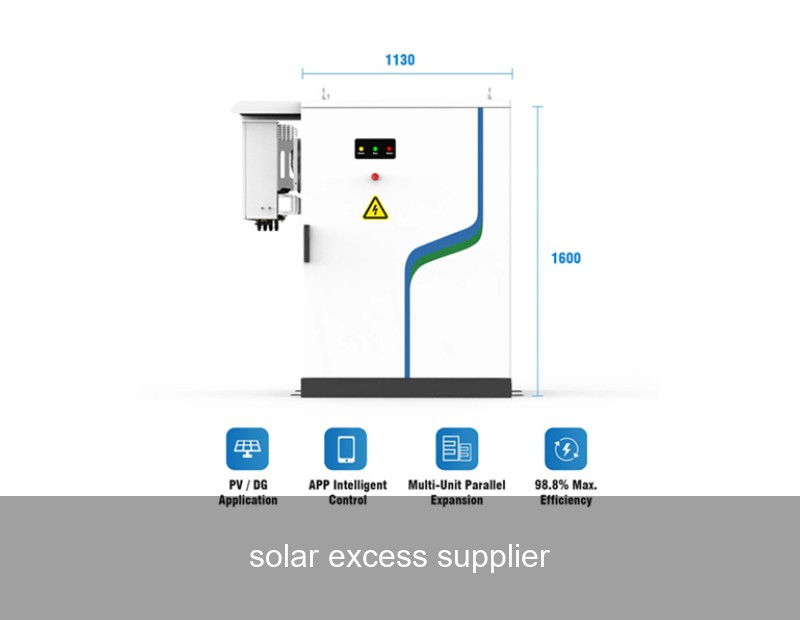
You've made the smart move to solar power. Your panels are soaking up the sun, reducing your electricity bills and your carbon footprint. But have you ever watched your energy monitor on a brilliantly sunny day and wondered, "Where is all that extra power going?" This common scenario introduces a critical player in the modern energy ecosystem: the solar excess supplier. This isn't just about selling surplus kilowatt-hours; it's about intelligently managing, storing, and utilizing every bit of energy your system produces to maximize independence, resilience, and return on investment.
Table of Contents
- The Phenomenon: Wasted Sunshine, Missed Opportunity
- The Data: The Grid's Limitations and Your Financial Loss
- The Solution: Becoming Your Own Solar Excess Supplier
- How Highjoule Empowers Prosumers as Solar Excess Suppliers
- Case Study: A German Bakery's Recipe for Energy Independence
- The Future Landscape: Beyond Self-Consumption
The Phenomenon: Wasted Sunshine, Missed Opportunity
For most solar panel owners, the generation curve looks like a bell: low in the morning, peaking at midday, and tapering off in the evening. However, your energy consumption curve often looks completely different—high in the mornings and evenings when the sun is low. This fundamental mismatch creates the "solar excess" phenomenon. Traditionally, this surplus is fed back into the main grid, often for a modest feed-in tariff. You become a supplier to the utility, but on their terms, at a price significantly lower than what you pay to buy power back from them at night. This cycle leaves a substantial portion of your solar investment's value on the table.

Image Source: Unsplash - Visual representation of energy curve mismatch.
The Data: The Grid's Limitations and Your Financial Loss
The financial impact is not theoretical. In markets like California, with high solar penetration, grid operators like CAISO report instances of "negative pricing" during peak solar hours, where the value of exported power plummets. For the prosumer, this translates to a poor return on exported energy. Meanwhile, electricity prices during peak evening hours remain stubbornly high. Let's break down a simple example:
| Scenario | Solar Energy Produced | Energy Used Directly | Excess Energy to Grid | Energy Bought from Grid (Evening) | Net Financial Position |
|---|---|---|---|---|---|
| Without Storage | 40 kWh | 15 kWh (saves at retail rate) | 25 kWh (sold at low feed-in tariff) | 10 kWh (bought at high peak rate) | Moderate Savings |
| With Storage (As Your Own Supplier) | 40 kWh | 15 kWh (saves at retail rate) | 25 kWh stored for later use | 0 kWh (use stored energy) | Maximized Savings & Independence |
The data is clear: relying solely on the grid to handle your solar excess means accepting a significant loss in potential value and control.
The Solution: Becoming Your Own Solar Excess Supplier
The most efficient and empowering solution is to become your own solar excess supplier. This is achieved by integrating a smart battery energy storage system (BESS) with your solar array. Think of it as building your personal, mini energy grid. Instead of sending excess power out, you capture it, store it, and become the supplier of your own electricity precisely when you need it most. This shift transforms your relationship with energy:
- Maximized Self-Consumption: Use more of the clean energy you produce, sometimes exceeding 80-90% of your total generation.
- Peak Shaving: Avoid drawing expensive power from the grid during peak rate periods by discharging your stored energy.
- Backup Power: Maintain essential power during grid outages, a feature becoming increasingly valuable.
- Grid Services: In some markets, advanced systems can participate in grid-balancing programs for additional revenue.
How Highjoule Empowers Prosumers as Solar Excess Suppliers
This is where Highjoule's expertise comes into play. Since 2005, we have been at the forefront of designing intelligent storage solutions that turn solar panel owners into savvy, independent energy managers. Our systems are engineered to be the ultimate solar excess supplier platform for your home or business.
Highjoule's HES Series (Home Energy System) is a prime example. It's not just a battery; it's an integrated energy management system. Its AI-driven software constantly learns your consumption patterns, weather forecasts, and utility rate schedules. It automatically decides the most economical moment to store solar excess, when to discharge to power your home, and even when to engage in grid services if beneficial. For commercial and industrial clients, our CES Series (Commercial Energy System) offers scalable, high-power solutions that manage solar excess for large facilities, providing critical demand charge reduction and operational resilience.
Our philosophy is simple: your solar excess is a valuable asset. Our technology ensures you retain control and maximize its value, turning every sunbeam into a source of long-term savings and security.

Image Source: Unsplash - Example of a modern home energy storage setup.
Case Study: A German Bakery's Recipe for Energy Independence
Let's look at a real-world application. Bäckerei Schmidt, a mid-sized bakery in Bavaria, Germany, faced a classic challenge. Their solar PV system produced significant excess during the day, but their ovens, refrigeration, and lighting drove massive energy consumption from early morning and into the evening. They were selling excess solar at €0.08/kWh but buying grid power at an average of €0.32/kWh, with high peak demand charges.
In 2022, they partnered with Highjoule to install a tailored CES 50 system. Here are the results after one year:
- Solar Self-Consumption Rate Increased: From 35% to 82%.
- Grid Energy Purchased During Peak Hours: Reduced by 95%.
- Annual Energy Cost Savings: €18,700.
- Demand Charge Reduction: 40%, saving an additional €4,200 annually.
- ROI Period: Achieved in under 5 years.
"The Highjoule system didn't just store our extra solar power," said the owner. "It made us the master of our energy flow. We now bake with our own stored sunshine, insulating our business from price spikes and grid instability. We've truly become our own solar excess supplier." This case exemplifies the tangible benefits of moving beyond simple solar generation to intelligent storage and management.
The Future Landscape: Beyond Self-Consumption
The role of a solar excess supplier is evolving. With the rise of virtual power plants (VPPs) and dynamic energy markets, platforms like those from Highjoule are enabling prosumers to aggregate their stored excess and participate in stabilizing the broader grid. By providing frequency regulation or capacity during extreme demand, your home or business battery can generate revenue, turning your energy asset into an active participant in the clean energy transition. Research from institutions like the National Renewable Energy Laboratory (NREL) highlights the immense grid value of aggregated distributed storage.
This points to a future where every solar+storage system is a node in a decentralized, resilient, and efficient energy network. The question is no longer just about saving on your bill; it's about what role you want to play in the new energy paradigm.
Ready to Explore Your Potential?
Could your home or business be doing more with the sunshine it captures? What would total energy security and maximized financial return look like for you? We invite you to assess your current solar usage and explore how Highjoule's intelligent storage solutions can transform you from a passive producer into an active, empowered solar excess supplier.
 Inquiry
 Online Chat