


Sistema de Calentamiento Solar de Agua: A Complete Guide to Efficiency and Energy Independence
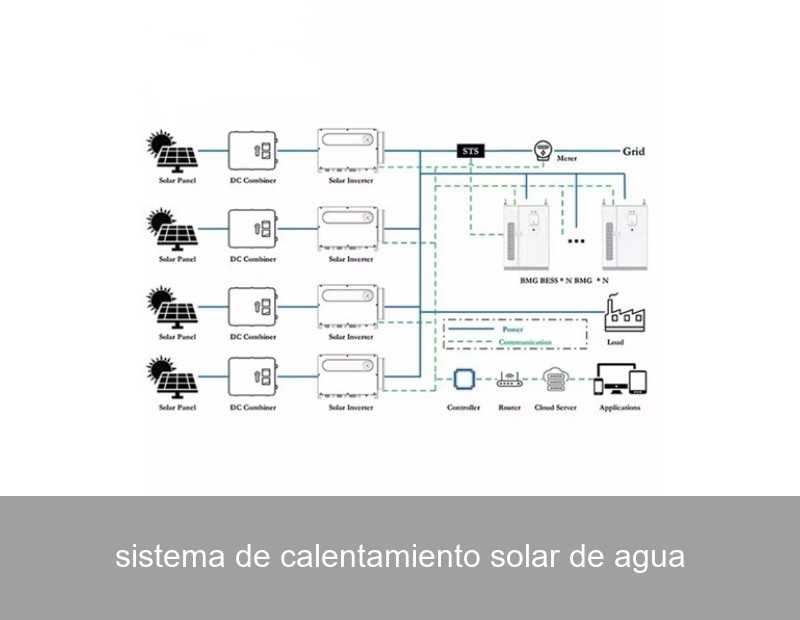
Have you ever looked at your energy bill and wondered, "There must be a better way"? For homeowners and businesses across Europe and the U.S., a sistema de calentamiento solar de agua (solar water heating system) is becoming that better way. It's a mature, reliable technology that harnesses free energy from the sun to provide a significant portion of your hot water needs, slashing energy costs and carbon footprint. But what happens when the sun sets, or during a stretch of cloudy days? That's where modern energy storage intelligence comes into play, transforming a simple solar thermal solution into a pillar of true energy resilience. As a Highjoule product and technology expert, I'll guide you through how integrating smart storage elevates this classic technology.
Table of Contents
How a Solar Water Heating System Works: The Core Components
At its heart, a sistema de calentamiento solar de agua is elegantly simple. It captures sunlight and converts it directly into heat for your water. The main components are:
- Solar Collectors: These are panels mounted on your roof. There are two main types: flat-plate collectors and evacuated tube collectors, with the latter being more efficient in colder or cloudier climates.
- Heat Transfer System: A fluid (often a glycol-water mix to prevent freezing) circulates through the collectors, absorbs heat, and carries it away.
- Storage Tank: This is the traditional "battery" for heat. The hot transfer fluid passes through a heat exchanger inside an insulated water tank, warming the potable water for later use.
- Backup Heating System: Typically, an electric element or a connection to a gas boiler provides supplemental heat when solar input is insufficient.
This system is fantastic for direct displacement of fossil fuels for water heating. According to the U.S. Department of Energy, a well-installed system can provide 50-80% of a household's annual hot water needs. But the dependency on immediate sunlight or a conventional backup source reveals a limitation.

A typical solar water heating system diagram. The insulated storage tank is key for short-term heat retention.
The Critical Storage Gap in Solar Thermal
Here’s the phenomenon many users face: You have a sunny day, your tank is scalding hot by noon, and you've got more thermal energy than you can use. By evening, after a few showers, the temperature drops. Then, a cloudy day follows, and your system relies entirely on the grid or gas backup. The thermal storage tank handles short-term shifts (day to night), but it cannot "stockpile" excess solar energy for multiple sunless days.
This is the storage gap. The true potential of your sistema de calentamiento solar de agua isn't fully realized because there's no efficient, long-term buffer. Furthermore, if your backup is an electric heater, you're subject to peak-time electricity prices and grid volatility. The solution lies not in replacing your solar thermal system, but in augmenting it with intelligent electrical storage.
The Case for Resilience: Data and Real-World Demands
Let's look at the data. Energy prices in Europe and parts of the U.S. have seen significant volatility. The quest for energy independence isn't just about cost savings; it's about reliability. For commercial applications like hotels, laundries, or food processing—where consistent hot water is critical—a disruption is costly.
Consider this case study from a medium-sized dairy farm in Bavaria, Germany. The farm uses a large sistema de calentamiento solar de agua for cleaning and processing, but their electric boiler backup was a major cost driver, especially during early morning operations. By integrating a Highjoule C&I Battery Energy Storage System (BESS) charged by a complementary rooftop PV array, they transformed their energy profile.
| Metric | Before Highjoule BESS | After Highjoule BESS Integration |
|---|---|---|
| Grid Electricity for Water Heating Backup | ~35,000 kWh/year | ~8,000 kWh/year |
| Energy Cost for Hot Water Backup | €10,500/year (est.) | €2,400/year (est.) |
| Solar Self-Consumption (PV) | 40% | 92% |
| Grid Dependency During Peak Times | High | Minimal |
The Highjoule system stores excess solar electricity from the PV panels, not heat. This stored electricity is then intelligently dispatched to power the electric backup heater in the solar thermal system precisely when needed, avoiding expensive grid draws. The solar thermal system handles the base load, the BESS manages the backup, creating a seamless, cost-optimized hot water supply.
The Highjoule Solution: Intelligent Storage for a Complete Energy System
At Highjoule, we view a sistema de calentamiento solar de agua as a vital component in a broader ecosystem of energy resilience. Our role is to provide the intelligence and storage that allows all your renewable assets—solar thermal, solar PV, wind—to work in harmony and maximize their impact.
For residential customers, our Highjoule Home Energy Storage System can be configured to prioritize using stored solar electricity to run heat pumps or electric water heater elements, effectively making your water heating "greener" even when the sun isn't shining on your thermal collectors. Our AI-driven energy management system learns your hot water usage patterns and optimizes charging and discharging cycles.

A modern home integrating solar PV with wall-mounted battery storage, a perfect complement to a solar thermal system.
For commercial and industrial applications, our scalable C&I and Microgrid solutions offer robust power. Imagine a hospital where hot water sanitation is non-negotiable. A Highjoule BESS can ensure the solar thermal system's backup is always powered, even during grid outages, by drawing from a bank of lithium iron phosphate (LiFePO4) batteries known for safety and longevity. We provide a full suite of services from initial audit and design to commissioning and remote monitoring via our Highjoule OS platform.
This integrated approach aligns with findings from the International Energy Agency (IEA), which emphasizes the need for system integration to decarbonize heating. By coupling thermal and electrical storage, you're not just heating water; you're building an adaptive energy asset.
The Future Outlook for Solar Thermal and Storage
The synergy between solar thermal technology and advanced electrical storage is where the future of home and business energy management is headed. It's about moving from single-purpose systems to a holistic, resilient energy network on your property. The sistema de calentamiento solar de agua proves its worth daily, and when paired with intelligent storage, its value proposition soars—offering not just savings, but also predictability and control in an uncertain energy landscape.
So, as you consider harnessing the sun for your hot water, ask yourself this: Is your goal merely to install a solar thermal system, or is it to achieve genuine energy independence and cost stability for your hot water needs, regardless of the weather or time of day? The technology to choose the latter is available today.
What is the first step you could take to assess how intelligent storage could unlock the full potential of your renewable energy investments?
 Inquiry
 Online Chat