


Unlocking Energy Independence: Your Guide to the 5kVA Off-Grid Solar Energy Storage Cabinet
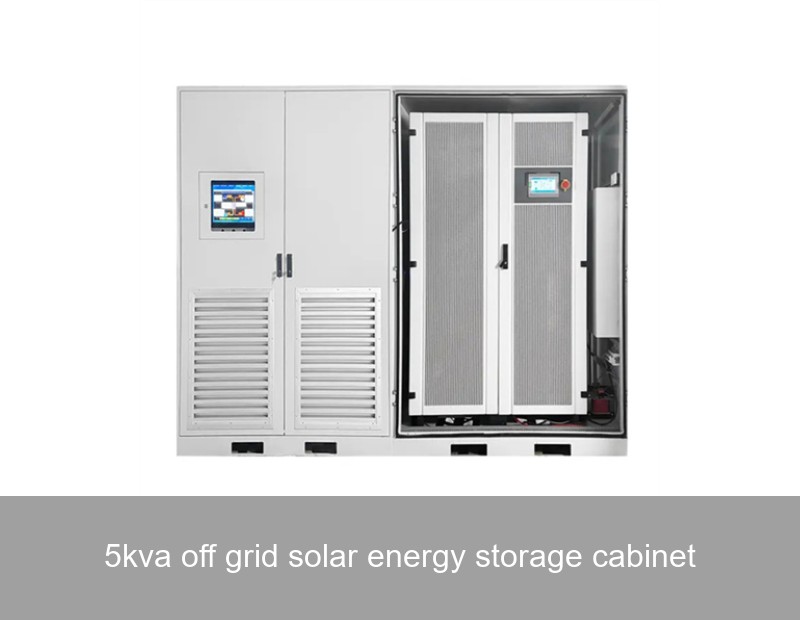
Imagine a power outage. The lights flicker and die. For most, it's a temporary nuisance. But for a remote farm, a critical research station, or a family seeking true energy resilience, it represents a fundamental vulnerability. This is where the 5kVA off-grid solar energy storage cabinet steps in—not merely as a backup, but as a complete, self-sustaining power station. At Highjoule, we've seen a growing demand, particularly across Europe and North America, for systems that provide absolute energy independence. Whether driven by rising grid instability, the desire to power remote locations, or a commitment to a sustainable lifestyle, the move towards off-grid living is more than a trend; it's a strategic shift. This article will demystify the 5kVA off-grid cabinet, exploring its components, real-world applications, and how it can be the cornerstone of your energy freedom.
Why Choose an Off-Grid Solar Solution? Beyond the Grid's Reach
The "grid" is a marvel of modern engineering, but it has its limits—both geographical and operational. Choosing an off-grid system isn't just about going green; it's a calculated decision for reliability, cost-control, and operational sovereignty. Let's break down the driving forces.
The Phenomenon: Increasing frequency of extreme weather events, from winter storms in Texas to wildfires in California and grid congestion in parts of Europe, has exposed the fragility of centralized power distribution. Meanwhile, the cost of extending utility lines to remote properties can be prohibitively expensive, often exceeding $15,000 to $50,000 per mile.
The Data: The global off-grid solar market is booming. A report highlighted that the demand for reliable, off-grid power for residential and commercial use continues to grow steadily, driven by both necessity and advancing technology. For a typical off-grid household or small business, a 5kVA (5,000 Volt-Ampere) system is often the sweet spot. It translates to roughly 4kW of usable power, capable of running essentials like refrigeration, lighting, water pumps, communication devices, and even some power tools or kitchen appliances—just not all at once. Intelligent load management is key.

Image Source: Unsplash - Example of a remote property ideal for an off-grid solar solution.
The Core Motivations:
- Absolute Energy Security: No more worries about blackouts or brownouts. Your power supply is determined by the sun and your storage capacity.
- Remote Operation: Perfect for cabins, agricultural pumps, telecommunication towers, and construction sites where grid connection is impossible or impractical.
- Predictable Energy Costs: After the initial investment, your "fuel" (sunlight) is free, shielding you from volatile electricity prices.
- Sustainability: A 100% renewable energy footprint, reducing your carbon emissions to zero for your energy consumption.
Key Components of a Reliable 5kVA Off-Grid System
Think of a 5kVA off-grid solar energy storage cabinet as a sophisticated ecosystem. It's more than just batteries in a box; it's an integrated system where every component must work in perfect harmony. Here’s what’s inside a robust setup:
| Component | Role in the System | What to Look For |
|---|---|---|
| Solar Panels | The primary fuel source. They convert sunlight into direct current (DC) electricity. | High-efficiency monocrystalline panels for limited roof/ground space. Sufficient array size to recharge batteries even in low-light seasons. |
| Off-Grid Inverter/Charger (The 5kVA Brain) | The system's core. Converts DC from panels/batteries to AC for appliances. Also charges batteries from a backup source (like a generator). | A true off-grid inverter with high surge capacity (e.g., 10kVA+) to start motors. Integrated MPPT solar charge controller. High efficiency (>95%). |
| Battery Bank (The Heart) | Stores energy for use when the sun isn’t shining. Defines your "days of autonomy." | Lithium Iron Phosphate (LiFePO4) batteries are now the standard for off-grid due to longer lifespan (10+ years), safety, depth of discharge (80-100%), and faster charging vs. old lead-acid. |
| Battery Management System (BMS) | The protective nervous system for the battery bank. Monitors voltage, temperature, and current to prevent damage. | Must be fully integrated and communicate seamlessly with the inverter for safe, automated operation. |
| Energy Management & Monitoring | The user interface. Provides real-time data on production, consumption, and battery state. | User-friendly app or display for remote monitoring and control, allowing you to optimize usage patterns. |
A Real-World Case Study: Mountain Cabin Resilience in the Swiss Alps
Let's move from theory to practice. Consider a family-owned vacation cabin in a remote valley of the Swiss Alps. The nearest grid connection point is 3 kilometers away, with mountainous terrain making a connection quote exceed €70,000. The cabin is used year-round, with peak usage during winter for heating and holiday gatherings.
The Challenge: Provide reliable, 24/7 power for LED lighting, a refrigerator, a water pump, a small electric heating system (backed by a wood stove), and essential electronics, regardless of heavy winter snow or summer storms.
The Highjoule Solution: A tailored 5kVA off-grid solar energy storage cabinet was installed. The system featured:
- Highjoule HPC-5K Off-Grid Inverter/Charger: With a 12kW surge capacity to handle the pump and heating system startup currents.
- Integrated Highjoule LiFE PowerWall (15kWh): LiFePO4 battery storage providing three days of autonomy under normal use.
- 8.5kWp Solar Array: Panels mounted on a ground-based structure to optimize winter sun angle and ease snow shedding.
- Highjoule Energy Hub Monitoring: Allowing the owners to check system status and energy flow from their primary home via smartphone.
The Outcome: For over two years, the system has operated flawlessly. During a severe 5-day snowstorm that knocked out power to nearby grid-connected villages, the cabin remained fully powered and comfortable. The system's design, with sufficient battery capacity and panel oversizing for winter, proved its worth. The owners now have zero electricity bills and, more importantly, complete peace of mind. This case exemplifies how a correctly sized and engineered 5kVA cabinet isn't just equipment—it's empowerment.
The Highjoule Solution: Engineered for Independence, Backed by Expertise
At Highjoule, we don't just sell components; we engineer integrated power ecosystems. Our Off-Grid Energy Cabinet series is the culmination of nearly two decades of innovation in battery storage and power conversion. We understand that an off-grid system must be utterly dependable.
Our approach centers on the Highjoule All-in-One Power Cabinet, which elegantly houses the critical components: the multi-mode inverter, the LiFePO4 battery bank, the smart BMS, and the monitoring system—all pre-wired and tested in a single, robust enclosure. This "cabinet" approach drastically reduces on-site installation complexity and potential points of failure. For a 5kVA application, our systems are designed with:
- Adaptive Intelligence: Our inverters dynamically manage energy flow between solar, battery, and any backup generator, prioritizing solar and preserving battery life.
- Scalable Storage: Start with a 10kWh battery bank and expand modularly as your needs grow, protecting your initial investment.
- Global Support & Compliance: Our products are certified to the highest international safety and grid standards (where applicable), and our technical support network spans across Europe and North America.
- Professional Design Partnership: We work with a network of certified installers to ensure your system is perfectly sized for your location's solar irradiance (using data from sources like the EU's PVGIS tool) and your specific load profile.

Image Source: Unsplash - Representation of a modern, integrated energy storage cabinet.
Making the Choice: Is a 5kVA Off-Grid Cabinet Right for You?
Deciding to go off-grid is significant. It requires a shift from seeing electricity as an on-demand utility to managing it as a precious, self-generated resource. A 5kVA off-grid solar energy storage cabinet is ideal for a well-insulated home or business with efficient appliances, a small workshop, or a remote telecom site. It's likely not sufficient for a large family home with central air conditioning, an electric vehicle charger, and multiple high-power appliances running concurrently.
The first step is always a detailed energy audit. List every device you plan to power, its wattage, and how many hours per day it runs. This simple exercise will reveal your true daily kilowatt-hour (kWh) consumption—the number that ultimately determines your battery and solar array size. Tools like the National Renewable Energy Laboratory's (NREL) calculators can be a helpful starting point.
Your Path Forward
The journey to energy independence is both exciting and demanding. It asks you to be more conscious of your energy use while rewarding you with unparalleled control and resilience. The technology, particularly integrated solutions from experienced providers like Highjoule, has never been more capable or accessible.
So, we leave you with this question to ponder: What would you power first to secure your family's comfort or your business's continuity, if the grid were no longer an option? The answer to that question is the perfect starting point for a conversation about your own off-grid future.
 Inquiry
 Online Chat