


Sistema di Accumulo Fotovoltaico: Your Key to Energy Independence and Savings
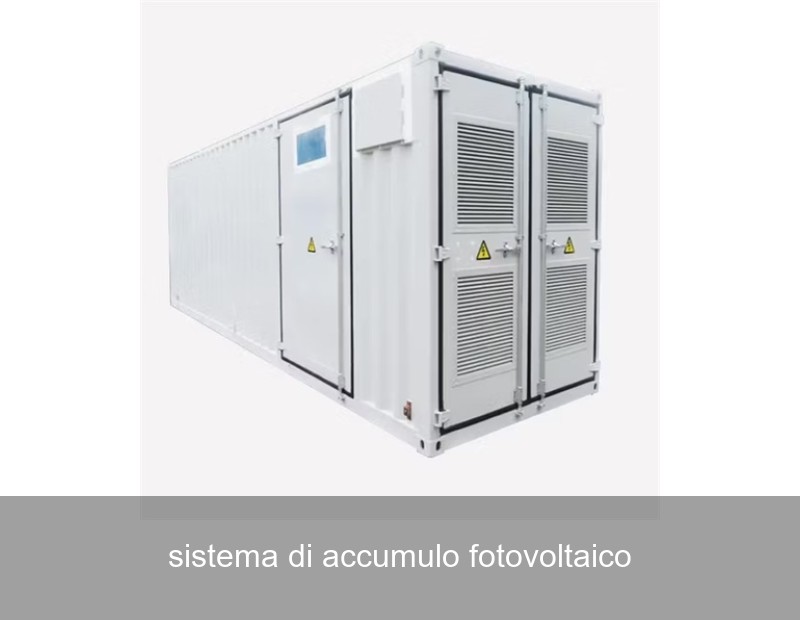
Have you ever looked at your solar panels on a bright, sunny day and wondered, "Where is all this excess energy going?" If you're like many solar homeowners in Europe and the US, a significant portion is likely fed back to the grid for a modest feed-in tariff. But what if you could capture that sunshine in a bottle and use it on your own terms? That's precisely the power of a sistema di accumulo fotovoltaico – a photovoltaic (PV) energy storage system. It's the game-changing companion to your solar array, transforming how you generate, consume, and think about electricity.
In this guide, we'll demystify solar battery storage. We'll move from the basic phenomenon of energy waste to the concrete data on savings, explore a real case study from a European business, and provide clear insights to help you determine if this technology is the right next step for your energy journey. As a global leader in advanced energy storage since 2005, Highjoule is at the forefront of this revolution, providing smart, efficient, and sustainable power solutions for homes and businesses alike.

Image Source: Unsplash - A modern home solar installation with integrated battery storage.
How Does a Photovoltaic Storage System Work? A Simple Breakdown
Think of your solar PV system without storage like a kitchen faucet. When the sun is shining (the tap is on), you can use water (electricity) immediately to wash dishes or fill a glass. Any excess water just goes down the drain. A sistema di accumulo fotovoltaico adds a large water tank to this setup.
- Daytime Production: Your solar panels convert sunlight into DC (Direct Current) electricity.
- Immediate Consumption: An inverter converts DC to AC (Alternating Current) for your home's appliances. You use what you need in real-time.
- Charging the Battery: Instead of sending surplus energy to the grid, it is diverted to charge your battery storage system, like filling up the energy "tank."
- Nighttime & Cloudy Day Discharge: When the sun sets or clouds roll in, your system automatically draws power from the charged battery, minimizing your need to purchase expensive electricity from the utility grid.
Modern systems, like Highjoule's Residential Energy Hub, are managed by intelligent energy management software. This brain of the system learns your consumption patterns, weather forecasts, and utility rate schedules to optimize when to store, use, or even strategically sell back energy for maximum financial return.
Key Benefits: Beyond Just Backup Power
The value of a solar battery extends far beyond emergency power during an outage. Let's look at the core advantages driving adoption in markets like California, Germany, and Italy.
| Benefit | Explanation | Impact on Homeowner |
|---|---|---|
| Increased Self-Consumption | Using more of the solar energy you produce. | Reduces grid dependence, maximizes ROI on solar panels. |
| Bill Savings & Rate Arbitrage | Store cheap solar energy, avoid buying expensive grid power during peak hours. | Direct reduction in monthly electricity bills, sometimes by 70% or more. |
| Energy Resilience | Provides backup power during grid outages. | Keeps essential loads (lights, fridge, internet) running for hours or days. |
| Grid Support & Sustainability | Reduces strain on the grid during peak demand. | Contributes to a more stable and greener electricity network for the community. |
For commercial and industrial applications, Highjoule's C&I PowerStack solutions deliver these benefits at scale, enabling businesses to manage demand charges, participate in grid services, and ensure operational continuity.
The Technology Evolution: From Lead-Acid to Intelligent Lithium
The heart of any sistema di accumulo fotovoltaico is the battery chemistry. The shift from traditional lead-acid to lithium-ion (Li-ion) has been transformative. Li-ion batteries, particularly Lithium Iron Phosphate (LFP), offer higher energy density, longer lifespan (typically 10+ years or 6,000+ cycles), greater depth of discharge, and require minimal maintenance.
But the hardware is only part of the story. The true innovation lies in system intelligence. Leading providers like Highjoule integrate advanced battery management systems (BMS) and grid-interactive inverters. These components work in concert to:
- Precisely control charging/discharging to prolong battery life.
- Seamlessly switch to backup power during a grid failure (often in milliseconds).
- Enable remote monitoring and control via user-friendly smartphone apps.
- Allow for future scalability – you can often add more battery modules as your needs grow.
A Real-World Case: The German Bakery Story
Let's move from theory to practice with data from a real installation. Consider a mid-sized artisan bakery in Bavaria, Germany. They had a 50 kWp solar array but were only using about 30% of the generation directly, feeding the rest to the grid at a low rate while buying expensive power in the early mornings and evenings for ovens and refrigeration.
The Problem: High grid consumption during peak tariff periods, low self-consumption of solar energy, and vulnerability to short power outages that could spoil inventory.
The Solution: Installation of a Highjoule Commercial Energy Storage System with 120 kWh of LFP battery capacity, integrated with their existing PV.
The Data-Driven Results (12 months post-installation):
- Self-Consumption Rate: Increased from 30% to over 85%.
- Electricity Bill Savings: Reduced grid electricity purchases by 68%.
- Peak Demand Shaving: Reduced peak power draw from the grid, lowering network charges.
- ROI Timeline: Projected payback period of just under 5 years, thanks to Germany's supportive energy policies and high electricity prices.
- Resilience: The bakery can now maintain critical cooling for up to 8 hours during a grid outage.
This case, mirrored by thousands of installations across Europe and North America, illustrates the tangible economic and operational benefits of a well-designed sistema di accumulo fotovoltaico. You can explore more about the policy landscape driving such adoption in Europe from authoritative sources like the International Energy Agency (IEA).

Image Source: Unsplash - Inside a large-scale battery energy storage system.
Choosing the Right System for Your Needs
Selecting a solar battery isn't a one-size-fits-all decision. Key factors to consider include:
- Capacity & Power: Capacity (kWh) is your "energy tank size." Power (kW) is how fast you can empty it. Do you need to run your entire home or just a few circuits?
- Chemistry & Warranty: Prioritize LFP for safety and longevity. Look for a warranty that guarantees both a period (e.g., 10 years) and a remaining capacity (e.g., 70%).
- Integration: Does it work seamlessly with your existing or planned solar inverter? Highjoule offers both AC- and DC-coupled solutions for maximum compatibility.
- Intelligence & Software: The software platform is crucial for optimization and monitoring. Can you set preferences and track performance easily?
For homeowners, the Highjoule Home series offers scalable, all-in-one units designed for simplicity and reliability. For more complex needs, such as off-grid microgrids or large-scale commercial applications, Highjoule's engineering team provides custom-designed solutions that integrate generation, storage, and advanced control systems.
The Future of Home Energy: A Connected, Intelligent Hub
The sistema di accumulo fotovoltaico is evolving from a standalone component into the core of a smart home energy ecosystem. The future points toward systems that integrate with electric vehicle (EV) chargers, allowing your car battery to become a backup resource (vehicle-to-home or V2H). They will also respond dynamically to real-time grid signals, providing valuable services that support renewable energy integration on a massive scale. You can read about the latest research in this field from institutions like the National Renewable Energy Laboratory (NREL).
Ultimately, investing in a high-quality solar storage system is an investment in price predictability, control, and sustainability. It moves you from being a passive consumer to an active manager of your energy destiny.

Image Source: Unsplash - Homeowner monitoring their energy production and consumption via a tablet app.
Is your current solar setup working as hard for your wallet and the planet as it could be? What would energy independence look like for your home or business?
 Inquiry
 Online Chat