


Understanding the Sistema Fotovoltaico Interconectado: Your Gateway to Energy Independence
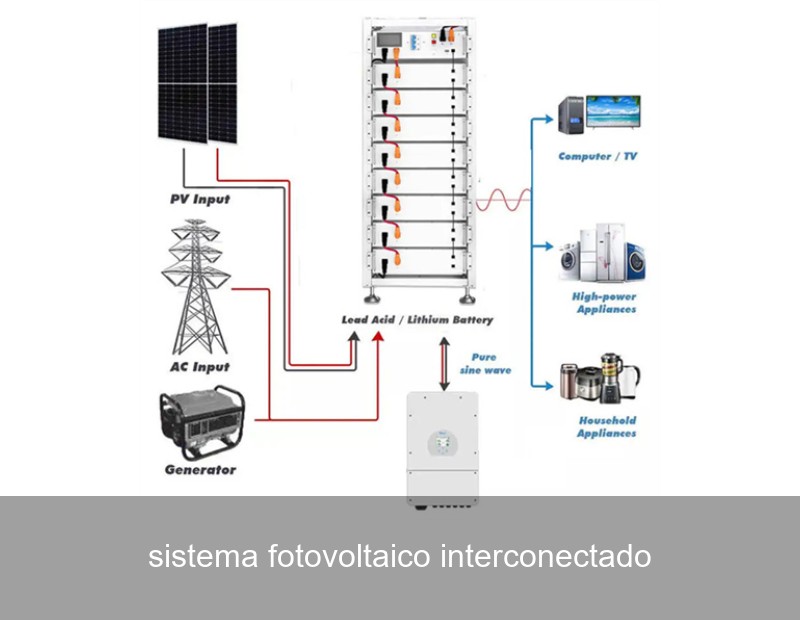
Have you ever looked at your rising electricity bill and wondered if there's a more sustainable, cost-effective way to power your home or business? You're not alone. Across Europe and the United States, a quiet revolution is taking place on rooftops and in communities, driven by a powerful technology: the sistema fotovoltaico interconectado, or interconnected photovoltaic system. This isn't just about installing solar panels; it's about creating an intelligent, two-way energy ecosystem that connects you to the sun and the grid, optimizing every kilowatt-hour. In this article, we'll demystify how these systems work, explore their tangible benefits with real-world data, and show you how modern solutions are making energy independence more accessible than ever.
Table of Contents
- What is an Interconnected Photovoltaic System?
- How Does a Grid-Tied Solar System Work? The Seamless Dance
- Key Components of a Modern Grid-Tied PV System
- Tangible Benefits: Why Homeowners and Businesses Are Switching
- Real-World Impact: A Case Study from California
- Beyond Basics: The Future is Smart and Integrated
- Choosing the Right Partner for Your Energy Journey
What is an Interconnected Photovoltaic System?
At its core, an interconnected or grid-tied photovoltaic (PV) system is a solar power setup that remains connected to the public electricity grid. Unlike off-grid systems that require large battery banks, a sistema fotovoltaico interconectado works in harmony with the utility grid. During sunny days, your solar panels generate electricity, powering your property first. Any excess energy is not wasted; it's fed back into the grid. At night or during periods of high cloud cover, you seamlessly draw power from the grid. This symbiotic relationship ensures uninterrupted power supply while turning your property into a mini power plant.

Image Source: Unsplash - Representative image of a grid-connected residential solar installation.
How Does a Grid-Tied Solar System Work? The Seamless Dance
Let's break down the elegant process. It all starts with sunlight hitting the photovoltaic panels, generating direct current (DC) electricity. This DC power travels to a crucial device called an inverter. Here's where the magic happens: the inverter converts that DC electricity into the alternating current (AC) that powers your appliances and the grid. This AC power is then sent to your home's main electrical panel (breaker box).
- Solar Generation > Demand: Your system produces more power than you're using. The excess AC electricity flows through a bidirectional utility meter and out onto the local grid, often earning you credits through net metering programs.
- Demand > Solar Generation: At night or on cloudy days, your consumption needs exceed solar production. Power automatically flows from the grid to supplement your needs, ensuring no interruption.
This intelligent, automated flow is managed by your system's components, requiring no manual intervention from you.
Key Components of a Modern Grid-Tied PV System
A reliable system is built on more than just panels. Understanding the key parts helps you appreciate the engineering behind the simplicity.
| Component | Primary Function | Modern Innovation |
|---|---|---|
| Solar Panels (Modules) | Convert sunlight into DC electricity. | High-efficiency monocrystalline panels yield more power in limited space. |
| Grid-Tie Inverter(s) | Convert DC to grid-compatible AC; system's "brain". | Advanced string inverters or microinverters offer panel-level monitoring and optimization. |
| Mounting System & Racking | Securely attaches panels to roof or ground. | Lightweight, aerodynamic designs that protect roof integrity. |
| Bidirectional Meter | Measures power drawn from and exported to the grid. | Installed by utility company to facilitate net metering. |
| Monitoring System | Tracks system performance and energy production in real-time. | Cloud-based platforms accessible via smartphone app, providing insights and fault detection. |
This is where companies like Highjoule elevate the standard offering. For instance, our Homescale Solar+ solution integrates high-performance panels with our proprietary EnergyHub inverter, which not only handles the DC/AC conversion but also includes built-in energy management. This smart technology can prioritize using your solar energy for high-consumption devices, maximizing self-consumption and savings. For businesses, our Commercial ESS (Energy Storage System) can be integrated into a grid-tied PV setup, allowing for critical load backup and demand charge management without sacrificing the benefits of grid interconnection.
Tangible Benefits: Why Homeowners and Businesses Are Switching
The shift towards interconnected PV systems is driven by compelling, measurable advantages.
- Significant Reduction in Energy Bills: By generating your own power, you purchase less from the utility. With net metering, exported energy further offsets costs. It's not uncommon for systems to reduce electricity bills by 70-100%.
- Low Maintenance & High Reliability: With no moving parts, solar systems require minimal upkeep—mainly occasional cleaning. Quality components from trusted providers ensure decades of stable operation.
- Increased Property Value: Studies consistently show homes with solar PV systems sell at a premium. A U.S. Department of Energy study found buyers are willing to pay more for homes with solar.
- Energy Resilience (when paired with storage): A modern twist on the traditional grid-tied system is adding a battery. Highjoule's systems, for example, can be configured for solar self-consumption with backup. This means you use more of your solar power directly and have a reserve to keep lights on during short grid outages, all while maintaining the grid connection for long-term stability.
- Environmental Impact: You directly reduce your carbon footprint by displacing fossil-fuel-generated grid electricity.
Real-World Impact: A Case Study from California
Let's move from theory to practice. Consider a mid-sized winery in Napa Valley, California—a region with high electricity costs for cooling and processing. Facing an average monthly bill of $4,200 and a desire for sustainability, they installed a 250 kW sistema fotovoltaico interconectado in 2022.
The system was designed with Highjoule's commercial-grade inverters and monitoring software. The results after the first year were compelling:
- Annual Energy Generation: 358,000 kWh
- Bill Savings: ~$58,000 (factoring in net metering credits)
- Carbon Offset: Equivalent to planting over 4,000 tree seedlings grown for 10 years.
- ROI Timeline: Projected payback period of under 5 years.
This case illustrates the powerful triple bottom line—profit, planet, people—achievable with a well-engineered grid-tied system. The winery remains fully connected to the grid for 24/7 reliability but has drastically cut its operational costs and brand-aligned with eco-conscious values.

Image Source: Unsplash - Example of a commercial solar installation on an agricultural business.
Beyond Basics: The Future is Smart and Integrated
The evolution of the sistema fotovoltaico interconectado is moving towards greater intelligence and control. We're seeing the rise of "smart homes" and "smart grids." Future systems won't just produce energy; they will forecast production, learn consumption patterns, and automatically optimize energy flows. Imagine your system pre-cooling your home using surplus solar energy before a peak rate period begins, or an electric vehicle charger that schedules charging for when your solar production is highest.
This requires an ecosystem of compatible, communicating devices. Highjoule's philosophy centers on this integrated approach. Our EnergyOS platform acts as the central nervous system for a property's energy, coordinating between solar production, battery storage, grid interaction, and major home loads. This turns a simple grid-tied system into a dynamic energy asset.
Choosing the Right Partner for Your Energy Journey
Investing in solar is a significant decision. The key to unlocking the full benefits lies in choosing a provider with deep expertise in both the technology and the regulatory landscapes of your region (be it Europe or the U.S.). Look for a partner that offers:
- End-to-End Service: From initial site assessment and financial modeling to permitting, installation, and long-term monitoring.
- High-Quality, Certified Components: Equipment with robust warranties and proven field performance.
- Smart Technology Integration: The ability to not just install panels, but to provide a system that can adapt and upgrade, potentially with storage in the future.
- Local Knowledge: Understanding of local incentives, net metering policies, and grid connection requirements is crucial.
With nearly two decades of experience since 2005, Highjoule has been at the forefront of this evolution. We provide tailored solutions for residential, commercial, and microgrid applications, ensuring every sistema fotovoltaico interconectado we design is not just a collection of parts, but a cohesive, intelligent, and sustainable power solution for the long term.
Ready to see what a truly intelligent grid-tied solar system could look like for your home or business? What's the first question you would ask an energy expert about taking control of your power?
 Inquiry
 Online Chat