


Smart Grid Protection System: The Guardian of Our Renewable Energy Future
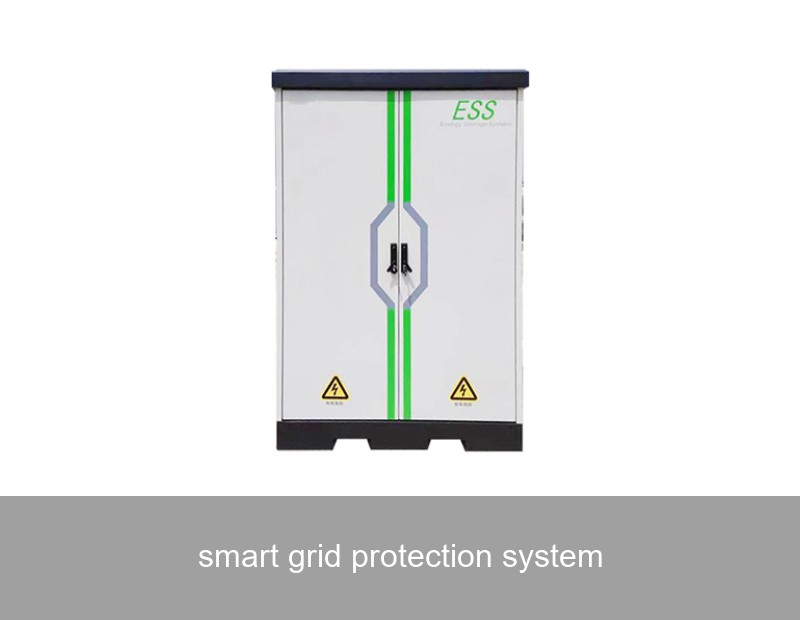
Imagine your local power grid as the human circulatory system. For decades, it was a one-way street: power flowed from large, centralized plants to your home or business. Today, that's changing dramatically. With the surge in rooftop solar, home battery storage, and electric vehicles, the grid is becoming a dynamic, two-way network. This evolution is brilliant but introduces new complexities. How do we protect this more intricate, interactive system from faults, fluctuations, and failures? The answer lies in a modern smart grid protection system. This isn't just an upgrade; it's a fundamental rethinking of grid resilience, ensuring that our clean energy transition is both powerful and secure.
Table of Contents
- The New Grid Reality: Why Old Protection Isn't Enough
- What is a Smart Grid Protection System?
- Key Components of an Intelligent Protection Scheme
- Case Study: Stabilizing a European Community Microgrid
- Highjoule's Role: Integrating Protection into Advanced Energy Storage
- Future Challenges and Opportunities
The New Grid Reality: Why Old Protection Isn't Enough
The traditional grid was designed for predictability. Protection systems—like circuit breakers and relays—were set up to detect major faults (e.g., a downed power line) and isolate the problem area. It was largely a brute-force approach. Now, consider a neighborhood with high solar penetration. On a sunny afternoon, solar panels might feed significant excess power back into the local grid, potentially causing voltage spikes that traditional equipment isn't programmed to handle gracefully. Similarly, a cloud passing over can cause a rapid drop in generation, creating instability.
The data underscores this challenge. According to the International Energy Agency (IEA), achieving national climate targets worldwide requires adding or refurbishing over 80 million kilometres of power lines by 2040—the equivalent of the entire existing global grid. This expansion, coupled with variable renewables, demands a smarter approach to protection.
What is a Smart Grid Protection System?
A smart grid protection system is an integrated network of digital devices, sensors, and software that monitors, analyzes, and controls power flow in real-time to prevent outages and damage. Unlike its predecessors, it uses two-way communication and advanced algorithms to make nuanced decisions. Think of it as the difference between a simple burglar alarm (loud siren, police called) and a full-scale smart home security system (motion sensors, cameras, automated lights, and remote notifications). The latter provides situational awareness and targeted responses.
The core objectives are:
- Adaptive Relaying: Adjusting protection settings automatically based on real-time grid conditions (e.g., high solar input vs. nighttime load).
- Faster Fault Detection & Isolation: Pinpointing the exact location of a problem within milliseconds and isolating the smallest possible section, keeping the rest of the grid online.
- Self-Healing Capabilities: Automatically re-routing power around a faulted section to restore service, often before customers even notice an issue.
- Cybersecurity Integration: Protecting the protection system itself from digital threats, a critical layer in modern infrastructure.
Key Components of an Intelligent Protection Scheme
Building this digital guardian requires several key technologies working in concert:
| Component | Function | Analogy |
|---|---|---|
| Phasor Measurement Units (PMUs) | Provide synchronized, high-speed measurements of voltage and current across the grid. | The grid's "EEG machine," giving a real-time, precise health reading. |
| Digital Relays & Circuit Breakers | Intelligent devices that receive data and execute disconnection commands. | The "muscles and reflexes" that act on the system's decisions. |
| Advanced Distribution Management Systems (ADMS) | The software brain that analyzes data, runs simulations, and coordinates responses. | The "air traffic control center" for electrons. |
| Distributed Energy Resource (DER) Management | Software that communicates with and controls rooftop solar, batteries, and EVs. | The "diplomat" that coordinates with all the new, independent energy producers. |

Image Source: Unsplash (Representative image of a grid control room)
Case Study: Stabilizing a European Community Microgrid
Let's look at a real-world application. A community in Northern Germany, committed to 100% renewable energy, operates a municipal microgrid integrating 5 MW of wind, 3 MW of solar PV, and a 2 MW / 4 MWh battery energy storage system (BESS). The challenge was frequency volatility, especially during periods of low wind and high cloud cover, which could trigger protective disconnects and cause blackouts.
The Solution: The community deployed a smart grid protection system centered on an advanced BESS with integrated adaptive protection logic. The system uses PMUs to monitor grid frequency 100 times per second. When frequency deviates beyond the standard 50 Hz ± 0.2 Hz tolerance, the BESS doesn't just wait for a fault; it injects or absorbs power within 150 milliseconds to stabilize the frequency.
The Data & Outcome: In the first 18 months of operation:
- Grid disturbance events were reduced by over 70%.
- The BESS provided over 200 frequency regulation actions per month, most of which were preventative and invisible to end-users.
- Renewable energy curtailment (wasting excess solar/wind power) was reduced by 15%, increasing community revenue and clean energy utilization.
This case shows how smart protection moves from merely reacting to failures to actively preventing them, unlocking higher levels of renewable penetration.
Highjoule's Role: Integrating Protection into Advanced Energy Storage
At Highjoule, we see the energy storage system not just as a backup power source, but as the active heart of a modern smart grid protection system. Our GridShield™ BESS Platform is engineered with this philosophy at its core.
Our commercial and industrial storage solutions come with built-in Advanced Grid Forming (AGF) inverters. Unlike traditional equipment that simply follows the grid, AGF inverters can create a stable voltage and frequency "signal" themselves. This means in a microgrid or during grid disturbances, a Highjoule system can act as an "anchor," providing the reference point that other assets synchronize to, preventing cascading failures.
Furthermore, our Energy Management System (EMS) is pre-configured with adaptive protection protocols. It can communicate directly with utility protection devices or a microgrid controller, offering services like:
- Voltage Support: Automatically injecting reactive power to correct voltage sags or swells in real-time.
- Islanding Detection & Seamless Transition: Safely disconnecting from the main grid during an outage and powering critical loads independently, then smoothly re-synchronizing when grid power returns.
- Harmonic Filtering: Protecting sensitive equipment from power quality issues caused by modern electronics and inverters.

Image Source: Unsplash (Representative image of a containerized BESS)
For utilities and large-scale projects, our team provides custom Grid Integration Consulting, modeling how our storage assets will interact with existing protection schemes and ensuring a harmonious, resilient upgrade to the grid's nervous system.
Future Challenges and Opportunities
The journey towards fully intelligent grids is ongoing. Key challenges include the high cost of widespread sensor (PMU) deployment, the need for universal communication standards, and the ever-present threat of cyber-attacks. Regulatory frameworks also often lag behind technological capability.
However, the opportunities are transformative. The U.S. Department of Energy's Grid Modernization Initiative highlights how digitalization and smart protection are foundational to national energy security and decarbonization. As artificial intelligence and machine learning mature, we can expect protection systems that predict faults before they occur by analyzing patterns in historical and real-time data.
So, as you consider adding solar panels, a home battery, or planning a community energy project, ask yourself this: Is my investment protected by a system designed for the last century, or is it part of an intelligent, resilient network ready for the future? What role could a strategically placed, smart battery system play in not just saving you money, but in strengthening the entire community's power resilience?
 Inquiry
 Online Chat