


Smart Infrastructure Solutions: The Backbone of a Resilient and Sustainable Future
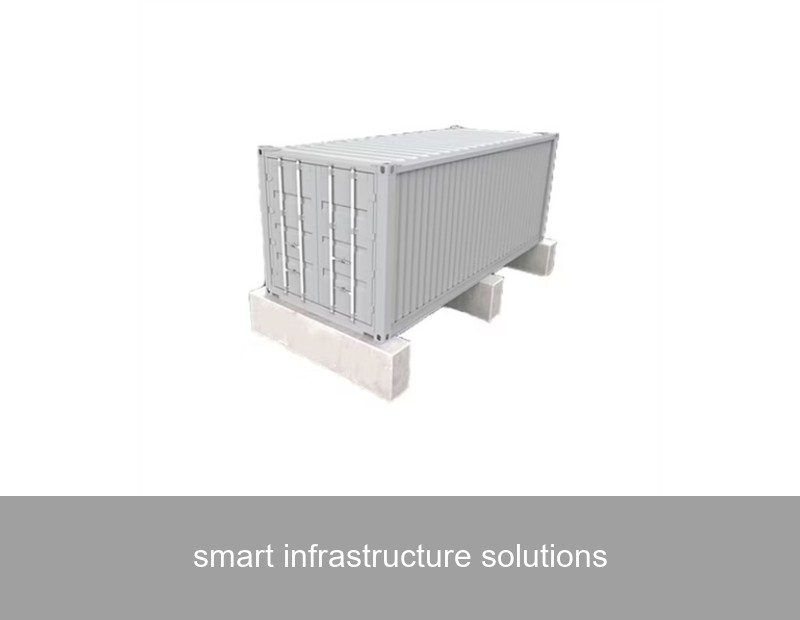
Imagine a city that breathes with its energy needs. It draws power from the sun when it shines, stores the excess for a rainy day, and intelligently distributes it to where it's needed most, all while keeping the grid stable and costs predictable. This isn't science fiction; it's the promise of smart infrastructure solutions. At their core, these solutions integrate digital intelligence, renewable energy, and advanced storage into the very fabric of our buildings, communities, and power systems. For businesses, municipalities, and homeowners, particularly in regions like Europe and North America facing grid volatility and ambitious decarbonization goals, smart infrastructure is no longer a luxury—it's a strategic imperative for energy independence, cost control, and sustainability.
Table of Contents
The Grid Under Pressure: A Widespread Phenomenon
You've likely felt the effects, even indirectly. Maybe you've read about rolling blackouts during heatwaves in California, or heard of European industries struggling with record-high energy prices. The traditional, centralized power grid—a one-way street from large power plants to consumers—is straining under new pressures. The rapid adoption of intermittent renewables like solar and wind, while essential, introduces variability. The surge in electric vehicles (EVs) is creating new, concentrated demand loads. Extreme weather events are becoming more frequent, threatening reliability. This phenomenon creates a complex puzzle: how do we balance supply and demand in real-time, maximize our use of clean energy, and ensure everyone has power when they need it? The answer lies in moving from a centralized, passive grid to a decentralized and intelligent one.
The Data Reality: Why Reactive Management Isn't Enough
Let's look at the numbers. According to the International Energy Agency (IEA), global electricity demand from EVs is set to skyrocket, potentially adding over 5,000 TWh of demand by 2030. Meanwhile, the U.S. Energy Information Administration (EIA) notes that weather-related outages are a leading cause of grid instability. Operating on a "build more power lines" or "fire up peaker plants" model is both economically and environmentally unsustainable. The financial data is equally compelling. Businesses face not only volatile energy costs but also potential losses from downtime. Smart infrastructure solutions address this by turning consumers into proactive "prosumers." The logic is a powerful阶梯: Generate your own renewable power → Store it for use anytime → Manage it intelligently based on cost, demand, and grid signals. This transforms energy from a mere utility bill into a manageable asset.

Image: A modern industrial facility integrating solar generation and battery storage, key elements of smart infrastructure. Source: Unsplash
Case Study: A German Industrial Park's Transformation
Let's make this concrete with a real-world example from our work at Highjoule. A mid-sized manufacturing park in Bavaria, Germany, faced a triple challenge: rising grid fees (€ct/kWh), an ambitious corporate carbon neutrality target, and the need for ultra-reliable power for precision machinery. Their old diesel backup generators were costly and dirty. Our team designed and deployed an integrated smart infrastructure solution that included:
- A 2.1 MW rooftop solar PV system.
- A centralized 1.8 MWh Highjoule H-Cube commercial battery energy storage system (BESS).
- Our proprietary Neuron energy management software (EMS) platform.
The system was configured for peak shaving, solar self-consumption maximization, and backup power. The results after the first year were telling:
| Metric | Before Implementation | After Implementation |
|---|---|---|
| Grid Energy Draw During Peak Hours | ~95% | < 40% |
| Annual Energy Costs | Baseline | Reduced by 34% |
| On-Site Renewable Consumption | ~30% (solar only, no storage) | Over 85% |
| Backup Runtime for Critical Loads | Limited by diesel fuel | 6+ hours (grid-independent) |
The park's management didn't just save money; they gained predictable operational expenses, slashed their Scope 2 emissions significantly, and achieved a new level of energy resilience. The Neuron EMS acts as the "brain," making autonomous decisions every few seconds to optimize the flow of energy, proving that intelligence is as crucial as the hardware itself.
Key Components of a Smart Infrastructure Solution
So, what makes infrastructure truly "smart"? It's the seamless integration of several layers:
1. The Physical Layer: Generation and Storage
This is the foundation. Solar panels, wind turbines, and crucially, advanced battery storage systems. The battery is the linchpin, enabling time-shifting of energy. Not all batteries are created equal. Factors like cycle life, depth of discharge, safety (especially lithium iron phosphate or LFP chemistry), and thermal management are critical for a 20+ year asset.
2. The Intelligence Layer: Software & Controls
Hardware without software is inert. An Energy Management System (EMS) or a broader platform that can monitor, forecast, and control is essential. It should be able to:
- Forecast local generation (e.g., solar yield) and load patterns.
- Respond to real-time electricity pricing or grid operator signals (a capability known as ancillary services).
- Automatically switch between grid-connected, backup, and economic modes.
3. The Integration Layer: Connectivity & Standards
A smart solution must speak the language of the existing ecosystem. This means compatibility with inverters, meters, building management systems (BMS), and evolving grid standards like IEEE 1547 in the U.S. or grid codes in the EU. Open protocols ensure your system isn't a future "island" of technology.

Image: An energy management software dashboard visualizing the flow and optimization of power in a smart system. Source: Unsplash
Highjoule's Role in Your Smart Infrastructure Journey
Since 2005, Highjoule has been at the forefront of making intelligent, resilient energy a reality. We understand that a smart infrastructure solution is not an off-the-shelf product but a tailored system. Our approach is holistic:
- For Commercial & Industrial Clients: Our flagship H-Cube BESS, built with UL-certified LFP cells, is the robust heart of many projects. Coupled with our Neuron software, we design systems for peak shaving, demand charge management, and uninterrupted power supply (UPS)-grade backup. We handle the entire process from feasibility and financial modeling to grid interconnection support.
- For Residential & Community Projects: Our HomePower series provides sleek, safe storage for homeowners, enabling greater solar self-consumption and backup power. For microgrids or community energy projects, we provide the scalable storage and control systems that allow neighborhoods to share and optimize local renewable resources.
- Our Core Differentiator: It's our integrated stack. We design and manufacture our own battery packs and develop our control software in-house. This vertical integration ensures superior performance, safety, and long-term reliability, giving our clients a single point of accountability. Our systems are operating in diverse climates from Scandinavia to the American Southwest, proving their adaptability.
Think of us not just as a hardware vendor, but as a partner in building your energy resilience. We provide the technology and expertise to future-proof your operations against price spikes, grid outages, and the demands of a carbon-constrained world.
What Will Your First Step Be?
The transition to smart infrastructure is accelerating. With policies like the EU's Green Deal and the U.S. Inflation Reduction Act incentivizing storage and modernization, the economic case is stronger than ever. But it starts with a question: What is the single biggest energy challenge constraining your operations or community today—is it cost volatility, reliability concerns, or sustainability targets? Identifying that pin-point is the first step toward designing a solution that not only solves it but unlocks new value. What energy data could you start collecting this month to better understand your own profile and opportunities?
 Inquiry
 Online Chat