


Unlocking Grid Resilience: The Rise of the Smarter Energy Storage Cabinet
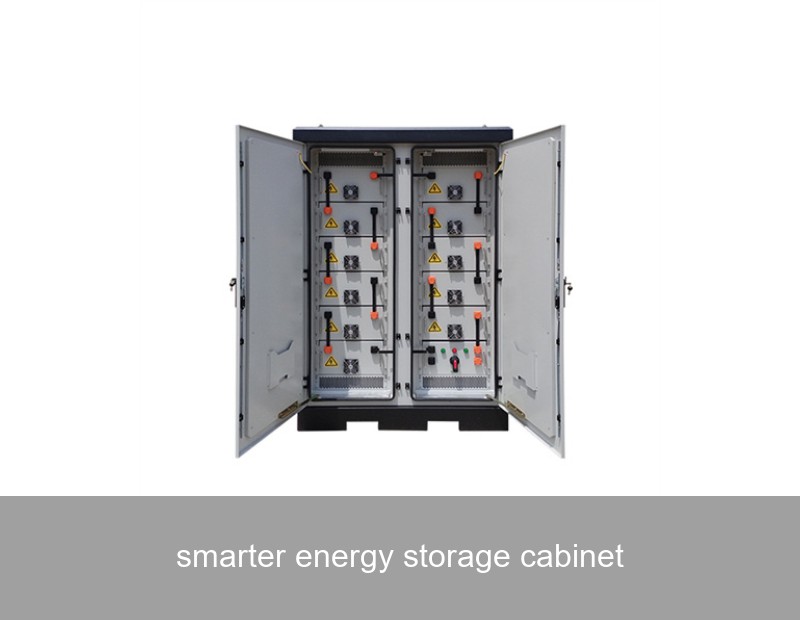
Have you ever wondered how businesses and communities can keep the lights on during a power outage, or seamlessly integrate a growing share of solar power? The answer is increasingly found not in massive infrastructure projects, but in intelligent, modular units: the smarter energy storage cabinet. Moving beyond simple battery boxes, these systems are the brains of modern energy management, optimizing power flow, cutting costs, and providing critical backup. For facility managers, energy directors, and homeowners alike, understanding this technology is key to building a resilient and sustainable energy future.
Table of Contents
- The Phenomenon: From Passive Battery to Active Partner
- The Data: Why Intelligence is Non-Negotiable
- The Case Study: A European Logistics Hub's Transformation
- The Insight: Core Components of a Smarter Cabinet
- Highjoule's Approach: Engineering Intelligence into Every Cabinet
- The Future: What's Next for On-Site Energy Storage?
The Phenomenon: From Passive Battery to Active Partner
Traditional energy storage was often a "set and forget" installation. A battery bank would charge, discharge, and provide backup power, but with limited adaptability. Today's challenges—volatile energy prices, grid instability, and ambitious decarbonization goals—demand more. Enter the smarter energy storage cabinet. This isn't just a container for batteries; it's an integrated energy asset. Think of it as the difference between a basic cell phone and a smartphone. Both can make calls, but the smartphone's true value lies in its apps, connectivity, and ability to solve diverse problems in real-time.
These intelligent cabinets continuously monitor energy consumption, grid conditions, weather forecasts, and electricity tariffs. Using sophisticated software, they autonomously decide when to store energy, when to use it, and when to sell it back to the grid. This transforms a capital expense into a dynamic, revenue-generating or cost-saving asset. For companies like Highjoule, which has been pioneering advanced battery energy storage systems (BESS) since 2005, the focus is on embedding this intelligence directly into the hardware and software, creating a seamless, user-friendly experience for commercial, industrial, and residential clients.
The Data: Why Intelligence is Non-Negotiable
The financial and operational argument for smart storage is compelling. Let's look at some key metrics:
| Challenge | Dumb Storage Result | Smarter Energy Storage Cabinet Result |
|---|---|---|
| Peak Demand Charges | May discharge indiscriminately, missing the highest cost peak. | Predicts and precisely dispatches power to "shave" peak demand, reducing charges by 20-40%. |
| Solar Self-Consumption | Stores excess solar, but may not optimize for time-of-use. | Maximizes self-consumption AND schedules discharge during high-rate evening periods, boosting ROI. |
| Grid Services | Typically unavailable or inefficient. | Can aggregate to provide frequency regulation or voltage support, creating new revenue streams. |
| System Longevity | Uniform charging/discharging can stress batteries. | Advanced Battery Management Systems (BMS) optimize each cell's health, extending lifespan by years. |
According to a report by the National Renewable Energy Laboratory (NREL), software-driven controls and forecasting can increase the value of storage by over 50% compared to basic operation. The intelligence layer is where the true value is captured.

Image: A modern, sleek energy storage cabinet installation in an industrial setting. Source: Unsplash (Representative image)
The Case Study: A European Logistics Hub's Transformation
Let's make this concrete with a real-world example. A major logistics and distribution center in Rhineland, Germany, faced a dual challenge: skyrocketing energy costs and a corporate mandate to reduce its carbon footprint. The facility had a 2 MW rooftop solar array, but over 60% of its generated electricity was being exported to the grid at low feed-in tariffs, while it simultaneously purchased expensive power during peak operations.
Their solution was the deployment of a modular, smarter energy storage cabinet system. Highjoule engineered a turnkey solution comprising four interconnected 250 kWh cabinets, each with integrated power conversion, cooling, and Highjoule's proprietary SynergyOS energy management platform. The results, monitored over 12 months, were significant:
- Energy Cost Reduction: By storing midday solar excess and discharging it during the 4 PM – 9 PM peak window, the facility reduced its peak demand charges by 34%.
- Solar Self-Consumption: Increased from 38% to over 85%, drastically cutting grid imports.
- ROI Timeline: The projected payback period, factoring in German incentive programs, was reduced to under 5 years.
- Resilience: The system provides 8 hours of backup power for critical refrigeration and sorting systems, a feature that has already prevented spoilage during two brief grid outages.
"It's not just a battery; it's our silent energy shift manager," noted the site's facility director. This case exemplifies the multi-faceted value proposition of intelligent storage in a competitive European market.
The Insight: Core Components of a Truly Smart Cabinet
So, what's under the hood? A smarter cabinet is defined by several key components that work in concert:
1. The Intelligent Brain: Energy Management System (EMS)
This is the core software. A cloud-connected or on-premise EMS uses algorithms and weather/grid data to make predictive decisions. It's the command center that turns raw storage into a strategic asset.
2. The Heart: Advanced Battery Pack & BMS
While lithium-ion (LFP chemistry is now dominant for safety and longevity) is standard, the magic is in the Battery Management System. A high-precision BMS monitors voltage, temperature, and health of every cell group, ensuring safety and maximizing cycle life.
3. The Muscles: Hybrid Inverter/Converter
This component handles the complex dance of converting DC from batteries and solar to AC for the building, and vice-versa. In smarter cabinets, it's bi-directional, efficient (>98%), and responds to EMS commands in milliseconds.
4. The Nervous System: Integrated Sensors & Connectivity
Thermal sensors, smoke detection, and secure IoT connectivity for remote monitoring are standard. This allows for proactive maintenance and real-time performance tracking via a user dashboard.

Image: A technician monitoring a digital dashboard of an energy storage system. Source: Unsplash (Representative image)
Highjoule's Approach: Engineering Intelligence into Every Cabinet
At Highjoule, our philosophy is that intelligence must be baked in, not bolted on. For over 18 years, we've designed our smarter energy storage cabinet solutions from the ground up with this in mind. Our flagship product line, the Highjoule Nexus Series, embodies this principle.
What sets the Nexus cabinet apart is its unified architecture. Instead of sourcing components from disparate suppliers, we engineer the BMS, inverter, and cooling systems to work as a single, optimized unit. Our SynergyOS platform learns your facility's load patterns and can be configured for multiple goals—from pure cost savings to carbon reduction—with a few clicks. For our commercial and industrial partners, this means a plug-and-play solution that delivers value from day one, backed by 24/7 monitoring and support from our global team. We provide the complete ecosystem: from initial site assessment and financial modeling to installation, commissioning, and long-term service, ensuring your storage asset performs optimally for its entire lifespan.
This integrated approach is critical for navigating complex grid interconnection rules, especially in markets like California or the UK, where standards are rigorous. As noted by the International Energy Agency (IEA), system integration and digitalization are key enablers for storage to fulfill its potential in clean energy transitions.
The Future: What's Next for On-Site Energy Storage?
The evolution of the smarter energy storage cabinet is far from over. We're on the cusp of even greater integration. Imagine cabinets that automatically participate in real-time peer-to-peer energy trading with neighboring buildings, forming a local microgrid. Or systems that use AI to predict equipment failures based on subtle power draw patterns. The convergence of storage with electric vehicle charging infrastructure is another frontier, where cabinets will manage bi-directionical charging (V2G) to stabilize local grids.
The question is no longer if a business or community should consider energy storage, but how smart their system needs to be to meet their specific financial and sustainability targets. With the right intelligence, storage becomes more than a cost center; it becomes a cornerstone of energy independence and operational resilience.
 Inquiry
 Online Chat