


The Sodium Ion Battery 100Ah: A Practical Guide to the Next-Gen Energy Storage
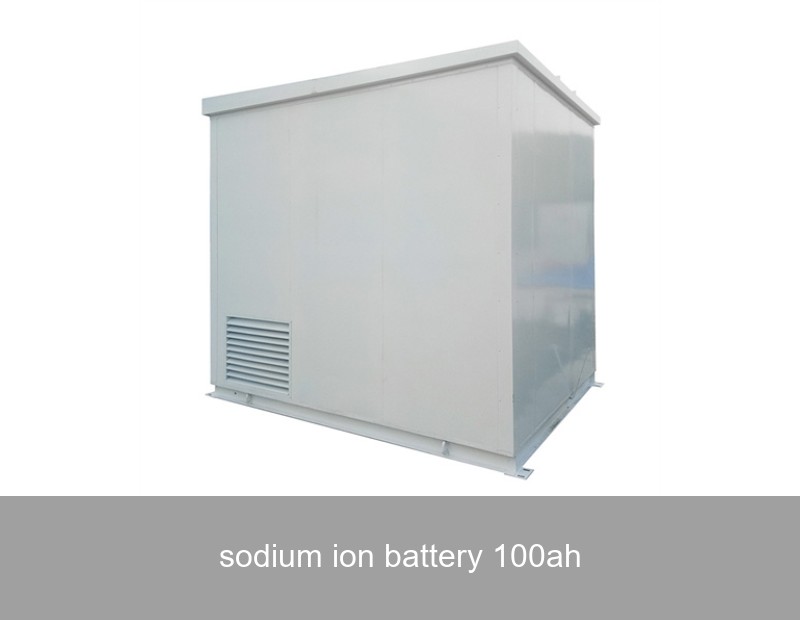
Imagine a world where your home battery backup or your business's energy resilience isn't tied to the volatile supply chains of lithium and cobalt. This isn't a distant future—it's unfolding now with the arrival of the sodium-ion battery 100Ah. For homeowners, businesses, and renewable energy enthusiasts across Europe and the US, this technology represents more than just a new battery; it's a shift towards more sustainable, secure, and potentially more affordable energy storage. But what makes a 100Ah sodium-ion battery different from the lithium-ion packs we're familiar with? Let's unpack the reality behind the headlines.
Table of Contents
The Phenomenon: Why Sodium is Stealing the Spotlight
You've felt it: the growing pressure on energy grids, the spike in electricity prices, and the urgent need to integrate more solar and wind power. Lithium-ion batteries have been the heroes of this transition, but they come with challenges—resource constraints, safety concerns, and cost volatility. Enter sodium-ion technology. Sodium is one of the most abundant elements on Earth (found in ordinary sea salt!), making it inherently cheaper and more geographically secure than lithium. The core promise of a sodium ion battery 100Ah is to deliver familiar, usable capacity (100 Ampere-hours) but from a more sustainable and potentially safer chemistry. It performs well in a wider temperature range, reducing cooling needs, and eliminates risks like thermal runaway associated with some lithium chemistries.

Image Source: Unsplash - Representative image of battery cell research and development.
Data Deep Dive: 100Ah Capacity in the Real World
Let's demystify "100Ah." Ampere-hour (Ah) is a unit of electrical charge. In practical terms, a 100Ah battery can theoretically deliver 100 amps for one hour, or 5 amps for 20 hours. For a typical home solar storage system operating at 48V, a single 100Ah sodium-ion battery module would store roughly 4.8 kWh of energy. That's enough to power essential loads like refrigeration, lighting, and internet for several hours during an outage.
But raw capacity is just one piece. Here’s how sodium-ion (Na-ion) stacks up against mainstream Lithium Iron Phosphate (LFP):
| Feature | Sodium-ion (100Ah Example) | Lithium Iron Phosphate (LFP) |
|---|---|---|
| Energy Density (Wh/kg) | 120-160 (Rapidly improving) | 140-180 |
| Cycle Life (to 80% capacity) | 3,000 - 6,000 cycles* | 4,000 - 7,000 cycles |
| Key Raw Material | Sodium (Abundant, low-cost) | Lithium, Iron, Phosphate |
| Performance at Low Temp | Excellent (High retention) | Good (Requires management) |
| Inherent Safety | High (Stable chemistry) | High |
*Data based on leading lab results and early commercial specs. Real-world performance varies. Source: Nature Energy Review on Na-ion batteries.
The data shows a trade-off: while current energy density is slightly lower, the advantages in cost, sustainability, and safety are compelling for many stationary storage applications where space is less critical than total cost of ownership.
Case Study: A German Microgrid Paves the Way
Let's look at a real-world application. In 2023, a cooperative in rural Bavaria, Germany, launched a community microgrid project designed to achieve 90% energy independence. Their challenge was to find a safe, cost-effective storage solution for the surplus solar energy generated in summer to be used in winter, requiring thousands of deep cycles over decades.
- Project: Community Solar + Storage Microgrid.
- Location: Bavaria, Germany.
- Storage Solution: A 500 kWh modular battery bank using sodium-ion battery 100Ah cells.
- Key Driver: Total lifecycle cost and enhanced fire safety for the community building housing the system.
- Result (After 12 months): The system met over 85% of the community's annual electricity needs. The sodium-ion batteries demonstrated stable performance with minimal capacity degradation, even through a cold German winter where their low-temperature efficiency proved advantageous. Projections show a 20-30% lower long-term cost per cycle compared to previously quoted lithium-ion options.
This case underscores that for community-scale and commercial energy storage, the sodium ion battery 100Ah is moving from lab curiosity to field-proven component.
Highjoule's Role: Integrating Innovation into Reliable Systems
At Highjoule, we've been at the forefront of energy storage intelligence since 2005. We see emerging technologies like sodium-ion not as standalone products, but as crucial components within a smarter, integrated energy ecosystem. Our approach is to leverage the right battery chemistry for the right application.
For instance, our Highjoule Hive™ Commercial Energy Platform is architected to be chemistry-agnostic. This means we can seamlessly integrate high-performing 100Ah sodium-ion battery packs into our systems where they make the most sense—such as for large-scale demand charge management or solar time-shifting for warehouses and agricultural facilities. Our intelligent energy management software (EMS) optimizes charging and discharging cycles to maximize the longevity and economic return of any battery, including sodium-ion.

Image Source: Unsplash - Representative image of a modern industrial battery storage installation.
For residential applications, our Highjoule HomePower+ solution is being future-proofed. As sodium-ion cells achieve higher energy densities and reach cost parity, they will become an attractive, ultra-safe option for home backup power. Our focus is on delivering a complete, reliable, and smart solution—whether the underlying cell chemistry is lithium, sodium, or what comes next.
Expert Insights: Balancing Promise and Practicality
The narrative isn't that sodium-ion will "replace" lithium-ion overnight. Think of it as a vital diversification of our energy storage portfolio. According to a 2023 IEA report on energy storage, achieving net-zero goals will require a massive, multi-technology deployment of storage, with different technologies serving different needs.
For the sodium ion battery 100Ah class, the immediate sweet spot is in:
- Stationary Storage: Where weight and size are less critical than safety, cycle life, and cost.
- Microgrids & Off-Grid: As seen in our German case, their robustness and temperature tolerance are key assets.
- Backup Power Systems: Offering a stable, safe alternative for telecom towers or emergency power.
The technology is still maturing. Energy density needs to improve for more space-constrained applications, and the manufacturing supply chain must scale. However, with major investments and rapid R&D progress, these hurdles are being addressed faster than many predicted.
The Future and Your Next Question
We stand at an inflection point. The sodium ion battery 100Ah is more than a spec sheet; it's a symbol of a more resilient and sustainable energy future. It asks us to think beyond a single technology and towards integrated, intelligent systems that harness the best of all worlds.
So, as you consider energy storage for your home, business, or community project, the question is no longer just "How many kilowatt-hours do I need?" The new, more nuanced question to ask is: "Given my specific priorities—be it upfront cost, lifecycle cost, safety, sustainability, or operational environment—what is the optimal battery chemistry and intelligent management system for my unique energy profile?"
What specific energy challenge are you looking to solve, and how might the evolving landscape of battery technologies like sodium-ion play a role in your solution?
 Inquiry
 Online Chat