


Compressed CO2 Energy Storage: A Game-Changer for Grid Stability and Renewable Integration
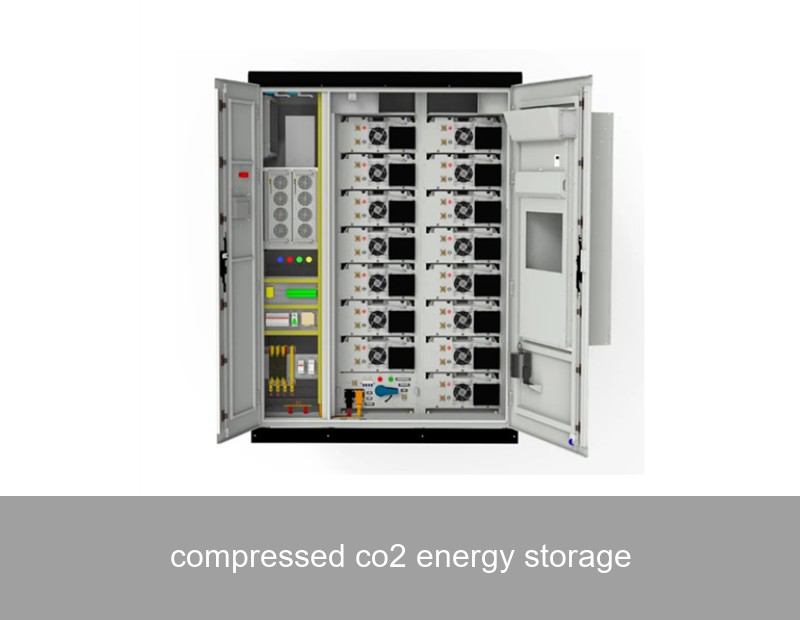
As the world races towards a net-zero future, a critical challenge emerges: how do we store massive amounts of renewable energy for when the sun doesn't shine and the wind doesn't blow? While lithium-ion batteries dominate headlines, a powerful and innovative contender is gaining momentum—compressed CO2 energy storage. This technology isn't just about storing energy; it's about creating a flexible, long-duration backbone for our future grids, especially in markets like Europe and North America grappling with renewable intermittency. Let's explore how turning carbon dioxide into a "battery" could revolutionize our energy landscape.
Table of Contents
How Does Compressed CO2 Energy Storage Actually Work?
Think of it as a sophisticated, closed-loop energy pump. The core principle is thermodynamic, using carbon dioxide's unique properties—it condenses into a liquid under moderate pressure at ambient temperature. Here's the simple breakdown:
- Charging (Storage): When excess renewable electricity is available (e.g., on a windy afternoon), the system uses that cheap, clean power to compress and cool CO2 gas until it liquefies. This liquid CO2 is then stored in insulated tanks at near-ambient pressure.
- Discharging (Generation): When the grid needs power (e.g., a calm evening), the liquid CO2 is warmed, causing it to rapidly expand back into a high-pressure gas. This gas flow drives a turbine, generating electricity fed back into the grid.
The entire process operates in a sealed system—the CO2 is constantly recycled, with zero emissions to the atmosphere. It's a brilliant example of using physics, not rare chemistry, for large-scale storage.

Image Source: Unsplash - Representative image of energy infrastructure
Compressed CO2 vs. Other Storage Technologies: A Clear Comparison
Why consider CO2 when we have lithium-ion and pumped hydro? Each technology has its ideal role. Compressed CO2 storage excels in the "long-duration" niche (10+ hours to multiple days), bridging the gap between short-duration batteries and seasonal storage.
| Technology | Typical Duration | Key Advantages | Considerations |
|---|---|---|---|
| Compressed CO2 Storage | 10-100+ hours | High round-trip efficiency (~75-80%), uses low-cost materials, site flexibility, long lifespan. | Newer technology, commercial scaling ongoing. |
| Lithium-Ion Batteries | 1-4 hours | High power, fast response, modular. | Resource constraints, degradation over time, shorter duration. |
| Pumped Hydro | 6-20+ hours | Proven, very large scale. | Geographic limitations, long permitting, high upfront cost. |
| Compressed Air (CAES) | 10-100+ hours | Large scale, long duration. | Often requires specific geological formations (salt caverns). |
As a global leader, Highjoule recognizes that the future grid needs a portfolio of storage solutions. While we provide cutting-edge lithium-ion Battery Energy Storage Systems (BESS) for commercial and industrial applications requiring rapid response, we actively monitor and partner with innovators in long-duration storage like compressed CO2. This allows us to design hybrid systems that match the right technology to our clients' specific discharge duration and economic needs.
A European Pioneer: The Energy Dome Case Study
Let's look at real-world progress. Italian company Energy Dome is at the forefront, having commissioned its first commercial-scale plant in Sardinia in 2023. Their "CO2 Battery" is a landmark for the technology.
- Project: Energy Dome's first 20MW/200MWh (10-hour duration) commercial plant.
- Location: Sardinia, Italy.
- The Data Point: A reported round-trip efficiency of around 75%, competitive with other long-duration technologies. The system is designed for a 30-year lifespan with minimal performance degradation.
- The Impact: This plant demonstrates the technology's readiness to provide bulk energy storage, helping to stabilize regional grids and maximize the use of local wind and solar resources. It proves that compressed CO2 storage can be built without specific geography and on a timeline measured in months, not years.
This case is particularly relevant for European and US markets with aggressive renewable targets. It shows a viable path to storing night-time wind power for the next day's peak or managing multi-day weather-related shortfalls.
Where Highjoule Fits In: Integrating Innovation with Proven Systems
At Highjoule, founded in 2005, our mission is to deliver intelligent, sustainable power solutions. While compressed CO2 is an emerging long-duration player, our strength lies in deploying and optimizing today's storage workhorses—advanced lithium-ion BESS—and integrating them with the broader energy ecosystem.
Imagine a future microgrid for a large industrial facility: Highjoule's smart energy management platform could orchestrate a combination of on-site solar, our high-power BESS for immediate load shifting and frequency regulation, and a compressed CO2 system for weekly or seasonal energy banking. This creates resilience and cost savings unmatched by a single technology.
Our expertise in power conversion systems (PCS), system control, and grid interconnection is directly relevant. The turbine-generator set in a CO2 plant shares similar grid-synchronization challenges that we solve daily. We view these new technologies not as competitors, but as future components in the comprehensive, multi-technology energy landscapes we design for our commercial, industrial, and utility partners.

Image Source: Unsplash - Solar farm representing renewable integration
The Future Outlook for CO2-Based Storage
The potential is immense. The U.S. Department of Energy's "Long Duration Storage Shot" aims to reduce the cost of grid-scale storage by 90% for systems that deliver 10+ hours of duration within this decade. Compressed CO2 is a prime candidate to help hit that target. Its use of commodity materials (steel, CO2) gives it a clear cost-reduction pathway as it scales.
Challenges remain, primarily related to scaling manufacturing of specialized components like the CO2 turbomachinery and achieving the levelized cost of storage (LCOS) needed to undercut fossil peaker plants consistently. But the trajectory is clear. As more pilots, like Energy Dome's, become operational and generate performance data, investor and utility confidence will grow.
Your Energy Resilience Strategy
The energy transition is moving from a question of generation to one of management. Whether it's a factory in Germany looking to cap its energy costs, a data center in Texas needing 24/7 clean power, or a municipality building a microgrid, long-duration storage will soon be part of the conversation.
Is your organization evaluating how to achieve true energy independence and price stability over the next decade, and what role emerging long-duration storage technologies might play in your asset portfolio?
 Inquiry
 Online Chat