


Beyond the Meter: How Intelligent Software Per Energy Manager is Revolutionizing Power Usage
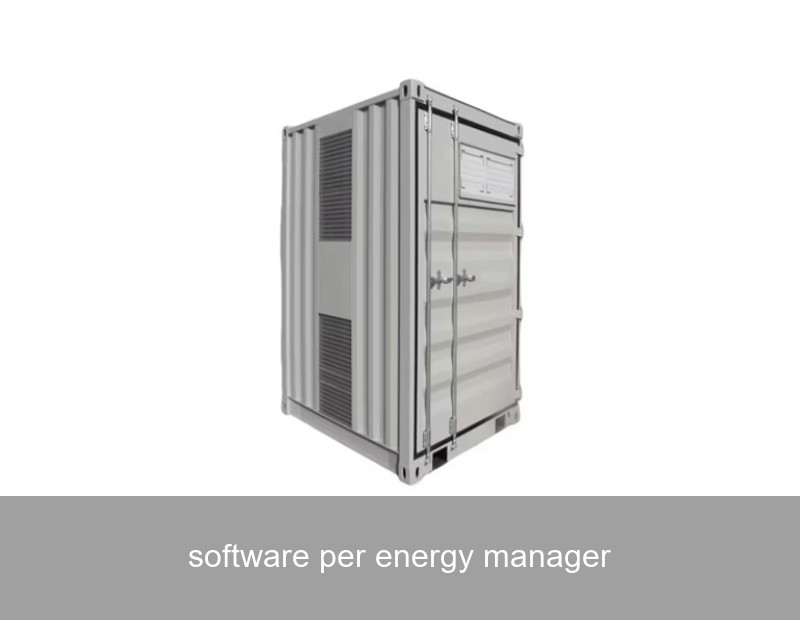
Let's be honest. For most businesses, energy management has historically meant one thing: receiving a monthly bill and hoping the next one isn't higher. The "manager" was often just the person who paid the invoice. But in an era of volatile energy prices, ambitious sustainability goals, and complex on-site generation like solar and storage, this passive approach is a costly relic. Today, the true game-changer isn't just a new piece of hardware; it's the sophisticated software per energy manager that transforms raw data into actionable intelligence and direct control. This digital brain is what turns a collection of assets into a cohesive, money-saving, and future-proof energy strategy.
The Phenomenon: Energy Data Overload Without Insight
Walk into any modern commercial facility, and you'll find a wealth of energy data. Smart meters, submeters, solar inverters, battery systems, building management systems—they're all generating streams of information. The problem? This data often lives in isolated silos. The finance team sees the total cost, the facilities manager might see demand peaks, and the sustainability officer tracks total consumption. No one has a unified, real-time view that answers the critical questions: Why did our cost spike last Tuesday at 3 PM? Is our solar energy being used optimally, or are we exporting it when we should be charging our battery? This fragmentation is the core challenge modern energy managers face.
The Data: The Untapped Potential in Your Meter
The opportunity cost of inaction is staggering. According to a report by the International Energy Agency (IEA), digital tools like advanced energy management software could save nearly 10% of total energy consumption in commercial and industrial buildings by 2040. Let's translate that into your reality. For a medium-sized industrial plant with an annual energy spend of €200,000, that's €20,000 left on the table every single year. More than just savings, this software provides resilience. By intelligently orchestrating battery storage with grid power and solar generation, businesses can shield themselves from peak demand charges, which can constitute up to 50% of a commercial electricity bill in many U.S. and European markets.

Image Source: Unsplash - A modern energy dashboard turns complex data into clear insights.
The Case Study: A European Supermarket Chain's Digital Transformation
Consider the real-world example of a major supermarket chain in Germany. They had installed solar PV on hundreds of store rooftops and were piloting battery storage. Yet, their energy costs remained stubbornly high, and their on-site renewable energy wasn't delivering maximum value.
The Problem: Systems operated independently. The solar panels produced energy, but without intelligent forecasting, the battery would often be full by midday. Excess solar was sold to the grid at low feed-in tariffs, while the stores would later draw expensive grid power during the evening peak. The energy team lacked the tools to automate a better strategy.
The Solution: They deployed a centralized, cloud-based energy manager software platform across 50 pilot locations. This platform integrated data from every meter, inverter, and battery. Using weather forecasts and price signals, the software's algorithms created a 24-hour forecast for solar production and store consumption.
The Data-Driven Outcome: The software took control, implementing an automated strategy: store cheap solar energy in the batteries, use it to power the store during the high-price evening peak, and only then draw from the grid. The results after one year were compelling:
- 15% Reduction in overall energy costs per store.
- 40% Increase in self-consumption of solar energy.
- Payback period for the software and control system investment was under 18 months.
- Provided a clear data foundation for rolling out EV charging stations without increasing grid demand charges.
This case underscores that hardware alone is not enough. It's the intelligent software per energy manager that unlocks the synergies and delivers the financial and environmental ROI.
Key Features of Intelligent Energy Manager Software
So, what should you look for in a modern energy management platform? It must move beyond simple monitoring to become a proactive control center.
| Feature | What It Does | Business Benefit |
|---|---|---|
| Unified Asset Monitoring | Brings data from solar, storage, grid, and loads into a single pane of glass. | Holistic visibility, eliminating data silos and confusion. |
| AI-Powered Forecasting | Predicts energy generation (solar/wind) and site consumption using weather and historical data. | Enables proactive planning, not reactive scrambling. |
| Automated Cost Optimization | Schedules battery charge/discharge and load shifting based on real-time and forecasted energy prices. | Directly cuts costs by avoiding peak tariffs and maximizing self-use. |
| Sustainability Reporting | Automatically tracks carbon footprint, renewable energy usage, and other ESG metrics. | Simplifies compliance and reporting for corporate sustainability goals. |
| Anomaly Detection & Alerts | Uses machine learning to spot unusual consumption patterns that indicate equipment faults. | Prevents waste, enables predictive maintenance, and avoids downtime. |
How Highjoule's EMPower Platform Delivers Intelligent Management
At Highjoule, we've spent nearly two decades not just building advanced battery storage systems, but perfecting the intelligence that makes them truly valuable. Our EMPower Energy Management Platform is the embodiment of this philosophy—a sophisticated software per energy manager designed for simplicity and power.
EMPower is the central nervous system for your energy assets. It seamlessly integrates with Highjoule and third-party hardware, providing the features outlined above and more. For our commercial and industrial clients, the magic lies in its Automated Policy Engine. You set your goals—"minimize cost," "maximize sustainability," or "ensure backup resilience"—and EMPower's algorithms execute the optimal strategy 24/7. It continuously analyzes grid conditions, like the dynamic FERC-regulated markets in the U.S. or intraday prices in Europe, to make real-time decisions that put money back on your bottom line.

Image Source: Unsplash - Centralized control is key for modern energy management.
For residential and small business customers using Highjoule's home storage systems, EMPower provides a user-friendly app that demystifies energy usage. It shows you exactly when you're using solar, battery, or grid power, suggests optimal times to run appliances, and gives you direct control over your energy destiny, all contributing to a more stable and sustainable grid.
The Future: AI, Automation, and Proactive Management
The evolution of software per energy manager is moving towards full autonomy and grid interaction. We're talking about systems that don't just react but predict and participate. Imagine software that can automatically enroll your battery storage in grid-balancing services like frequency regulation, generating a new revenue stream for your business. Or a platform that negotiates with other local assets in a virtual power plant (VPP) to collectively support the community grid during stress events. This level of sophistication, powered by AI, is where the next frontier of value lies, transforming energy managers from bill-payers into strategic grid partners and profit centers.
What's Your Next Step?
The transition from passive consumer to active energy manager is no longer a luxury for the future; it's a competitive necessity for today. The data exists, the technology is proven, and the financial case is clear. The question is no longer if you should implement an intelligent energy management system, but how you will start. What is the one piece of energy data you wish you understood better today, and how could having that insight change your decisions tomorrow?
 Inquiry
 Online Chat