


The Ultimate Guide to Solar Backup Power Supply for Home: Energy Independence in Your Hands
a fierce storm rolls through your neighborhood, the lights flicker, and then—darkness. The grid is down. But in your home, the refrigerator hums, the Wi-Fi stays on, and a few lamps keep the gloom at bay. This isn't magic; it's the modern reality enabled by a solar backup power supply for home. More than just emergency power, these systems are becoming a cornerstone of resilient, sustainable, and cost-smart living. Let's explore how this technology works, why it's a game-changer, and how companies like Highjoule are making it smarter and more accessible than ever.
Table of Contents
What is a Solar Backup Power Supply for a Home?
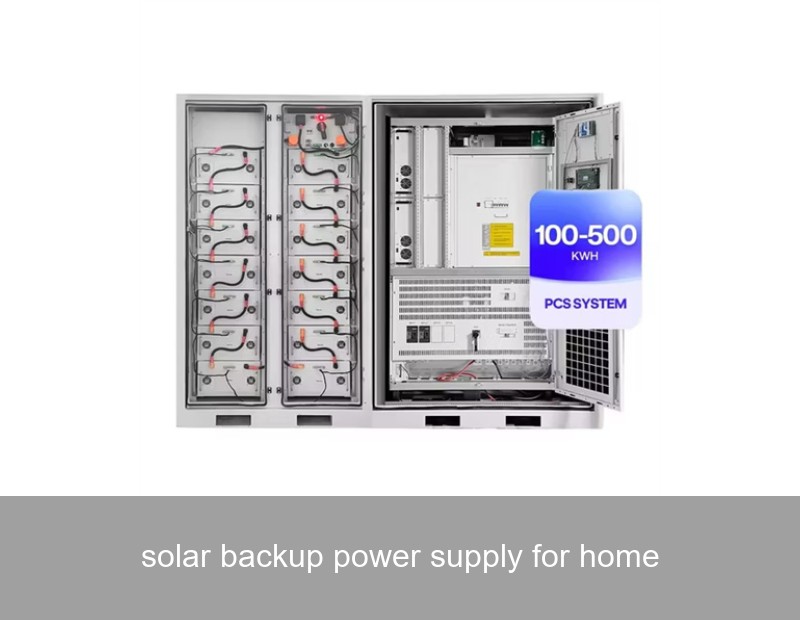
A solar backup power supply for home is an integrated system that captures energy from the sun, stores it, and delivers it to your essential home appliances during a grid outage. Unlike a noisy gas generator, it operates silently, emits no fumes, and fuels itself for free using sunlight. The core idea is elegant: your rooftop solar panels generate electricity during the day. Instead of sending all excess power to the grid, a portion charges a dedicated home battery storage system. When the grid fails, an intelligent inverter automatically disconnects your home from the grid (a process called "islanding") and switches power supply to the charged battery, keeping your critical loads running.

Image Source: Unsplash (Photographer: Vivint Solar)
The Urgent Push for Home Energy Resilience
The demand for home energy backup isn't just about convenience; it's driven by tangible, growing challenges.
The Problem: Increasing Grid Instability
From extreme weather events like hurricanes and wildfires to aging infrastructure and peak demand overloads, power outages are becoming more frequent and prolonged. In the U.S., the average customer experienced just over 7 hours of power interruptions in 2021, with major events being a primary contributor. In Europe, energy security concerns have further accelerated the desire for self-sufficiency.
The Data: Rising Adoption and Falling Costs
The numbers tell a compelling story. The global market for residential energy storage is soaring. According to industry analyses, the cost of lithium-ion batteries, the heart of these systems, has fallen by nearly 90% in the last decade. This economic shift, combined with supportive policies and rising electricity rates, makes a solar backup system a financially sound investment for long-term energy bill management, not just an emergency expense.
Key Components of a Modern Solar Backup System
Understanding the key pieces will help you make an informed decision. A robust system consists of:
- Solar Panels (PV Array): Capture sunlight and convert it to direct current (DC) electricity.
- Hybrid or Battery-Ready Inverter: The system's brain. It converts DC from panels/battery to usable AC for your home, manages energy flow, and enables seamless grid disconnection.
- Home Battery Storage: The cornerstone of backup. High-capacity lithium-ion batteries (like LiFePO4) store excess solar energy for use at night or during outages.
- Smart Energy Management System: Software that intelligently decides when to charge, discharge, or export energy, optimizing for self-consumption, cost savings, or backup readiness.
- Critical Loads Panel (Optional but recommended): A sub-panel that powers essential circuits (lights, fridge, internet, medical equipment), allowing a smaller battery to provide backup for longer.
Real-World Impact: A Case Study from California
Let's move from theory to practice. Consider the Johnson family in Sonoma County, California, an area prone to Public Safety Power Shutoffs (PSPS) to prevent wildfires.
The Situation
In 2022, the Johnsons faced 5 planned outage events, totaling over 150 hours without grid power. Relying on a small portable generator was noisy, required constant refueling, and couldn't power their well pump or home office.
The Solution & Data
They installed a 10 kW solar array paired with a 20 kWh integrated battery storage system. During a 48-hour PSPS event in October 2023:
| Metric | Result |
|---|---|
| Total Energy Used from Grid | 0 kWh |
| Total Energy Provided by Solar + Battery | 89.5 kWh |
| Critical Loads Supported | Refrigeration, lighting, well pump, internet, and home office (computers & monitors) |
| Battery State of Charge at End of Event | 32% (recharged by solar the next day) |
The system provided uninterrupted power, preserved food and medicine, enabled continued work, and provided immense peace of mind. Their calculated payback period, factoring in daily self-consumption savings and state incentives, is under 7 years.
Highjoule's Intelligent Approach to Home Solar Backup
As a global leader in advanced energy storage since 2005, Highjoule designs systems with intelligence, efficiency, and longevity at their core. Our solutions for residential solar backup power supply for home go beyond simple battery boxes.

Image Source: Unsplash (Photographer: American Public Power Association)
Highjoule Horizon Home Energy System
Our flagship residential product is an all-in-one unit that simplifies resilience:
- Modular Scalability: Start with a base unit and add battery capacity as your needs or budget grow.
- High-Efficiency LiFePO4 Batteries: Safer chemistry with a longer cycle life (over 6000 cycles), ensuring your backup is reliable for decades.
- AI-Powered Energy OS: Our software learns your home's energy patterns, weather forecasts, and utility rate schedules. It automatically optimizes for maximum self-consumption, prepares for predicted storms, and can even participate in grid services programs (where available) to generate revenue.
- Seamless Integration: The system works with both new and existing solar installations, and our certified installer network ensures a smooth, compliant process.
For homeowners, this means not just backup power, but a holistic tool for managing energy costs and reducing carbon footprint every single day. You can learn more about the science behind modern battery storage from resources like the National Renewable Energy Laboratory.
Choosing the Right System for Your Home
Selecting a solar backup power supply for home is a personal decision. Ask yourself:
- What are your critical loads? List the appliances you must keep on during an outage (sum: their wattage).
- What is your outage profile? Are they typically short (hours) or long (days)?
- What are your financial goals? Pure backup, or maximum daily bill savings?
- What is your home's solar potential? A site assessment is key.
Partnering with an expert like Highjoule means you get a tailored design that balances backup duration, system cost, and daily value. We help you navigate incentives like the U.S. federal Investment Tax Credit (ITC) or European subsidies to improve your return on investment.
Your Next Step Towards Energy Independence
The technology for clean, quiet, and intelligent home energy resilience is here and proven. It empowers you to take control, save money, and contribute to a more stable grid. What would you power first to transform your home's experience during the next outage? We invite you to explore your home's potential with a personalized energy assessment from Highjoule's network of experts.
 Inquiry
 Online Chat