


Solar Power and Solar Battery Systems: Your Complete Guide to Energy Independence
Have you ever watched your electricity meter spin backwards on a sunny day, only to dread the evening bill when the sun sets? You're not alone. Across Europe and the US, millions of homeowners and businesses are harnessing solar power, but the real game-changer is pairing it with the right solar battery. This combination isn't just about generating clean energy; it's about controlling when and how you use it, transforming sunlight into a reliable 24/7 power source. Let's explore how this technology works and why it's becoming the cornerstone of modern energy resilience.
Table of Contents
- The Challenge: Solar Power's Intermittency
- The Solution: Solar Battery Storage Explained
- Key Benefits of Adding a Battery to Your Solar System
- A Real-World Case Study: Resilience in Practice
- Choosing the Right Solar Battery System
- The Future of Solar and Storage
The Challenge: Solar Power's Intermittency
The phenomenon is clear: solar panels produce abundant energy when the sun shines, often peaking at midday. However, energy demand typically surges in the early morning and evening. This creates a mismatch. Without storage, excess solar power is fed back to the grid, often for minimal compensation, while you draw expensive power from the grid at night. This model limits both your savings and your energy security.
Data from the U.S. Department of Energy shows that while solar accounted for over 50% of new electricity-generating capacity in 2023, the value of this energy is maximized only when it can be dispatched on demand. Furthermore, grid instability and increasing power outages—like those experienced in Europe during extreme weather events—highlight the vulnerability of a grid-dependent system.
The Solution: Solar Battery Storage Explained
A solar battery system solves this core problem. Think of it as a sophisticated energy bank for your home or business. Your solar panels are the income generator, and the battery is your savings account. During the day, instead of sending all surplus energy away, you store it. When production drops or the grid fails, you withdraw from your personal energy reserves.
Modern systems, like those developed by Highjoule, go beyond simple storage. They are intelligent energy managers. Our Highjoule Harmony ESS integrates seamlessly with new or existing solar arrays. Its AI-driven software learns your consumption patterns, weather forecasts, and grid tariff schedules to autonomously decide the most economical moment to store or discharge energy, ensuring you use every kilowatt-hour to your greatest advantage.

Image Source: Unsplash - A modern home solar installation with integrated storage.
How a Solar + Battery System Works: A Typical Day
- Morning (6-10 AM): The household wakes up. The battery supplies power for appliances, coffee makers, and heating, offsetting peak grid rates.
- Midday (10 AM - 4 PM): Solar production exceeds home consumption. The battery charges fully with the excess clean energy.
- Evening Peak (4-9 PM): Solar production ceases, grid demand and prices soar. The home runs entirely on the stored energy from the battery, avoiding expensive grid imports.
- Overnight (9 PM - 6 AM): The battery continues to power essential loads until morning, when the cycle begins anew.
Key Benefits of Adding a Battery to Your Solar System
| Benefit | Explanation | Impact |
|---|---|---|
| Energy Independence | Reduce reliance on the utility grid and volatile energy markets. | Greater control over your energy costs and supply. |
| Bill Savings & ROI | Maximize self-consumption of solar energy, reducing grid imports during high-tariff periods. | Typical system payback periods of 6-10 years, with decades of subsequent free energy. |
| Backup Power | Provides seamless, automatic power during grid outages. | Keeps lights, refrigeration, and critical systems running for hours or even days. |
| Grid Support & Sustainability | Stored energy can be used to stabilize the local grid (in some programs) and reduces fossil fuel peaker plant use. | Contributes to a more resilient and cleaner community energy infrastructure. |
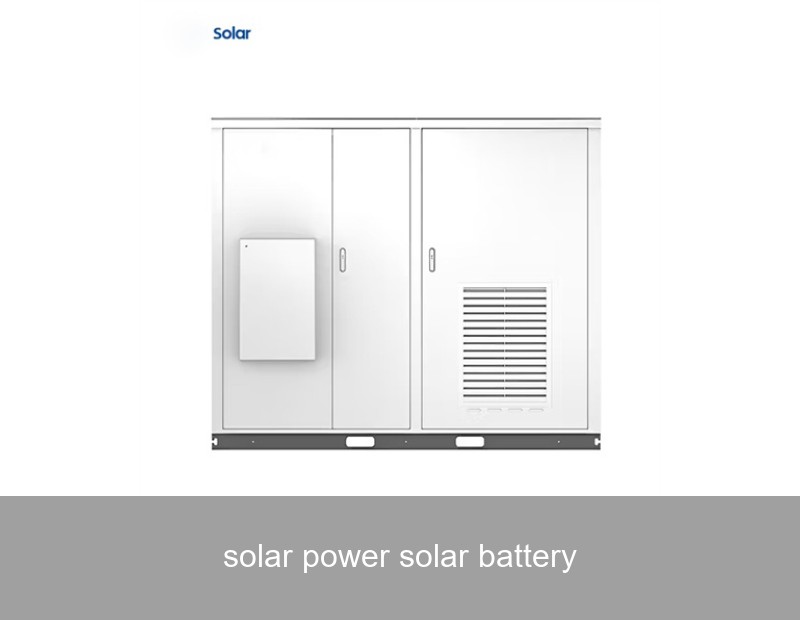
For commercial and industrial applications, Highjoule's Quantum BESS series offers scalable, containerized solutions. These systems manage demand charges—a major cost for businesses—by discharging stored energy during short periods of peak power draw, leading to dramatic reductions in operational expenses.
A Real-World Case Study: Resilience in Practice
Let's look at a concrete example from California, USA, a leader in solar adoption but also prone to Public Safety Power Shutoffs (PSPS) due to wildfire risk.
The Situation: A mid-sized winery in Napa Valley installed a 250 kW solar array in 2018. While it reduced their daytime energy costs, they remained vulnerable to multi-day grid outages during harvest season, which could jeopardize temperature-controlled fermentation tanks.
The Solution: In 2022, they partnered with Highjoule to integrate a 500 kWh Quantum BESS with their existing solar. The system was designed for two primary functions: daily load-shifting to avoid time-of-use rates and providing critical backup for up to 48 hours.
- Energy Cost Reduction: By shifting consumption, they reduced their annual electricity bill by an additional 68% beyond solar alone.
- Demand Charge Savings: The battery's peak shaving capability cut monthly demand charges by over 40%.
- Reliability: During a 36-hour PSPS event in October 2023, the winery operated seamlessly on solar + storage. According to a CAISO report, distributed storage is increasingly critical for grid resilience during such events.
This case demonstrates that a solar battery system is not just an expense; it's a strategic asset protecting both finances and core operations.
Choosing the Right Solar Battery System
Not all batteries are created equal. Key considerations include:
- Capacity & Power: Capacity (kWh) is your energy "tank size." Power (kW) is how much energy can be delivered at once. Ensure both match your needs.
- Chemistry: Lithium Iron Phosphate (LFP) batteries, like those used in Highjoule's Harmony ESS, offer superior safety, longevity, and performance across a wide temperature range compared to older NMC chemistries.
- Depth of Discharge (DoD): A higher DoD means you can safely use more of the battery's stated capacity without damaging it.
- Integration & Intelligence: The system's brain is as important as its hardware. Look for smart energy management that optimizes for your specific goals.

Image Source: Unsplash - Technician inspecting a commercial battery storage system.
Highjoule provides end-to-end support, from initial site assessment and financial modeling to professional installation, grid compliance, and long-term monitoring via our proprietary JouleMind AI platform. This holistic approach ensures your investment is optimized for the long haul.
The Future of Solar and Storage
The synergy between solar power and solar battery technology is accelerating. We're moving towards virtual power plants (VPPs), where thousands of distributed systems like yours are aggregated to act as a single, large power plant, supporting the grid and creating new revenue streams for participants. Furthermore, innovations in battery density and recycling, as noted by research from NREL, are making these systems more sustainable and cost-effective over their entire lifecycle.
So, as you consider taking control of your energy future, what is the first question you need answered to evaluate if your home or business is ready for a solar battery system?
 Inquiry
 Online Chat