


Plug In Solar Battery Storage: Your Gateway to Energy Independence
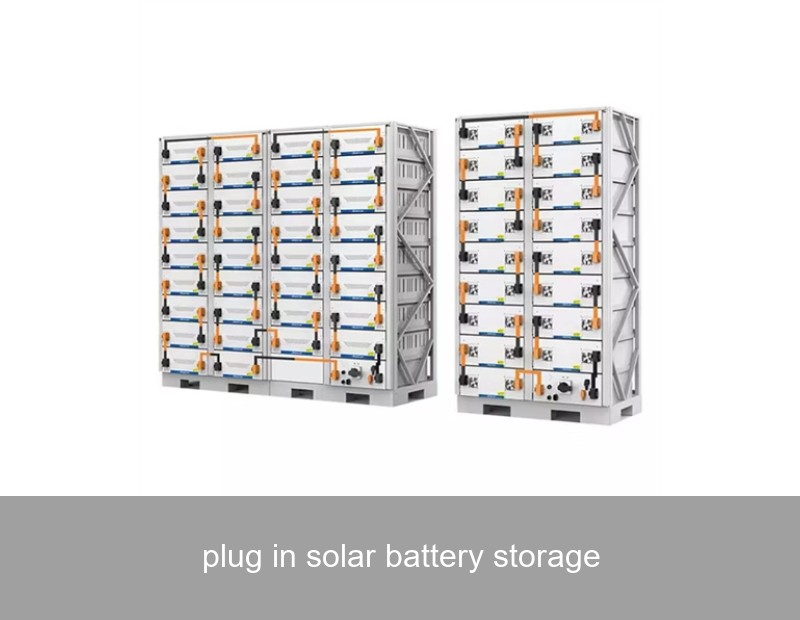
Have you ever watched your electricity meter spin backwards on a sunny afternoon, only to draw power from the grid at night, paying premium rates? This daily dance is a common frustration for solar panel owners. The solution, increasingly within reach for homes and businesses, is plug in solar battery storage. This technology is transforming renewable energy from a supplemental source into a reliable, round-the-clock power supply. In this article, we'll demystify how these systems work, explore their tangible benefits with real-world data, and show you how they're paving the way for a smarter, more resilient energy future.
Table of Contents
- What is Plug-In Solar Battery Storage?
- How Does a Plug-In Battery System Work?
- Key Benefits: Beyond Just Backup Power
- Real-World Impact: A Case Study from California
- Choosing the Right System: What to Consider
- The Future of Home and Business Energy
What is Plug-In Solar Battery Storage?
At its core, plug in solar battery storage is a system that captures and stores excess electricity generated by your solar panels. Instead of sending surplus energy back to the grid (often for a low feed-in tariff), you store it in a high-capacity battery for use later—when the sun isn't shining, during peak evening hours, or even during a power outage. Think of it as a personal energy savings account for your home or business. The term "plug-in" often refers to the growing segment of AC-coupled battery systems. These units can be more easily added to existing solar installations, as they "plug into" your home's AC electrical system, often simplifying installation and offering greater flexibility.

Image Source: Unsplash - A modern home with solar panels and a potential location for a battery storage unit.
How Does a Plug-In Battery System Work? The Daily Cycle
Let's walk through a typical day. Your rooftop solar panels are most productive around midday. A standard setup without storage would export most of that power. With a battery system, the magic happens:
- Daytime (Generation & Storage): Solar panels power your home first. Any excess energy is directed to charge the battery. Once the battery is full, surplus energy can then be exported to the grid.
- Evening/Night (Discharge): As solar production drops and household demand rises, the system automatically switches to draw power from the charged battery. This drastically reduces or eliminates your need to buy expensive grid electricity.
- Grid Outage (Backup): Most modern systems, like those from Highjoule, include an islanding function. If the grid goes down, the system can disconnect and use the stored energy in the battery to power critical loads, keeping your lights on and fridge running.
This intelligent management is handled by an energy management system (EMS), the brain of the operation, which optimizes for self-consumption, cost savings, or grid services.
The Highjoule Advantage: Intelligent, Integrated Storage
At Highjoule, we've spent nearly two decades refining this technology. Our HES Series of residential and commercial energy storage systems are designed as true AC-coupled, plug-and-play solutions. They seamlessly integrate with both new and existing solar installations. What sets them apart is the Highjoule Smart EMS, which doesn't just react—it learns. It analyzes your consumption patterns, weather forecasts, and real-time electricity tariffs to optimize when to charge, discharge, or hold energy, maximizing your financial return and energy independence.
Key Benefits: Beyond Just Backup Power
The value of adding storage extends far beyond emergency preparedness.
| Benefit | Description | Impact |
|---|---|---|
| Maximized Self-Consumption | Use more of the solar energy you produce. | Can increase the utilization of your solar investment from ~30% to 70% or more. |
| Reduced Energy Bills | Avoid buying grid power during expensive peak periods. | Significant savings, especially in regions with high Time-of-Use (TOU) rates. |
| Enhanced Resilience | Provide backup power during outages. | Peace of mind and continuity for homes and critical business operations. |
| Grid Support & Sustainability | Reduce strain on the grid during peak demand. | Contributes to community-wide grid stability and higher penetration of renewables. |
Real-World Impact: A Case Study from California
Theory is good, but data tells the real story. Let's look at a real example from a climate not unlike Southern Europe's.
The Challenge: A medium-sized winery in Sonoma County, California, had a 100 kW solar array but was still facing high demand charges and unreliable grid power, which risked spoilage during fermentation. Their solar system was offsetting daytime energy use but did nothing for their evening cooling loads or outages.
The Solution: In 2022, they installed a Highjoule CESS-50 commercial energy storage system (500 kWh capacity). The system was AC-coupled to their existing solar infrastructure.
The Results (12-month period):
- Demand Charge Reduction: By strategically discharging the battery during monthly utility peak demand windows, they reduced their peak demand by 40%, saving over $1,800 monthly on this charge alone. (Data sourced from client utility bills and Highjoule monitoring platform).
- Self-Consumption Increase: They increased their direct use of solar power from 35% to 82%.
- Reliability: The system provided seamless backup during two planned public safety power shutoffs, keeping critical refrigeration online and preventing thousands of dollars in potential product loss.
This case mirrors challenges faced by many European and US businesses with volatile energy costs and a need for process continuity. It demonstrates that plug in solar battery storage is a strategic financial asset, not just an environmental one. For more on the role of storage in grid stability, see this report from the International Energy Agency (IEA).
Choosing the Right System: What to Consider
Not all storage systems are created equal. Here are key factors to guide your decision:
- Capacity & Power: Capacity (kWh) is how much energy it can store; Power (kW) is how much it can deliver at once. A home may need 10-20 kWh for backup, while a business needs much more.
- Chemistry: Lithium Iron Phosphate (LFP) is now the industry standard for safety, longevity, and performance. All Highjoule systems utilize LFP chemistry.
- Depth of Discharge (DoD) & Warranty: A high DoD (e.g., 90%) means you can use more of the battery's capacity. Look for a strong warranty (e.g., 10 years, 70% capacity retention).
- Integration & Software: Can it be easily added to your existing setup? Is the management software intelligent and user-friendly?
- Scalability: Can you add more battery modules later if your needs grow? Highjoule's modular design allows for easy expansion.
Highjoule's Tailored Approach
We understand that a one-size-fits-all solution doesn't work. That's why our team works with certified installers across Europe and North America to conduct detailed energy audits. We analyze your past consumption, solar production data, and local utility rates to design a system that meets your specific financial and resilience goals, whether for a family home in Germany or a manufacturing facility in Texas.

Image Source: Unsplash - A technician monitoring a commercial-scale battery storage installation.
The Future of Home and Business Energy
The trend is clear: energy systems are becoming decentralized, digitalized, and democratized. Plug in solar battery storage is the linchpin of this transition. As virtual power plants (VPPs) become more prevalent—where networks of home batteries are aggregated to support the grid—owners may even earn revenue by allowing grid operators to use a small portion of their stored energy during times of critical need. This is not science fiction; pilot programs are active in the UK, Germany, and parts of the US. You can read about a VPP pilot in this U.S. Department of Energy article.
Furthermore, pairing storage with electric vehicle (EV) charging creates a holistic home energy ecosystem. Imagine your car battery acting as an additional backup source or your home battery charging your EV with cheap, self-produced solar energy.
Ready to Take Control of Your Energy?
The journey to energy independence starts with a question: How much of your own clean energy do you want to use, and how much control do you want over your power costs and reliability? Plug in solar battery storage provides a compelling answer. It's an investment that pays dividends in savings, security, and sustainability.
What's the first load you would want to secure during a power outage, and how would it feel to know your solar panels can power it—day or night?
 Inquiry
 Online Chat