


Solar Battery Backup Systems for Homes: Your Guide to Energy Independence
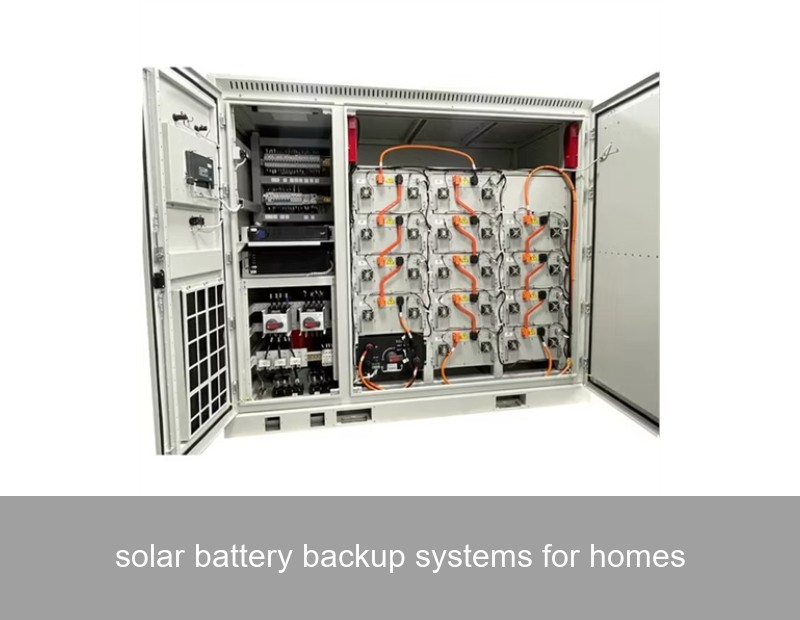
Imagine this: a powerful storm knocks out the grid in your neighborhood. While others are left in the dark, your home's lights stay on, the refrigerator hums quietly, and your family's routine remains undisturbed. This isn't magic; it's the modern reality made possible by solar battery backup systems for homes. As electricity costs soar and extreme weather events become more frequent, homeowners across Europe and the U.S. are increasingly looking beyond solar panels alone. They are seeking true energy resilience. This comprehensive guide will walk you through everything you need to know about integrating a battery with your solar power, transforming your home into a personal power station.
Table of Contents
- What Are Solar Battery Backup Systems?
- Why the Surge in Home Battery Backup? The Data Tells the Story
- Key Components of a Home Solar Battery System
- A Real-World Case Study: Resilience in California
- Choosing the Right System for Your Home
- How Highjoule Empowers Your Energy Independence
- The Future of the Home is Powered by You

Image: A modern home equipped with solar panels and a wall-mounted battery storage unit. Source: Unsplash.
What Are Solar Battery Backup Systems?
At its core, a solar battery backup system for your home is an intelligent energy storage solution that captures and stores the excess electricity generated by your rooftop solar panels. Instead of sending all that surplus clean energy back to the grid (often for a minimal feed-in tariff), you store it in a high-capacity battery for use when you need it most: at night, on cloudy days, or during a power outage. Think of it as your personal energy savings account. You "deposit" solar energy during the sunny hours and make a "withdrawal" whenever your home demand exceeds your solar production or when the grid fails.
The Basic Workflow:
- Daytime (Sunny): Solar panels generate electricity. This power first supplies your home's immediate needs. Any excess charges your battery system. If the battery is full, the remaining surplus is exported to the grid.
- Nighttime/Cloudy Days: Your home draws power primarily from the charged battery, minimizing reliance on the expensive grid.
- During a Grid Outage: This is where the "backup" function shines. An automatic transfer switch (often built into the inverter) safely disconnects your home from the grid. Your system then forms a microgrid, powering critical loads in your home directly from the solar panels and the stored energy in the battery.
Why the Surge in Home Battery Backup? The Data Tells the Story
The move towards home energy storage is not just a trend; it's a logical response to several converging global phenomena. Let's break down the drivers using the PAS (Problem-Agitate-Solution) framework.
Phenomenon & Problem: Grid instability and rising costs are pressing concerns. In the U.S., the average duration of a power outage has been increasing, with major events like wildfires and hurricanes causing prolonged blackouts (U.S. Energy Information Administration). In Europe, the energy crisis following geopolitical tensions sent electricity prices to record highs, making consumers acutely aware of their energy vulnerability.
Agitation with Data: The financial and security pain is real. According to a 2023 Lazard report, the levelized cost of storage (LCOS) for lithium-ion batteries has fallen by over 70% since 2015. Coupled with incentives like the U.S. federal Investment Tax Credit (ITC) – which now includes standalone storage – and various European subsidies, the payback period for a solar-plus-storage system is more attractive than ever. Homeowners are no longer asking "why," but "why not?"
Solution: A properly sized solar battery backup system directly addresses these pains. It provides energy security, shields from volatile utility rates through increased self-consumption, and increases the value and sustainability of your home.
Key Components of a Home Solar Battery System
Understanding the key players in your system will help you make informed decisions. Here’s what makes up a typical setup:
| Component | Primary Function | What to Look For |
|---|---|---|
| Solar Panels | Generate DC (Direct Current) electricity from sunlight. | Efficiency rating, warranty, aesthetics. |
| Battery Bank | Stores excess solar energy as DC power for later use. | Usable capacity (kWh), depth of discharge (DoD), round-trip efficiency, chemistry (Li-ion NMC or LFP). |
| Inverter/Charger | The "brain." Converts DC from panels/battery to AC for home use, manages charging/discharging. | Type (Hybrid inverter recommended for new systems), continuous power output (kW), backup capability. |
| Energy Management System (EMS) | Intelligent software that optimizes energy flow based on habits, tariffs, and weather. | User-friendly app, smart features like time-based control and outage preparedness modes. |
A Real-World Case Study: Resilience in California
Let's look at a concrete example from Sonoma County, California, an area frequently impacted by Public Safety Power Shutoffs (PSPS) to prevent wildfires.
The Scenario: The Johnson family installed a 10 kW solar array in 2020. In 2022, they added a 13.5 kWh lithium iron phosphate (LFP) battery backup system to their home. Their primary goals were to maintain power for critical loads (refrigeration, lighting, internet, and a medical device) during grid outages and to reduce their reliance on the grid during peak pricing hours (4-9 PM).
The Data & Outcome: In the fall of 2023, a PSPS event led to a 36-hour grid outage in their community.
- Backup Performance: The system seamlessly switched to backup power in less than a second. The battery, managed by smart software, powered their essential circuits for the full outage duration. Their solar panels continued to recharge the battery during the daytime, effectively creating an "island" of power.
- Financial Impact: Beyond backup, their self-consumption of solar energy rose from ~40% to over 80%. Their monthly electricity bill, which averaged $180 before storage, was reduced to a near-constant $25 monthly connection fee, saving them roughly $1,860 annually. They estimate a full system payback in under 8 years, not accounting for the intangible value of peace of mind.

Image: A modern, sleek home battery unit installed in a garage. Source: Unsplash.
Choosing the Right System for Your Home
Selecting a solar battery backup system isn't one-size-fits-all. Consider this your decision ladder:
- Define Your "Why": Is your primary goal whole-home backup during outages, or maximizing financial ROI through energy arbitrage? This determines capacity.
- Audit Your Energy Use: Review your utility bills. Identify your critical loads (what must stay on during an outage) and your total daily consumption. A professional energy audit is highly recommended.
- Understand Key Specs:
- Usable Capacity (kWh): The actual amount of energy you can use. A 10 kWh battery with a 90% Depth of Discharge (DoD) offers 9 kWh usable.
- Power Rating (kW): How much power it can deliver at once. Can it handle the startup surge of your well pump or air conditioner?
- Chemistry: LFP batteries are gaining popularity for their longer lifespan, superior thermal stability, and ability to regularly discharge to 100% DoD, making them ideal for daily cycling.
- Plan for Integration: Will this be a retrofit to an existing solar system (AC-coupled) or part of a new solar installation (DC-coupled)? Each has pros and cons.
How Highjoule Empowers Your Energy Independence
This is where expertise and quality hardware make all the difference. At Highjoule, with nearly two decades of experience since 2005, we engineer storage solutions that are not just products, but integrated energy platforms. For the residential market, our HomePower Stack series is designed to meet the rigorous demands of modern homeowners.
Our systems feature industry-leading LFP battery chemistry, known for its safety and longevity, and are integrated with our proprietary Neuron Energy Management Platform. Neuron doesn't just store energy; it learns your household patterns, forecasts weather, and can automatically optimize for time-of-use rates or prepare for a forecasted storm by pre-charging your battery to 100%. We offer scalable capacity from 10 kWh to over 30 kWh, allowing you to start with what you need and expand later.
For homeowners, this translates to a seamless experience: reliable backup power, maximized solar self-consumption, and intuitive control via a smartphone app. Our certified installers across Europe and North America ensure that your system is designed correctly, permitted properly, and commissioned to deliver performance and peace of mind for decades.
Highjoule HomePower Stack Highlights:
- Ultra-Safe LFP Chemistry: Non-toxic, excellent thermal stability, perfect for indoor installations.
- Modular & Scalable: Start with one unit and add more as your needs or budget grows.
- Grid Services Ready: In some markets, your system can participate in virtual power plant (VPP) programs, earning you revenue for supporting grid stability.
- 25-Year Performance Warranty: We stand behind our products with one of the most comprehensive warranties in the industry.

Image: A family enjoying the security and comfort provided by their own energy independence. Source: Unsplash.
The Future of the Home is Powered by You
The journey towards energy independence is accelerating. Solar battery backup systems for homes are evolving from a niche luxury to a central component of a smart, resilient, and cost-effective household. They represent a fundamental shift from being a passive consumer to an active prosumer—producing, managing, and storing your own energy.
As you contemplate this investment, ask yourself: What is the true cost of a single prolonged power outage to your family's safety, comfort, and finances? And what would it be worth to never have to worry about it again?
Are you ready to map out what your home's personalized path to energy resilience could look like?
 Inquiry
 Online Chat