


Single Phase Hybrid Battery Systems: The Smart Heart of Modern Home Energy
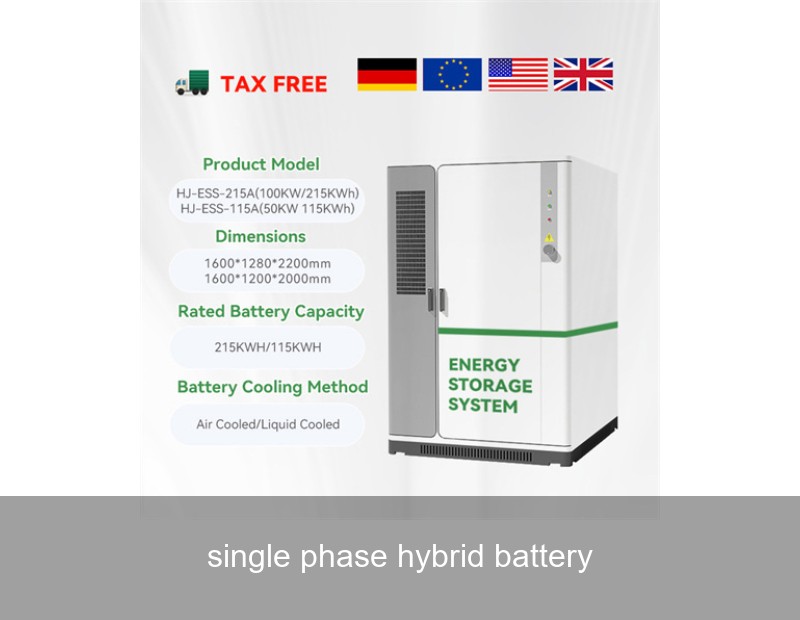
Have you ever watched your electricity meter spin wildly during peak hours, felt the pinch of rising energy bills, or wondered what happens to your solar panels' excess energy when the grid is down? If so, you're not alone. Across homes in Europe and the US, a quiet revolution is taking place in how we generate, store, and use power. At the center of this revolution is a key technology: the single phase hybrid battery system. This isn't just a battery; it's an intelligent energy manager for your home, seamlessly integrating solar, storage, and the grid to create resilience and savings. As a global leader in advanced energy storage since 2005, Highjoule is at the forefront of designing these sophisticated systems that empower homeowners to take control.
Table of Contents
What is a Single Phase Hybrid Battery System?
Let's break down the name. "Single phase" refers to the standard electrical supply in most residential homes, particularly in Europe and Australia, and common for smaller homes and farms in the US. It's the typical 230V or 120/240V supply that powers your lights, appliances, and TV. "Hybrid" is the crucial part. Unlike a simple battery backup, a hybrid system combines a battery inverter and a solar inverter into a single, compact unit. This all-in-one brain manages multiple energy flows: from your solar panels, from the grid, and to/from the battery. The result? A system that doesn't just store energy but actively optimizes its use based on your consumption patterns, solar production, and even time-of-use electricity rates.
Why the Surge in Demand? The Data Behind the Trend
The move towards single phase hybrid solutions isn't a fad; it's a direct response to tangible market pressures and opportunities.
- Soaring Energy Prices: In 2022-2023, European household electricity prices saw unprecedented increases, with some countries experiencing hikes of over 50% [Source: Eurostat]. In the US, rates have steadily climbed, with peak demand charges adding further complexity.
- Solar Self-Consumption: With the reduction of generous feed-in tariffs, the economic logic has shifted. It's now far more valuable to use your solar energy than to sell it back at a low rate. Hybrid batteries dramatically increase self-consumption from an average of 30-40% to 70% or more.
- Grid Resilience: From winter storms in Texas to grid constraints in rural Europe, power outages are a growing concern. Homeowners seek energy independence not just for savings, but for security.
This perfect storm of factors has made the single phase hybrid battery the logical next step for any home with or considering solar panels.

A modern home equipped for solar and storage - the ideal candidate for a single phase hybrid system.
How It Works: The Intelligent Energy Hub
Think of your home's new energy system as a smart financial manager for your electrons. Here's a typical daily cycle:
| Time of Day | Solar Production | Hybrid System Action | Result for Homeowner |
|---|---|---|---|
| Morning to Afternoon (Sunny) | High | Powers home loads first, then charges battery. Any excess can be sold to grid if beneficial. | Minimal grid import. Battery prepared for evening. |
| Evening Peak (6 PM - 9 PM) | Low/None | Discharges stored battery energy to power home, avoiding expensive peak grid rates. | Low-cost power during most expensive hours. |
| Night (Off-Peak) | None | If battery is low, can draw from grid at cheap rates to charge (if programmed). Powers home loads. | Access to low-cost backup energy. |
| Grid Outage | Variable | Instantly isolates home ("islands") and uses solar + battery to power critical loads. | Continuous power, peace of mind. |
This automated orchestration is what delivers the financial payback and the priceless resilience.
Real-World Impact: A Case Study from Germany
Let's look at the Müller family in Bavaria. In 2021, they had a 8kWp solar array but were only using about 35% of its production directly. Frustrated by low feed-in tariffs and winter power fluctuations, they installed a Highjoule Horizon Home Single Phase Hybrid System with a 10kWh lithium iron phosphate (LFP) battery.
- Before Installation: Annual grid electricity purchase: 4,200 kWh. Solar self-consumption rate: ~35%.
- After Installation (12-month data): Annual grid electricity purchase: 1,100 kWh. Solar self-consumption rate: 85%.
- Financial Outcome: Combined savings from reduced imports and optimized feed-in increased their annual energy ROI by an estimated 22%. The system also provided backup during two brief winter grid outages.
"It's not just about the numbers on a bill," Mrs. Müller noted. "It's the feeling of security and knowing we're using our own clean energy first." This case exemplifies the dual benefit—economic and psychological—that a well-designed hybrid system delivers.
Choosing the Right System: Key Considerations
Not all single phase hybrid systems are created equal. When evaluating options, homeowners should consider:
Battery Chemistry & Longevity
Lithium Iron Phosphate (LFP) has become the industry standard for home storage due to its superior safety, long cycle life (often 6,000+ cycles), and stability. It's a core technology we use at Highjoule for our residential products.
Inverter Power and Scalability
Can the system handle your peak home load while also charging the battery? A 5kW inverter might struggle if you run an oven, heat pump, and washing machine simultaneously. Look for systems with sufficient continuous and surge power ratings.
Software and Grid Services
The hardware is only as good as its brain. Advanced energy management software can enable participation in virtual power plants (VPPs) or grid-balancing services, potentially creating additional revenue streams. Highjoule's EcoSync™ AI Platform, for instance, learns consumption patterns and can respond to real-time grid signals to optimize for cost and carbon footprint.
A sleek, wall-mounted home battery unit - the visible component of a sophisticated hybrid system.
Highjoule's Approach: Smarter, Integrated Solutions
Since 2005, Highjoule has been engineering energy storage solutions for a global market. Our single phase hybrid systems, like the Horizon Home Series, are built on three core principles:
- All-in-One Simplicity: We integrate the hybrid inverter, battery management system (BMS), and necessary safety disconnects into a streamlined, easy-to-install cabinet. This reduces complexity and cost for our installer partners and homeowners.
- Intelligent by Design: Every system comes with our proprietary energy management software, allowing for remote monitoring, customizable operating modes (e.g., maximize self-consumption, backup priority, time-of-use optimization), and future firmware upgrades.
- Built for the Future: Our systems are designed with scalability in mind. You can often start with a smaller battery capacity and add more modules later as your needs or budget grow. We also ensure our hardware is compatible with evolving grid standards and renewable incentives.
For homeowners, this translates to a reliable, future-proofed energy asset. For installers, it means a trusted, high-performance product that's straightforward to deploy and support.
Beyond the Hardware: Our Services
Highjoule provides more than just equipment. We offer comprehensive support including pre-sales system design assistance, in-depth training for certified installers, and a robust warranty backed by our global service network. We believe a successful installation is a partnership that lasts for the decades-long life of the product.
As energy markets continue to evolve, the question for homeowners is no longer *if* they should consider a battery, but *what kind* of system will deliver the greatest value and control over the long term. Is your home's energy system ready to become an intelligent, responsive partner in your daily life?
 Inquiry
 Online Chat