


Finding the Best Li-Ion Battery for Solar Energy Storage: A Homeowner's and Business Guide
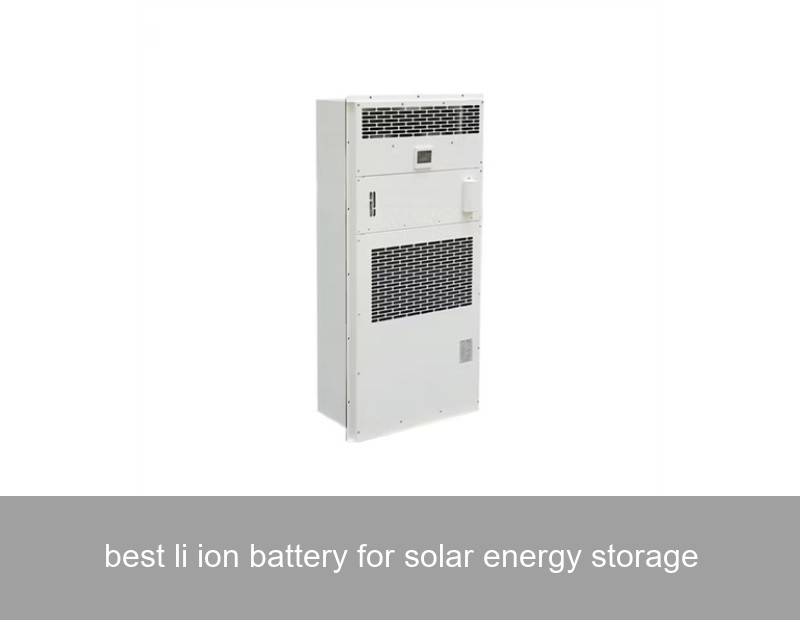
You've made the smart decision to invest in solar panels. They're generating clean energy, reducing your carbon footprint, and slashing your electricity bills during the day. But what happens when the sun goes down, or on those cloudy days? This is where the best li ion battery for solar energy storage becomes the game-changer, transforming your solar array from a daytime-only solution into a 24/7 personal power plant. Choosing the right battery isn't just about backup; it's about maximizing self-consumption, achieving true energy independence, and getting the highest return on your green investment.
Table of Contents
- The Challenge: Your Solar Power Isn't There When You Need It Most
- Beyond the Hype: Key Metrics for the Best Solar Battery
- Why Chemistry Matters: Lithium Iron Phosphate (LFP) Takes the Lead
- From Data to Reality: A Real-World Case Study
- The Highjoule Solution: Engineered for Performance and Peace of Mind
- Making the Right Choice for Your Home or Business
The Challenge: Your Solar Power Isn't There When You Need It Most
Here's a common phenomenon for solar owners without storage: your panels peak at noon, but your household energy demand typically peaks in the early morning and evening. This mismatch means you export excess electricity to the grid at low rates, only to buy it back at night at higher prices. According to the U.S. Department of Energy, effective storage is key to unlocking solar's full potential, allowing communities and individuals to better manage this supply-demand imbalance.
The right battery system captures that midday surplus and intelligently dispatches it when you need it. But with so many options on the market, how do you identify the best li ion battery for solar energy storage for your specific needs?
Beyond the Hype: Key Metrics for the Best Solar Battery
Don't just look at the brand name. Evaluate these critical technical and performance metrics:
- Usable Capacity (kWh): This is the actual amount of energy you can use. Some batteries advertise a total capacity but have a lower "usable" amount due to built-in depth-of-discharge (DoD) limits for longevity. Always compare usable kWh.
- Power Rating (kW): How much electricity the battery can deliver at once. A high capacity with a low power rating means you can run your lights for a long time, but not necessarily your air conditioner and oven simultaneously.
- Round-Trip Efficiency (%): The percentage of energy put into the battery that you can later use. Higher efficiency (e.g., 95% vs. 85%) means less energy is lost as heat during charging and discharging, putting more of your hard-earned solar power to work.
- Warranty & Cycle Life: The warranty guarantees performance over time. Look for batteries that guarantee a high percentage of original capacity (e.g., 70%) after 10 years or a specified number of "full cycles" (one charge and discharge).
| Metric | What It Means | What to Look For |
|---|---|---|
| Usable Capacity | Actual energy you can use | High kWh, matching your nightly consumption |
| Continuous Power | What appliances you can run at once | Typically 5kW+ for whole-home backup |
| Round-Trip Efficiency | Energy lost during storage process | 94% or higher is industry-leading |
| Warranty | Long-term performance guarantee | 10+ years, with end-of-term capacity stated |
Why Chemistry Matters: Lithium Iron Phosphate (LFP) Takes the Lead
Not all lithium-ion batteries are created equal. While early home batteries used Nickel Manganese Cobalt (NMC) chemistry, the best li ion battery for solar energy storage today increasingly utilizes Lithium Iron Phosphate (LFP). Here’s why LFP is becoming the gold standard:
- Superior Safety: LFP chemistry is inherently more stable and resistant to thermal runaway, significantly reducing fire risk—a paramount concern for home installations.
- Longer Lifespan: LFP batteries can typically endure many more charge/discharge cycles (often 6,000+ to 70% capacity) before significant degradation, directly translating to a longer useful life.
- No Cobalt: They avoid using cobalt, a material with ethical sourcing concerns and price volatility, making them more sustainable and stable in cost.
While NMC batteries might offer slightly higher energy density, the safety, longevity, and ethical advantages of LFP make it the preferred choice for stationary home and commercial energy storage. Research from NREL highlights the growing dominance and improved performance of LFP chemistry in stationary storage applications.
From Data to Reality: A Real-World Case Study
Let's move from theory to practice. Consider a typical family home in Southern California with a 10kW solar system. Their goal: eliminate their $220 monthly evening peak-time electricity bill and gain resilience during Public Safety Power Shutoffs (PSPS).
Phenomenon: High export to the grid at noon, high import from 4-9 pm (peak rates up to $0.55/kWh), and grid unreliability during fire season.
Solution: A 13.5 kWh LFP battery system with a 7kW continuous power output.
Data & Outcome (First Year):
- Self-Consumption Increase: Solar self-consumption rose from 30% to over 80%.
- Bill Savings: The monthly electricity bill dropped to a ~$10 minimum service charge, saving ~$2,500 annually.
- Backup Performance: During a 12-hour grid outage, the battery seamlessly powered all critical loads (refrigeration, lighting, communications, and a portion of HVAC), maintaining comfort and safety.
This case demonstrates that the best li ion battery for solar energy storage isn't just a backup device; it's a financial tool that optimizes energy use and provides invaluable peace of mind.

Image: A sleek, modern home battery system installed in a garage. Source: Unsplash
The Highjoule Solution: Engineered for Performance and Peace of Mind
At Highjoule, with nearly two decades of expertise since 2005, we've engineered our EverVolt H2 Series home battery system to meet and exceed the criteria for the best solar storage solution. We don't just sell components; we provide intelligent, integrated power ecosystems.
Our EverVolt H2 is a modular LFP battery system designed for scalability (from 10 kWh to over 30 kWh) and robust performance. Here’s how it stands out:
- Built on LFP Chemistry: For maximum safety, longevity (15-year warranty), and stable performance across a wide temperature range.
- High Efficiency & Power: With a 96% round-trip efficiency and up to 10kW of continuous power, it ensures minimal energy loss and can handle heavy household loads.
- Advanced System Intelligence: Our integrated energy management system (EMS) doesn't just store energy. It learns your usage patterns, weather forecasts, and even dynamic utility rates (where available) to autonomously optimize charging and discharging for the greatest savings and resilience.
- Seamless Integration: The EverVolt H2 is designed to work flawlessly with both new and existing solar installations, and its modular design allows for cost-effective expansion as your energy needs grow.
For commercial and industrial clients, Highjoule's GridMax Pro series provides large-scale, containerized BESS solutions that enable demand charge management, renewable integration, and microgrid capabilities, helping businesses achieve sustainability targets and operational cost certainty.

Image: Monitoring and control of a large-scale battery storage system. Source: Unsplash
Making the Right Choice for Your Home or Business
So, how do you choose? Start by asking the right questions:
- What are my primary goals? (Maximize savings, essential backup, full energy independence?)
- What is my critical load? (What appliances must run during an outage? Calculate their total wattage.)
- What is my budget and desired payback period?
- Does my installer have proven expertise with the chosen battery technology?
The best li ion battery for solar energy storage is the one that aligns perfectly with your energy profile, physical constraints, and long-term goals. It's a partnership between smart hardware, intelligent software, and expert installation.
Given the rapid evolution of grid dynamics and the increasing frequency of extreme weather events, is your current energy setup merely a cost, or is it an adaptable asset that protects and adds value to your property? We invite you to connect with a Highjoule energy specialist for a personalized assessment of how intelligent storage can transform your solar investment.
 Inquiry
 Online Chat