


Solar Energy in Singapore: A Bright Spot in the Urban Energy Transition
Imagine powering a bustling, high-rise city-state where land is a premium and sunshine is abundant. That's the unique challenge and opportunity for solar energy in Singapore. While the nation is a global financial hub, its journey towards energy independence is geographically constrained. This has sparked remarkable innovation, turning rooftops, reservoirs, and even vertical facades into power generators. As a global leader in advanced energy storage, Highjoule sees Singapore's solar story as a powerful blueprint for urban sustainability worldwide. Let's explore how this island nation is harnessing the sun and the critical role smart storage plays in making every photon count.
Table of Contents
- The Solar Imperative: Why Singapore is Betting on the Sun
- By the Numbers: Singapore's Solar Surge
- The Intermittency Challenge: Where Solar Meets Its Limit
- Case Study: Powering a Sustainable Industrial Hub with Solar+Storage
- Highjoule's Smart Solutions for Singapore's Solar Ambition
- Future Horizons: Floating Solar and Beyond
The Solar Imperative: Why Singapore is Betting on the Sun
Singapore's energy landscape is a fascinating paradox. It's a tech-forward nation with limited options for traditional renewable energy. There's no space for vast wind farms, no rivers for large-scale hydropower, and geothermal resources are minimal. So, what's left? The sun. With an average of 1,600 to 2,000 hours of sunshine annually, solar energy in Singapore isn't just an alternative; it's the most viable pathway to diversify its energy mix and reduce reliance on imported natural gas. The government's ambitious Singapore Green Plan 2030 targets at least 2 gigawatt-peak (GWp) of solar deployment by 2030, enough to power over 350,000 households annually. But integrating this variable power into a stable, national grid is where the real engineering challenge begins.

Rooftop solar installations on Singapore's ubiquitous HDB flats are a common sight, maximizing urban space for energy generation. (Image credit: Unsplash)
By the Numbers: Singapore's Solar Surge
The growth of solar in Singapore is quantifiable and impressive. Let's look at the key metrics that define this transition:
| Metric | 2015 Status | 2023 Status | 2030 Target |
|---|---|---|---|
| Solar PV Installed Capacity | ~60 MWp | ~1 GWp | > 2 GWp |
| Solar's Share of Peak Demand | <1% | ~4% | ~10%+ |
| Key Installations | Rooftop Pilots | Floating PV on Tengeh, Rooftop Aggregation | Vertical & Integrated Building Facades |
This data, sourced from the Energy Market Authority (EMA), shows a nearly 16-fold increase in under a decade. However, reaching the 2030 target means not just installing more panels, but intelligently managing the power they produce. Solar output isn't constant—it peaks at midday and drops to zero at night, rarely aligning perfectly with the grid's highest demand periods, which often occur in the early evening.
The Intermittency Challenge: Where Solar Meets Its Limit
This is the central puzzle for grid operators worldwide, and in a dense, high-reliability environment like Singapore, it's magnified. What happens during sudden cloud cover that causes a solar generation dip? Or when the sun is shining brightly but electricity demand is low? Without a buffer, this variability can lead to grid instability, curtailment (wasting excess solar energy), or a continued need for fossil-fuel "peaker" plants to balance the load.
Think of the national grid like a precise, synchronized orchestra. Solar energy is a brilliant but unpredictable soloist. To create a harmonious symphony, you need a conductor—this is where advanced battery energy storage systems (BESS) come in. They don't just store energy; they provide grid services like frequency regulation and load shifting in milliseconds, ensuring stability and maximizing the utility of every solar kilowatt-hour generated.
Case Study: Stabilizing a Commercial District with Solar+Storage
Consider a real-world scenario in a Singaporean commercial district. A large business park with multiple office towers installed a 5 MWp rooftop solar system. While it significantly reduced daytime grid consumption, the park's energy managers faced two issues: 1) a sharp, unpredictable drop in solar output during afternoon thunderstorms, and 2) an inability to use daytime solar surplus for the high evening load when offices were still occupied but the sun was down.
The solution was integrating a 2 MWh / 1 MW battery storage system, like Highjoule's GridMax Commercial BESS. Here's the impact over one year:
- Solar Self-Consumption Rate Increased: From 70% to over 95%, drastically reducing wasted solar energy.
- Peak Demand Charges Reduced: The system discharged during evening peak periods, shaving the park's maximum grid draw by 22%.
- Grid Stability Enhanced: The BESS's fast response capability automatically smoothed out the 1.8 MW drop caused by a sudden cloud cover event in under a second, preventing a potential voltage dip for the entire district.
This example illustrates the symbiotic relationship between solar generation and intelligent storage—one creates clean energy, the other ensures it's reliable, dispatchable, and economically optimal.
Highjoule's Smart Solutions for Singapore's Solar Ambition
At Highjoule, we understand that the success of solar energy in Singapore hinges on integration, not just installation. Our product suite is engineered for the specific challenges of urban, tropical environments:
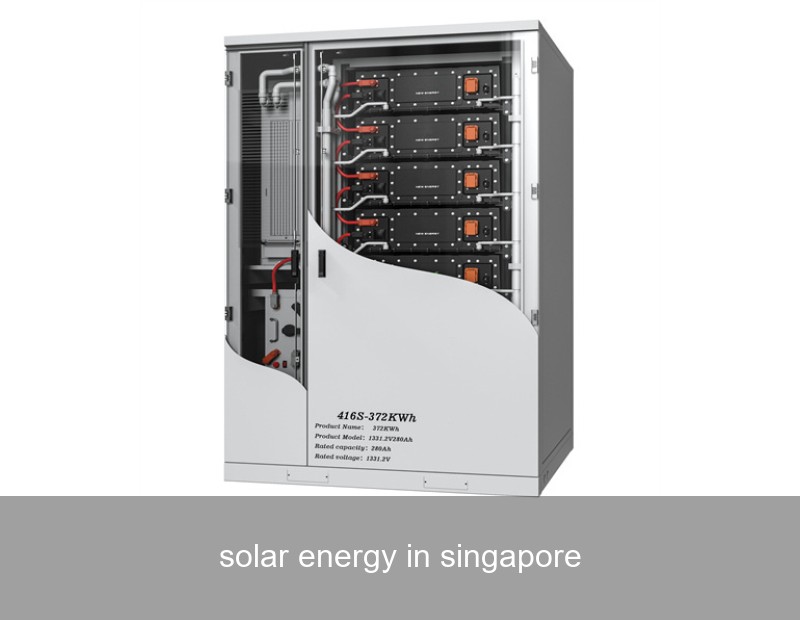
- GridMax Industrial & Commercial BESS: Our flagship system is designed for resilience. Featuring liquid-cooled, LFP battery architecture, it thrives in Singapore's high ambient temperatures, ensuring longevity and safety. Its advanced energy management system (EMS) can be configured to prioritize self-consumption, peak shaving, or grid services, offering a tailored ROI for any business.
- HomePower Residential Solutions: For landed properties and condominiums investing in rooftop solar, our HomePower series provides seamless integration. It allows homeowners to store excess daytime solar energy to power their homes at night, achieving greater energy independence and insulating themselves from tariff fluctuations.
- Microgrid Controllers: For larger-scale applications like campuses or industrial parks, our controller software acts as the "brain," optimally dispatching power between solar arrays, battery storage, backup generators, and the main grid to ensure cost-effective and uninterrupted power.
Our systems are more than just batteries; they are intelligent grid assets. By partnering with developers and EPCs in Singapore, Highjoule technology is helping to transform solar from a variable resource into a firm, predictable pillar of the nation's energy supply.

A modern Battery Energy Storage System (BESS), similar to Highjoule's GridMax, is key to stabilizing grids with high solar penetration. (Image credit: Unsplash)
Future Horizons: Floating Solar and Beyond
Singapore's innovation isn't stopping at rooftops. The world's largest inland floating solar photovoltaic farm at Tengeh Reservoir is a testament to its ingenuity. This 60 MWp project offsets 32,000 tons of carbon annually. The next frontier involves building-integrated photovoltaics (BIPV), where solar cells are embedded in windows and facades, and exploring regional power grids to import clean energy. For all these avenues, storage remains the enabling key. As solar penetration deepens, the need for large-scale, utility-grade storage solutions will only grow.
The journey of solar energy in Singapore offers a powerful lesson for urban centers in Europe, the US, and globally: land constraints are not a barrier to a renewable future. They are a catalyst for smarter, more integrated energy systems. The question is no longer just "How much solar can we install?" but rather "How do we build an intelligent, resilient network that captures, stores, and delivers this clean power precisely when and where it's needed?"
Is your business or community looking to not just adopt solar, but to truly optimize its value and ensure grid resilience? What role do you see for intelligent storage in your local energy transition?
 Inquiry
 Online Chat