


Navigating Solar BESS Price in Kuwait: A Guide for Sustainable Investment
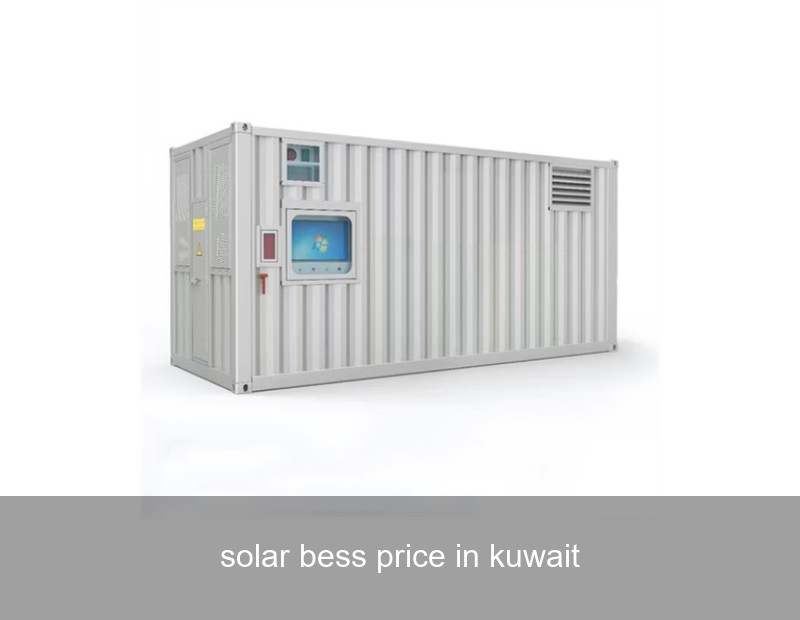
If you're exploring solar energy in Kuwait, you've likely encountered the term "BESS" – Battery Energy Storage Systems. And the immediate question that follows is, "What is the solar BESS price in Kuwait, and is it worth the investment?" It's a smart question. As Kuwait ambitiously pushes towards its 2030 renewable energy targets, combining solar panels with storage isn't just an option; it's becoming a necessity for maximizing return and ensuring grid stability. The price isn't a single number but a spectrum influenced by technology, scale, and intelligence. Let's demystify the costs and value proposition of integrating storage with your solar project in the Kuwaiti market.
Understanding Solar BESS and Its Price Drivers
Think of a Solar BESS as the brain and battery pack for your solar array. When the sun is blazing, solar panels generate electricity. Without storage, excess energy often goes to waste or is exported to the grid at a low rate. A BESS captures that surplus, stores it, and releases it precisely when you need it most—during peak tariff hours, at night, or during grid outages.
The total solar BESS price in Kuwait is shaped by several key components:
- Battery Cells & Chemistry: The heart of the system. Lithium Iron Phosphate (LFP) is now the dominant chemistry for commercial and utility projects due to its safety, longevity (often over 6,000 cycles), and excellent performance in high-temperature climates like Kuwait's.
- Power Conversion System (PCS): This bi-directional inverter manages the flow of energy between AC, DC, and the battery. Its efficiency and grid-support capabilities are crucial.
- Energy Management System (EMS): The true "intelligence." A sophisticated EMS forecasts energy generation and consumption, optimizing charge/discharge cycles to maximize financial return and protect the battery's health.
- Balance of System (BOS): This includes climate control (critical for Kuwait's heat), safety systems, installation, and ongoing software support.
For a detailed look at global battery price trends, the International Energy Agency (IEA) provides authoritative analysis and forecasts.
Kuwait's Solar Landscape: A Prime Market for BESS
Kuwait's vision, outlined in its Kuwait Vision 2035, includes a target of 15% renewable energy by 2030. With abundant solar irradiance exceeding 2,000 kWh/m² annually, the potential is enormous. However, this solar potential comes with challenges: intense heat that can degrade equipment, high peak electricity demand driven by air conditioning, and a need to modernize the grid.
This is where BESS transitions from a luxury to a strategic asset. Storage helps "firm" solar power, making it a reliable source even when the sun isn't shining. It can defer costly grid infrastructure upgrades and provide critical services like frequency regulation. For commercial and industrial (C&I) entities, it directly translates to reducing demand charges and providing backup power, making the solar BESS price in Kuwait an operational cost-saving calculation, not just a capital expense.

Image: Desert solar installations, similar to Kuwait's environment. Source: Unsplash
Breaking Down the Solar BESS Price in Kuwait
Let's talk numbers. Prices are typically quoted in $/kWh for energy capacity and $/kW for power capacity. For a turnkey, high-quality commercial or industrial-scale Solar BESS in Kuwait, you can expect a broad range.
| System Scale | Typical Capacity | Key Price Influencers | Considerations for Kuwait |
|---|---|---|---|
| Commercial & Industrial (C&I) | 500 kWh - 2 MWh | Battery chemistry (LFP), PCS quality, EMS sophistication, integration complexity. | High demand charge reduction, backup for critical operations, need for advanced cooling systems. |
| Utility-Scale | 10 MWh+ | Economies of scale, grid interconnection requirements, long-term service agreements. | Grid stability services, renewable energy time-shifting, must withstand extreme ambient temperatures. |
As of 2024, for a complete LFP-based system, the price can range from $350 to $550 per kWh for C&I projects, depending on the factors above. Crucially, the levelized cost of storage (LCOS)—the total cost of ownership over the system's life—is a more important metric than upfront price. A cheaper system with poor thermal management in Kuwait's heat may degrade faster, making its LCOS higher than a more robust, initially pricier solution.
Case Study: The Shagaya Renewable Energy Park
A real-world example illuminates the value. The Shagaya Renewable Energy Park, a flagship project by the Kuwait Institute for Scientific Research (KISR), includes a concentrated solar power (CSP) plant with thermal storage and a photovoltaic (PV) plant. While the PV plant initially operated without large-scale batteries, studies and pilots for adding BESS are actively considered.
Analysis of similar desert PV+Storage projects in the GCC, like the DEWA Solar Park in Dubai, shows that adding storage increases the capital cost by 20-30% but can increase the usable, dispatchable solar energy by over 50%. It allows shifting solar generation from midday to the evening peak demand period. For Kuwait, this means a solar BESS price investment directly supports meeting peak air conditioning demand after sunset, reducing reliance on gas-fired peaker plants and enhancing national energy security.
Highjoule's Tailored Solutions for the Kuwaiti Market
This is where Highjoule's nearly two decades of expertise become critical. We understand that a system for Kuwait isn't just an off-the-shelf product; it's an engineered solution. Our approach to optimizing the solar BESS price in Kuwait focuses on total lifecycle value.
- High-Temperature Optimized BESS: Our containerized and modular systems feature integrated, high-efficiency cooling systems designed to maintain optimal battery temperature even in 50°C+ ambient conditions, ensuring longevity and safety.
- AI-Powered Energy Management: Our proprietary EMS uses machine learning to adapt to Kuwait's specific load profiles and weather patterns, automating the storage strategy to maximize ROI, whether through demand charge management or grid services.
- Flexible Deployment Models: We offer both upfront purchase and Energy-as-a-Service (EaaS) models, helping clients overcome capital barriers. Our EaaS model provides a predictable monthly fee, turning a capex question into a simple operational expense comparison.
For a large warehouse or manufacturing facility in Kuwait's Shuwaikh Industrial area, a Highjoule C&I BESS can typically deliver a payback period of 4-7 years by slashing demand charges and providing voltage support, after which it delivers nearly free stored energy for the remainder of its 15+ year design life.

Image: Engineer monitoring a modern battery energy storage system. Source: Unsplash
The Future of Solar BESS Prices and Technology
The trajectory for solar BESS price in Kuwait is promising. Global battery cell prices are forecast to continue a gradual decline through 2024 and beyond, driven by scaling manufacturing and technology improvements. More impactful for Kuwait will be the evolution of battery chemistries even more resilient to heat and the growth of "virtual power plant" (VPP) software, which could allow distributed BESS assets across Kuwait to aggregate and provide valuable grid services, creating new revenue streams for owners.
Your Next Step: From Price to Value
So, the conversation should shift from "What is the price?" to "What is the value?" A sophisticated BESS is an investment in energy independence, operational resilience, and financial predictability. For a project developer, it's the key to winning tenders by offering firm, dispatchable clean power. For a factory owner, it's a direct tool to control escalating energy costs.
What specific energy challenge—be it unreliable power, crippling demand charges, or a corporate sustainability target—could a smart Solar BESS solve for your operation in Kuwait, and how would you measure its success?
 Inquiry
 Online Chat