


Maximizing Your Solar Campaign Call Center: The Untapped Potential of Intelligent Energy Management
Imagine this: your solar campaign call center is buzzing. Agents are converting leads at record rates, fueled by a perfectly scripted campaign and real-time data. Then, a localized grid fluctuation causes a brief but critical power dip. Systems reboot, calls are dropped, and the momentum of your entire campaign stalls. In that moment, your revenue isn't just tied to your sales team's skill—it's directly connected to the quality and reliability of the electricity powering your operations. For modern call centers, especially those driving critical initiatives like solar campaigns, energy is no longer just a utility bill; it's the foundational layer of operational integrity, cost predictability, and environmental commitment. This is where the conversation shifts from simply using power to intelligently managing it.
The Energy Data Gap in Modern Call Centers
Most call center managers have a deep understanding of their KPIs: average handle time, conversion rates, and customer satisfaction scores. Yet, few have the same visibility into their energy performance. This creates a significant data gap. Consider the phenomenon of "phantom loads" and inefficient cooling in server rooms and agent workspaces. The U.S. Department of Energy notes that commercial buildings, including call centers, can waste up to 30% of their energy through inefficiencies. For a 24/7 operation, this isn't just an environmental concern—it's a substantial, recurring operational cost that eats into your campaign's ROI.
Let's look at the data. A typical mid-sized call center with 100 workstations, servers, and HVAC can consume over 250,000 kWh annually. With volatile energy prices, particularly in European markets, this cost is increasingly unpredictable. A study by the International Energy Agency (IEA) highlights the growing impact of energy price volatility on commercial operations. This financial exposure is compounded by the reputational irony: a solar campaign call center, promoting clean energy, may itself be powered by a grid reliant on fossil fuels, facing frequent instability.

Image Source: Unsplash. A modern call center's operations are entirely dependent on continuous, high-quality power.
A Case Study in Resilience: SunDial Solutions
Let's move from theory to a tangible example. SunDial Solutions, a solar installer based in Southern California, ran their high-stakes seasonal campaigns from a 150-seat in-house call center. Their challenge was twofold: frequent public safety power shutoffs (PSPS) during fire season would halt operations for days, and their rising electricity costs were cutting into marketing budgets.
Their Solution: They viewed their call center not just as a cost center but as a critical infrastructure asset. In 2022, they implemented a turnkey behind-the-meter energy solution comprising a 200 kW rooftop solar array coupled with a 500 kWh battery energy storage system (BESS). The system was designed for peak shaving and full backup.
The Results (12-Month Period):
| Metric | Before Implementation | After Implementation |
|---|---|---|
| Campaign Downtime Due to Grid Outages | 42 hours (Lost revenue est. $126,000) | 0 hours |
| Energy Costs | $72,000 annually | Net credit of $3,500 (via solar generation + demand charge avoidance) |
| Carbon Footprint | ~78 metric tons CO2e | ~12 metric tons CO2e |
More powerfully, their agents could now confidently tell potential customers, "Our entire operation runs on the same solar and storage technology we're offering you." This authenticity became a unique selling proposition, boosting conversion rates by an estimated 15% for their premium offerings.
Beyond Backup: Power as a Strategic Asset
The SunDial case reveals a crucial insight: resilient power transforms from an insurance policy into a strategic asset. For a solar campaign call center, this asset delivers on three fronts:
- Operational Uninterruptibility: Campaigns proceed regardless of grid conditions. No dropped calls, no lost data, no momentum killed.
- Cost Certainty & Reduction: Solar self-consumption slashes daytime costs. The battery system can "peak shave," reducing demand charges—a significant portion of commercial bills—by discharging stored energy during periods of highest grid demand.
- Brand Integrity & Storytelling: It aligns your operations with your product's values, creating an authentic narrative that resonates with environmentally conscious consumers.
Highjoule's Intelligent Power Solutions for Call Centers
This is where Highjoule's expertise becomes critical. Since 2005, we've moved beyond simply providing batteries. We design integrated energy systems that turn commercial and industrial facilities—like call centers—into intelligent, resilient, and efficient energy hubs.
For a solar campaign call center, a Highjoule solution typically involves a seamless integration:
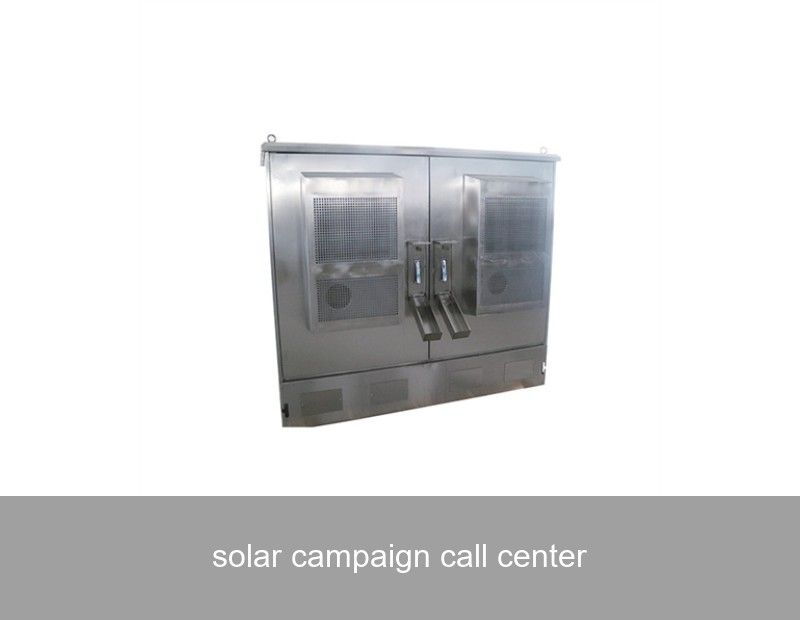
- High-Density Battery Storage (HBS Series): Our scalable lithium iron phosphate (LFP) battery cabinets provide safe, long-duration backup power and daily cycling for economic optimization. They are the core of your energy independence.
- Advanced Energy Management System (AEMS): This is the "brain." Our AEMS software intelligently decides when to draw from the grid, charge from solar, or discharge from batteries based on real-time electricity prices, weather forecasts, and your call center's schedule. It automates peak shaving and ensures seamless transition during outages.
- Grid-Interactive Inverters: Our bi-directional inverters manage the flow of power between solar panels, batteries, the building, and the grid, maintaining perfect power quality for sensitive telecom and computing equipment.
We offer this as a full-service package: initial energy audit, system design, installation, and ongoing monitoring. Our goal is to provide a set-it-and-forget-it energy resilience layer, so you can focus 100% on your campaign's performance.

Image Source: Unsplash. A modern Battery Energy Storage System (BESS), similar to Highjoule's HBS Series, providing clean, silent backup power.
Future-Proof Your Operations
The energy landscape is shifting. Regulations like the EU's REPowerEU plan are pushing for energy independence and efficiency at an unprecedented scale. In the U.S., federal and state incentives, like the Investment Tax Credit (ITC) for solar+storage, make these systems more financially accessible than ever. Implementing an intelligent energy system today isn't just about solving current problems; it's about positioning your business for a future where energy flexibility is a key competitive advantage.
So, the question for every solar campaign manager and call center operations director is this: When your next major campaign goes live, will your energy infrastructure be a hidden vulnerability or your most powerful supporting asset? How would the certainty of zero downtime and lower, predictable energy costs change the way you plan and scale your outreach?
 Inquiry
 Online Chat