


Powering the Future: How Energy Giants Like Huadian Power International Corp Ltd Are Embracing Advanced Energy Storage
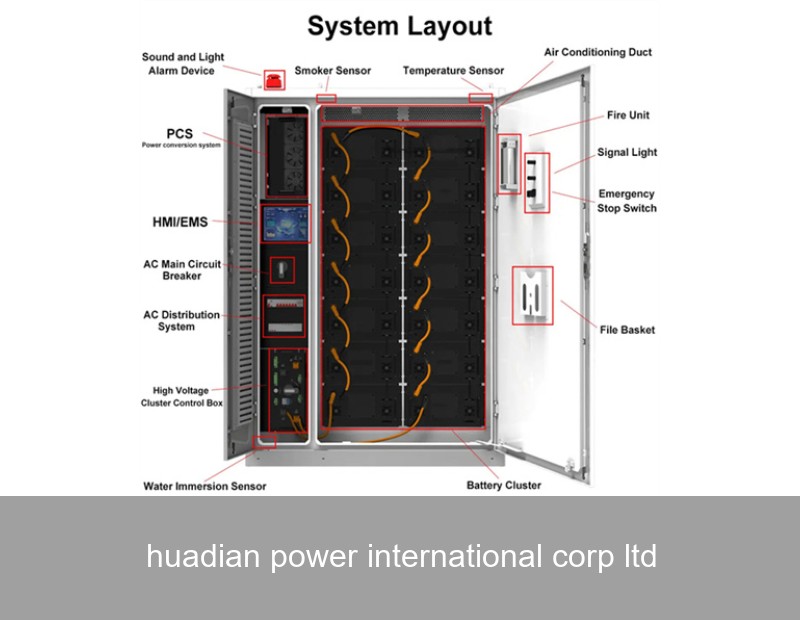
Imagine a world where the clean energy generated by a solar farm in the midday sun doesn't go to waste but is stored for use during the evening peak. This is no longer a vision of the future; it's the operational reality for forward-thinking power producers globally. Companies like Huadian Power International Corp Ltd, a major player in China's energy sector, are at the forefront of integrating large-scale renewable energy projects. Their journey mirrors a global shift, particularly in markets like Europe and the U.S., where the synergy between renewable generation and advanced battery energy storage systems (BESS) is unlocking unprecedented grid stability and economic value. This article explores the critical role of energy storage in modern power generation and how collaboration with technology providers is shaping a more resilient and sustainable energy landscape.
Table of Contents
- The Storage Imperative: Beyond Generation
- The Data Realities: Grid Needs and Market Forces
- Case Study: Firming Renewables in the European Market
- The Highjoule Role: Intelligent Storage for Power Producers
- Future Collaborations and Open Questions
The Storage Imperative: Beyond Generation
For decades, the core business of power generation companies was straightforward: produce electricity as reliably and cheaply as possible. The rise of wind and solar has fundamentally changed this equation. These are variable energy sources—dependent on the weather and time of day. A utility-scale solar plant, for instance, generates a bell-shaped curve of power throughout the day, often out of sync with consumer demand which typically peaks in the early morning and evening. This creates a dual challenge: curtailment (wasting excess renewable energy when production exceeds demand) and the continued need for peak power plants (often fossil-fueled) to fill the gaps.
This is precisely where the strategic value of energy storage comes in. Think of a BESS as a giant, high-efficiency "energy bank." It allows generators to deposit excess electrons when production is high and withdraw them when demand is high. For a diversified energy company managing a portfolio that includes renewables, this capability transforms a variable resource into a dispatchable, grid-friendly one. It's the logical next step for any generator committed to a sustainable future while ensuring grid reliability and revenue optimization.
The Data Realities: Grid Needs and Market Forces
The transition isn't just theoretical; it's driven by hard data and evolving market structures. In the U.S., the Inflation Reduction Act (IRA) has created powerful investment tax credits (ITCs) for standalone energy storage, accelerating deployment. In Europe, ambitious REPowerEU targets aim to massively increase renewable capacity, with storage being recognized as an essential enabling technology.
Let's look at some numbers:
| Market | Key Driver | Projected BESS Growth (Example) |
|---|---|---|
| United States | IRA Tax Credits, Frequency Regulation Markets | The U.S. energy storage market is expected to add nearly 63 GW of capacity between 2024-2028 according to Wood Mackenzie*. |
| European Union | Grid Stability with High Renewable Penetration | Europe's grid-scale storage capacity is forecast to grow from less than 10 GW in 2023 to over 90 GW by 2030, per BloombergNEF*. |
These figures highlight a clear trend: storage is becoming a core asset class. For power generators, this means new revenue streams through arbitrage (buying low, selling high), ancillary services (providing fast-response grid support), and capacity markets (guaranteeing future power availability).

Image: Utility-scale solar paired with battery storage is becoming the new standard. (Source: Unsplash, Photographer: American Public Power Association)
Case Study: Firming Renewables in the European Market
Consider a real-world scenario from Southern Europe. A mid-sized independent power producer (IPP) operates a 50 MW photovoltaic (PV) plant. Despite its output, the plant faced significant curtailment during sunny weekends with low demand and couldn't participate in valuable evening peak pricing.
Their Solution: The IPP partnered with an advanced storage provider to deploy a 20 MW / 40 MWh battery storage system co-located with the solar farm. The BESS was configured for multiple value streams:
- Solar Firming: Capturing excess solar generation from 11 AM to 3 PM.
- Energy Arbitrage: Discharging stored energy during the high-price evening peak (6 PM - 9 PM).
- Frequency Response: Offering automated frequency regulation services to the grid operator 24/7.
The Outcome (Data): Within the first year of operation, the project achieved:
- A 95% reduction in solar curtailment at the site.
- An increase in overall plant revenue by over 30% through arbitrage and new service sales.
- Provision of critical grid inertia, enhancing local reliability.
This case exemplifies the tangible benefits for generation assets. It's a model directly relevant for large, diversified utilities managing international portfolios, demonstrating how storage turns a challenge into a profitable advantage.
The Highjoule Role: Intelligent Storage for Power Producers
Executing a successful storage strategy requires more than just batteries. It demands intelligent, integrated systems designed for the rigorous demands of utility and commercial-scale applications. This is where Highjoule's expertise becomes pivotal. Since 2005, we have been at the forefront of developing advanced, smart BESS solutions tailored for complex energy challenges.
For a major power producer, the choice of storage partner is critical. Highjoule's systems are engineered with this scale in mind:
- High-Energy & High-Power Solutions: Our product lines, like the HJ Commercial Series and HJ Grid-Scale Series, offer scalable configurations from hundreds of kWh to GWh, perfect for co-location with solar/wind farms or standalone grid support.
- Advanced Energy Management System (EMS): The true brain of the operation. Our AI-driven EMS doesn't just store and release energy; it continuously analyzes market prices, grid signals, and weather forecasts to optimize dispatch across multiple revenue streams automatically.
- Safety and Longevity: Built with industry-leading lithium-iron-phosphate (LFP) battery chemistry and a multi-layer safety architecture, our systems ensure operational safety and a long service life, which is non-negotiable for critical infrastructure.
- Global Support: With deep experience in both the U.S. and European markets, Highjoule provides comprehensive support, from feasibility studies and system design to commissioning and long-term maintenance, ensuring your storage asset performs optimally for its entire lifecycle.
Imagine a company like Huadian Power International Corp Ltd expanding its international renewable footprint. Partnering with a technology provider like Highjoule could provide the turnkey, intelligent storage backbone needed to maximize the value and impact of every megawatt of clean energy produced, ensuring it's reliable, dispatchable, and economically optimized.

Image: Intelligent control systems are key to maximizing the value of energy storage assets. (Source: Unsplash, Photographer: ThisisEngineering)
Future Collaborations and Open Questions
The path forward for the global energy sector is one of integration and intelligence. The question for traditional and renewable power generators is no longer if to adopt storage, but how, where, and at what scale. The collaboration between large energy corporations and specialized technology innovators will define the speed and success of this transition.
As we look at the ambitious goals set by nations and corporations alike, one must ask: How will the next generation of hybrid power plants—seamlessly integrating generation, storage, and AI-driven control—reshape our definition of a baseload power provider, and what new opportunities will this create for pioneers in the field?
We invite you to explore how intelligent storage can transform your energy assets. What is the most pressing challenge in your current renewable or conventional generation portfolio that storage could potentially solve?
 Inquiry
 Online Chat