


Solar Cell Battery Storage: The Key to Unlocking True Energy Independence
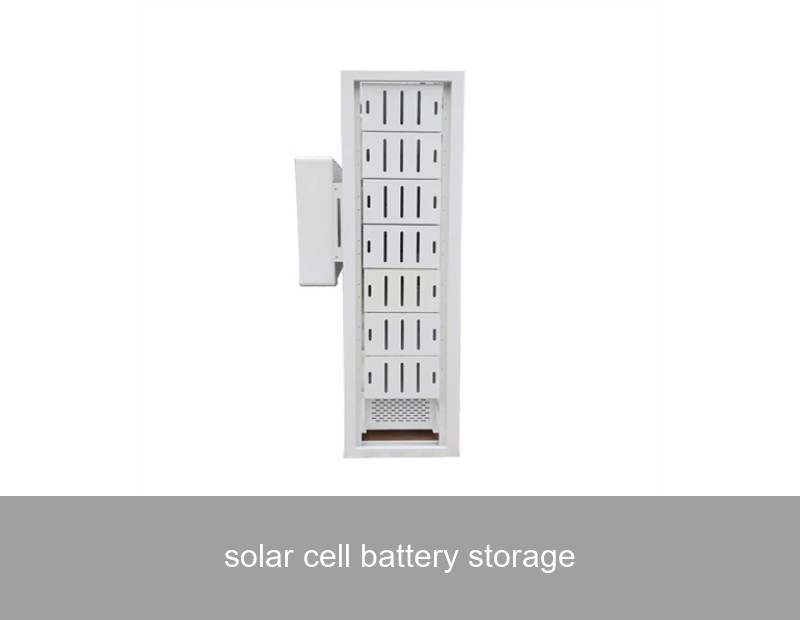
Imagine a sunny afternoon. Your rooftop solar panels are humming, generating more clean electricity than your home can use. Without a solar cell battery storage system, that precious surplus simply flows back to the grid, often for minimal compensation. Now, picture a different scenario: that excess energy is stored in a high-performance battery, ready to power your home through the evening peak, a sudden outage, or a cloudy day. This isn't just a vision of the future; it's the transformative reality that modern battery storage brings to solar power, turning intermittent generation into a reliable, 24/7 energy asset. For homeowners and businesses across Europe and the U.S., integrating storage is the final, crucial step toward maximizing self-consumption, achieving resilience, and taking full control of energy costs.
Table of Contents
- The Challenge: Solar's Intermittency and the Duck Curve
- How Solar Cell Battery Storage Works: More Than Just a Backup
- Real-World Impact: A Case Study from California
- Choosing the Right System: Key Considerations
- The Highjoule Solution: Intelligent Storage for Demanding Applications
- Future Horizons: What's Next for Solar and Storage?
The Challenge: Solar's Intermittency and the Duck Curve
The phenomenal growth of solar photovoltaic (PV) installations has been a cornerstone of the global energy transition. However, it introduces a complex challenge for grid operators: the mismatch between peak solar production (midday) and peak energy demand (evening). This divergence creates a net load curve that, famously, looks like the silhouette of a duck (NREL, 2016).
The "Duck Curve" phenomenon illustrates a critical problem: as solar floods the grid during the day, traditional power plants must ramp down, only to perform a rapid and expensive ramp-up as the sun sets and demand surges. This not only strains infrastructure but can also lead to curtailment of solar energy—essentially, wasting clean power because there's nowhere to put it. For the individual solar owner, this often translates to selling excess energy at low, wholesale rates while buying it back from the grid at much higher retail rates in the evening.

Image Source: U.S. Department of Energy, illustrating the "Duck Curve" challenge.
How Solar Cell Battery Storage Works: More Than Just a Backup
A modern solar cell battery storage system is an intelligent energy manager. At its heart are lithium-ion battery packs, similar in chemistry to those in your laptop but engineered for durability, safety, and thousands of deep charge cycles. The true brain is the inverter and energy management system (EMS), which decides when to store, when to discharge, and how to optimize for your specific goals.
- Self-Consumption Optimization: The primary function. Store excess solar generation for use later, dramatically reducing reliance on the grid.
- Backup Power: Provides seamless power during grid outages, keeping essential loads running.
- Load Shifting & Arbitrage: In regions with time-of-use (TOU) rates, the system can be programmed to discharge during expensive peak periods, even if the sun isn't shining, maximizing bill savings.
- Grid Services: Advanced systems can participate in virtual power plants (VPPs) to support grid stability, potentially generating revenue for the owner.
Real-World Impact: A Case Study from California
Let's look at real data from a commercial application. A mid-sized winery in Sonoma County, California, faced high demand charges and unreliable grid power, which threatened its refrigeration and production facilities. In 2022, they installed a 250 kW solar PV array coupled with a 500 kWh solar cell battery storage system.
| Metric | Before Installation | After Installation | Change |
|---|---|---|---|
| Monthly Grid Energy Use | ~45,000 kWh | ~8,000 kWh | -82% |
| Peak Demand Charge | $8,500 (monthly avg.) | $1,200 (monthly avg.) | -86% |
| Grid Outage Impact | Production Halt, Spoilage Risk | 72+ hours of critical load backup | Operational Resilience |
| Annual CO2e Reduction | Estimated 120 metric tons | Significant | |
The system's intelligence allowed it to "peak shave," discharging the battery when the winery's power draw from the grid was at its highest, thereby slashing demand charges. During the 2023 rolling blackouts, the facility operated uninterrupted. This case exemplifies how storage transforms solar from a cost-reduction tool into a comprehensive energy resilience and financial optimization asset.
Choosing the Right System: Key Considerations
Not all storage solutions are created equal. Selecting a system requires careful thought beyond just kilowatt-hour (kWh) capacity.
- Power (kW) vs. Energy (kWh): Power determines how many appliances you can run at once; energy defines how long you can run them. A system with high power but low energy might run your entire house for a short time, while one with lower power but high energy might run essential circuits for days.
- Depth of Discharge (DoD) & Warranty: Reputable manufacturers specify a recommended DoD (e.g., 90%) to maximize cycle life. Look for a strong warranty that guarantees both capacity retention (e.g., 70% after 10 years) and a cycle count.
- System Intelligence & Integration: Can the system integrate with existing solar? Does its software allow for customizable modes (self-consumption, backup, time-based control)? This is where advanced providers differentiate themselves.
- Safety & Standards: Ensure the system meets stringent local and international safety standards (UL, IEC). Ask about thermal management (liquid vs. air cooling) and safety protocols.
The Highjoule Solution: Intelligent Storage for Demanding Applications
At Highjoule, with nearly two decades of experience since 2005, we've engineered our solar cell battery storage solutions to address these precise considerations for commercial, industrial, and residential clients. Our systems are built on a philosophy of intelligent resilience.
Our flagship product line, the Highjoule H-Series, features modular lithium iron phosphate (LFP) battery cabinets known for their exceptional safety and long cycle life. Paired with our proprietary Adaptive Grid Intelligence (AGI) platform, the system doesn't just store energy—it learns from your consumption patterns, weather forecasts, and real-time grid conditions to make autonomous, economically optimal decisions.
For the winery in our case study, a Highjoule system was selected for its robust liquid cooling system, essential for maintaining battery health in California's climate, and its ability to seamlessly coordinate multiple battery cabinets to deliver the high power needed for industrial refrigeration startups. Our AGI software was configured to prioritize demand charge reduction while maintaining a mandatory state of charge for backup, providing both immediate savings and peace of mind.

Image Source: Highjoule. A modular H-Series installation for a commercial client.
Whether it's a German manufacturing plant seeking to stabilize its energy costs, a U.S. hospital requiring flawless backup power, or a community microgrid project, Highjoule delivers scalable, smart, and sustainable power solutions that make renewable energy work harder and smarter.
Future Horizons: What's Next for Solar and Storage?
The synergy between solar and storage is accelerating. We are moving towards ever more integrated AC-coupled and DC-coupled systems, where components communicate flawlessly. Emerging software platforms are enabling broader participation in grid-balancing markets, turning distributed storage assets into valuable grid resources. Furthermore, advancements in battery chemistry, like solid-state batteries, promise even higher energy density and safety in the coming decade (Nature Energy, 2020).
The fundamental question is no longer "Why should I add storage?" but rather "How can I design my energy ecosystem to be as efficient, resilient, and cost-effective as possible from the start?" The combination of solar PV and advanced battery storage is the definitive answer, creating a decentralized, robust, and clean energy network.
Is your current solar installation operating at its full potential, or is it time to explore how intelligent battery storage could redefine your energy independence and financial return?
 Inquiry
 Online Chat