


Solar Cell Off Grid Hybrid Systems: Your Ultimate Guide to Energy Independence
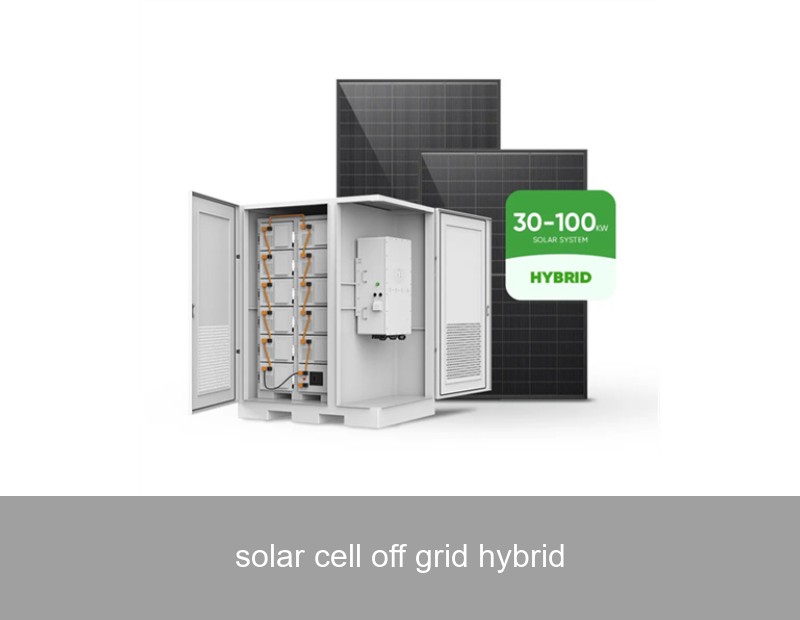
Imagine a power system that gives you the freedom of off-grid living without sacrificing the reliability of the grid. That's the promise of a solar cell off grid hybrid system. For homeowners and businesses across Europe and the US, these systems are no longer a futuristic concept but a practical solution to rising energy costs, grid instability, and the desire for true sustainability. This guide will demystify how they work, why they're becoming essential, and how companies like Highjoule are leading the charge with intelligent, integrated solutions.
Table of Contents
What is a Solar Cell Off Grid Hybrid System?
Let's break down the name. "Solar cell" refers to your photovoltaic (PV) panels. "Off grid" means the ability to operate independently from the public electricity network. "Hybrid" is the crucial part—it signifies a system that intelligently combines solar power, battery storage, and a connection to the main grid or a backup generator. Unlike a purely off-grid setup that can leave you in the dark during prolonged cloudy periods, a hybrid system uses the grid as a backup, while the battery acts as your personal energy reservoir. You can store excess solar energy, use it at night, sell it back to the grid (where permitted), and have automatic, instantaneous backup power during an outage. It's the best of all worlds.

Image: A modern home equipped with solar panels and a battery storage unit, key components of a hybrid system. Source: Unsplash
Why the Shift? The Data Behind the Trend
The move towards hybrid systems isn't just anecdotal; it's driven by hard data and clear market signals.
- Economic Sense: The International Renewable Energy Agency (IRENA) reports that the cost of solar PV has fallen by over 80% in the last decade. Pair this with rising retail electricity rates—which increased by an average of over 5% annually in many EU countries and the US in recent years—and the payback period for a hybrid system shrinks dramatically.
- Grid Reliability Concerns: From wildfires in California to winter storms in Texas and grid modernisation challenges in Europe, power outages are a growing concern. A hybrid system with battery backup provides peace of mind that a simple grid-tied solar system cannot.
- Policy and Incentives: Programs like the US Investment Tax Credit (ITC) and various European subsidies (e.g., Germany's BEG, Italy's Superbonus) now often include or even favor storage integration, making the hybrid proposition financially attractive.
Key Components of a Robust Hybrid System
Understanding the parts is key to understanding the whole. A high-performance system consists of:
| Component | Function | What to Look For |
|---|---|---|
| Solar PV Panels | Generate DC electricity from sunlight. | High efficiency, reliable manufacturer warranty, performance in low light. |
| Hybrid Inverter (The Brain) | Converts DC from panels/battery to AC for home use. Manages energy flow between all sources. | High efficiency, multiple MPPT trackers, seamless grid-to-backup switching (<20ms). |
| Battery Energy Storage System (BESS) | Stores excess solar energy for later use. | Depth of Discharge (DoD), cycle life, chemistry (LiFePO4 is leading for safety/longevity). |
| Energy Management System (EMS) | Software that optimizes energy use based on weather, tariffs, and habits. | Smart learning algorithms, user-friendly app, integration capabilities. |
The Heart of the System: Battery Storage
This is where the magic happens. The battery is your energy insurance policy. Not all batteries are created equal. Leading systems today use Lithium Iron Phosphate (LiFePO4) chemistry, renowned for its long cycle life (often 6,000+ cycles), thermal stability, and safety. When sizing a battery, consider your "critical load" during an outage and your daily self-consumption goal, not just kilowatt-hours (kWh).
A Real-World Case Study: Resilience in the Austrian Alps
Let's look at a concrete example. A family-run alpine guesthouse in Tyrol, Austria, faced a dual challenge: frequent winter grid disruptions due to heavy snow and high energy costs. Their goal was 80% energy autonomy.
- System Installed (2022): 45 kWp of solar panels, a 60 kWh LiFePO4 battery storage unit, and a 25 kW hybrid inverter system.
- Results (2023 Data):
- 85% Self-Sufficiency Achieved: They cover the vast majority of their energy needs year-round.
- Zero Outage Impact: Experienced 7 grid outages totaling 42 hours. The guesthouse operations continued uninterrupted.
- Financials: Reduced annual energy costs by €11,200. With available Austrian federal and state subsidies, the projected payback period is under 7 years.
This case, documented in part by the U.S. Department of Energy's solar office resources, illustrates the tangible benefits for a commercial operation in a demanding environment.
Highjoule's Role: Intelligent Energy Management
This is where expertise and product quality become paramount. As a global leader in advanced energy storage since 2005, Highjoule doesn't just sell components; we deliver integrated, intelligent power solutions. For the solar cell off grid hybrid market, our value lies in seamless integration and smart control.
Our HPS Series Hybrid Power Systems are engineered for resilience. They combine our high-cycle LiFePO4 batteries with a suite of certified hybrid inverters into a pre-engineered, plug-and-play solution. The real differentiator is the Highjoule Energy OS, our proprietary energy management platform. It doesn't just react; it learns and forecasts. By analyzing weather patterns, local utility rate structures (like time-of-use tariffs common in California and parts of Europe), and your consumption habits, it automatically decides the most economical moment to charge from solar, discharge from the battery, or draw from the grid.
Image: Advanced energy management software monitoring production and consumption, similar to Highjoule Energy OS. Source: Unsplash
For larger commercial, industrial, or microgrid applications, Highjoule's Containerized Battery Energy Storage Systems (BESS) offer scalable, turnkey solutions. These can integrate massive solar arrays, manage peak shaving to avoid demand charges, and provide black start capability for true off-grid microgrids.
Choosing and Optimizing Your System
So, how do you navigate this decision? Start by asking the right questions:
- What are your primary goals? (Bill savings, backup power, carbon reduction?)
- What are your critical loads? (Refrigeration, heating/cooling pump, medical equipment?)
- What is your local climate and utility policy? (Net metering rules, feed-in tariffs, outage history?)
Optimization is Key
Installation is just the beginning. To maximize ROI, your system should be "set and forget" but also adaptable. Ensure your provider offers remote monitoring and software updates. For instance, Highjoule's systems receive over-the-air updates that can improve efficiency algorithms or adapt to new utility rate schedules automatically, protecting your investment for the long term.
According to a National Renewable Energy Laboratory (NREL) study, proper sizing and smart control can improve the value of a residential solar+storage system by up to 30% compared to a basic setup.
Ready for Your Energy Independence Audit?
The journey to a smarter, more resilient energy setup begins with understanding your own home or business as a micro-grid. What would the first 24 hours of a power outage look like for you, and what value would you place on eliminating that disruption entirely? We invite you to consider not just the technology, but the freedom and control it enables.
 Inquiry
 Online Chat