


Unlocking Energy Freedom: Your Complete Guide to a Modern Solar Electrical Power System
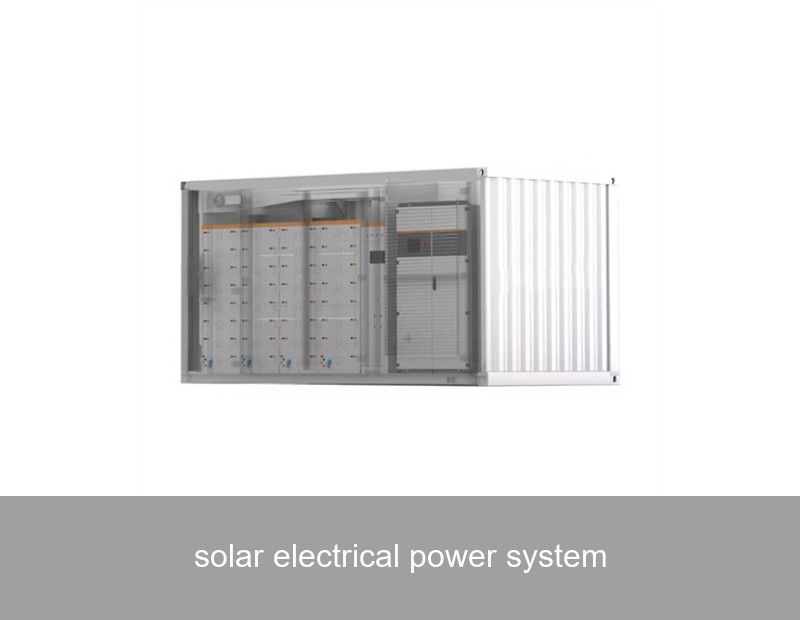
Imagine a bright, sunny afternoon. While you're at work or running errands, the roof of your home or business is quietly generating clean, free electricity. This isn't magic; it's the practical reality of a modern solar electrical power system. More than just panels on a roof, it's an integrated ecosystem designed to capture, manage, and optimize solar energy for maximum benefit. For homeowners and business leaders across Europe and the U.S., understanding this system is the first step toward energy independence, resilience, and significant cost savings. Let's demystify how these systems work and why the right energy storage solution is the crucial piece that transforms solar from a simple supplement to a powerful, self-reliant energy asset.
The Grid Reliance Phenomenon: A Modern Paradox
Here's a curious situation many of us face: we install solar panels to save money and "go green," but we remain almost entirely dependent on the traditional utility grid. Why? Because the sun doesn't shine at night, and panels produce less on cloudy days. Without a way to store the excess energy your panels produce at midday, you send it back to the grid, often for a small credit, only to buy expensive power back in the evening. You've reduced your bill, but you haven't broken free. This phenomenon leaves you vulnerable to rising electricity rates, grid outages, and the inherent limitations of a one-way energy relationship. The true potential of your solar electrical power system remains untapped.
The Data Behind the Sun: Why Solar Makes Financial Sense
The numbers speak volumes. According to the International Renewable Energy Agency (IRENA), the global weighted-average levelized cost of electricity (LCOE) from utility-scale solar photovoltaics fell by a staggering 89% between 2010 and 2022. In sun-rich parts of the U.S. and Southern Europe, solar is now the cheapest source of electricity in history. But for the end-user, the economics are equally compelling. A typical residential system in Germany or California can offset 70-90% of annual grid electricity consumption. The key metric is the payback period—the time it takes for energy savings to equal the system cost. With various incentives, this period in many markets is now between 6 to 10 years, with decades of nearly free electricity to follow. However, these figures dramatically improve when you add storage, increasing self-consumption from 30-40% to 70-80% or more.
Image Source: Unsplash - A modern residential solar installation.
Case Study: A Bavarian Bakery's Recipe for Energy Independence
Let's look at a real-world example. Schmidt's Bakery, a family-owned business in Bavaria, Germany, faced high and unpredictable energy costs. Their ovens, refrigeration, and lighting created a heavy, round-the-clock load. They installed a 50 kWp solar array, which cut daytime costs but did nothing for their pre-dawn baking shifts or evening power needs. They were still at the mercy of the grid.
Their solution was to integrate a Highjoule HI-Cube 50 commercial battery storage system. Here's the impact:
| Metric | Before Storage | After Highjoule HI-Cube Integration |
|---|---|---|
| Grid Energy Consumption | 65% of total need | 22% of total need |
| Self-Consumption of Solar | 38% | 89% |
| Monthly Energy Cost | €2,800 (avg.) | €950 (avg.) |
| Backup Power During Outage | None (full shutdown) | 8+ hours for critical loads |
"The Highjoule system wasn't just an add-on; it became the brain of our energy operation," explained owner Klaus Schmidt. "It automatically decides when to store, when to use, and when to conserve, ensuring our ovens never stop. Our energy costs are now predictable and controlled." This case highlights that a complete, intelligent solar electrical power system is a transformative business investment.
Key Components of a Modern Solar Electrical Power System
Understanding the parts helps you see the whole picture. A sophisticated system goes beyond basic parts:
- Solar Panels (PV Modules): The primary energy harvesters, converting sunlight into direct current (DC) electricity.
- Inverter(s): The translator. Converts the DC electricity from panels into usable alternating current (AC) for your home or business. Modern systems often use hybrid inverters that can also manage battery charging/discharging.
- The Critical Missing Link: Battery Storage: This is the heart of energy independence. It stores surplus solar energy for use when the sun isn't shining.
- Energy Management System (EMS): The brain. This intelligent software platform monitors energy production, consumption, grid conditions, and weather forecasts to optimize every kilowatt-hour. It makes automated decisions to maximize savings and resilience.
- Balance of System (BOS): Mounting, wiring, switches, and safety components that tie everything together securely.
Why Storage is No Longer Optional
Think of your solar panels as a prolific water spring that only flows during the day. Without a storage tank (the battery), you can only use water while the spring runs and must rely on expensive, piped municipal water the rest of the time. The tank changes everything, allowing you to use your own water on demand. Similarly, the U.S. Department of Energy notes that storage is key to aligning variable solar generation with daily demand patterns. It turns a time-shifted resource into an on-demand one.
The Highjoule Advantage: Intelligent Storage as the Game Changer
This is where Highjoule, with nearly two decades of expertise, redefines what a solar electrical power system can achieve. We don't just provide batteries; we deliver intelligent, integrated storage solutions that maximize the value of every solar panel.
Our flagship product lines, like the HI-Power for residential and HI-Cube for commercial/industrial applications, are built on three core principles:
- Intelligence First: Our proprietary EMS uses AI-driven algorithms not just to store and release energy, but to learn your consumption patterns, predict weather, and even respond to real-time grid signals (where available) to participate in demand response programs, creating an additional revenue stream.
- Uncompromising Safety & Durability: Using top-tier lithium iron phosphate (LFP) chemistry, our systems are designed for safety and a long operational life, often exceeding 6,000 cycles while maintaining high capacity.
- Scalability & Integration: Whether you're a homeowner starting small or a factory with a multi-megawatt need, our systems are modular. They seamlessly integrate with new or existing solar installations and can be scaled as your energy needs grow.
For microgrid applications, Highjoule systems provide grid-forming capabilities, allowing communities or campuses to operate as self-sustaining energy islands during extended outages or in remote locations. We provide a complete solution from design and engineering to commissioning and ongoing performance monitoring.
Image Source: Unsplash - A clean, modern battery storage installation.
What Does Your Energy Future Look Like?
The journey toward a resilient, cost-effective energy future begins with a single question. Are you ready to move beyond just solar panels and build a truly intelligent solar electrical power system that gives you control, protects you from volatility, and maximizes your investment? What would you power first if the grid went down tomorrow, and how would securing that power change your sense of security and operational confidence?
 Inquiry
 Online Chat