


Solar PV Battery Storage: The Key to Unlocking True Energy Independence
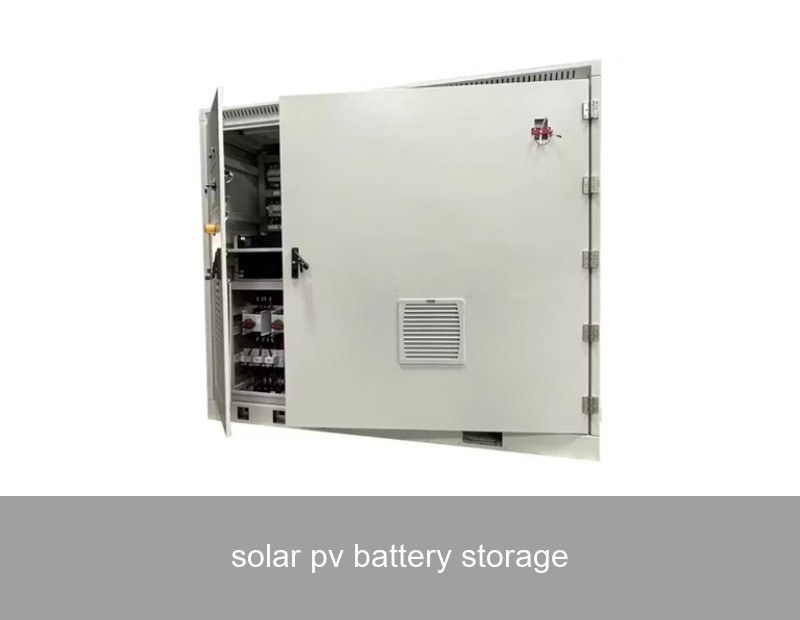
Have you ever watched your solar panels working hard on a sunny afternoon and wondered, "Where is all this extra energy going?" If you're like many solar adopters in Europe and the US, the answer might be "back to the grid" for a modest credit. But what if you could capture that sunshine in a box and use it on your own terms—after sunset, during a blackout, or when grid prices skyrocket? This is the powerful promise of solar PV battery storage. It's the missing piece that transforms a one-way solar system into a resilient, self-sufficient home power plant. As a Senior Product Technology Expert at Highjoule, I've seen how this technology is revolutionizing the way we think about personal energy. Let's explore how pairing solar with intelligent storage isn't just an upgrade; it's a fundamental shift towards energy autonomy and smarter consumption.
Table of Contents
- The Challenge: Solar's Intermittency and the "Duck Curve"
- How Solar PV Battery Storage Works: More Than Just a Battery
- Tangible Benefits: From Bill Savings to Back-Up Power
- A Real-World Case Study: The Smith Family's Journey in California
- Choosing the Right System: Key Considerations
- The Highjoule Solution: Intelligent Storage for Demanding Applications
- The Future of Home Energy is Integrated
The Challenge: Solar's Intermittency and the "Duck Curve"
The phenomenon is clear: the sun doesn't shine at night. This simple fact creates a fundamental challenge for solar-powered homes and the broader grid. During peak daylight hours, homes with solar often produce more electricity than they can use. This excess floods the grid, sometimes leading to reduced compensation through mechanisms like net metering. Then, as the sun sets and families return home, turning on appliances, lights, and heating, solar production plummets just as demand peaks. Grid operators call this pattern the "duck curve", and it's becoming more pronounced in sunny regions like California and parts of Europe.
This mismatch means you're still heavily reliant on the utility grid, especially during expensive evening hours. You're missing the opportunity to maximize the value of your solar investment. Solar PV battery storage directly addresses this by time-shifting your solar energy, storing the midday surplus for use when you need it most.
How Solar PV Battery Storage Works: More Than Just a Battery
At its core, a solar battery system is an intelligent energy manager. It sits between your solar panels, your home, and the grid, making real-time decisions to optimize your power flow.
- Step 1: Solar Generation: Your PV panels convert sunlight into DC (Direct Current) electricity.
- Step 2: Conversion & Primary Use: An inverter converts DC to AC (Alternating Current) for immediate home use. Your home consumes this power first.
- Step 3: Intelligent Storage: Any excess solar energy, instead of being exported, is directed to charge the battery system (like Highjoule's H-Store series). The system's brain (the inverter/controller) manages this charging to preserve battery health.
- Step 4: Discharge on Demand: When solar production drops (at night or on cloudy days), the system automatically draws power from the battery to run your home, minimizing grid imports.
- Step 5: Grid Interaction (Optional): Advanced systems can be programmed to draw from the grid during super off-peak times to charge the battery or to sell power back during peak grid stress events, creating potential revenue.

Image: A clean, wall-mounted battery storage unit like Highjoule's H-Store integrates seamlessly into a home. (Source: Unsplash)
Tangible Benefits: From Bill Savings to Back-Up Power
The advantages of adding storage are multi-faceted and go beyond simple arithmetic on an electricity bill.
| Benefit | Description | Impact |
|---|---|---|
| Maximized Self-Consumption | Use more of the solar energy you produce, sometimes increasing self-sufficiency from 30-40% to 70-80% or more. | Directly reduces the amount of expensive grid power you need to buy. |
| Back-Up Power Resilience | Provides seamless, automatic power during grid outages. Essential appliances keep running. | Peace of mind, safety, and comfort during storms or grid instability. |
| Time-of-Use (TOU) Optimization | In areas with TOU rates, the system discharges during high-cost peak periods and charges during low-cost off-peak times. | Can dramatically flatten your effective cost per kWh, leading to greater savings. |
| Grid Support & Potential Revenue | In some markets, you can participate in Virtual Power Plant (VPP) programs, allowing your battery to support the grid during peak demand. | May receive payments or credits from your utility for this service. |
| Increased Home Value | A home with integrated solar + storage is seen as a modern, resilient, and future-proof asset. | Studies show it can increase property value and appeal to eco-conscious buyers. |
A Real-World Case Study: The Smith Family's Journey in California
Let's look at a concrete example. The Smith family in Sacramento, California, installed a 8 kW solar array in 2020. With California's shifting net metering policies (NEM 3.0), the credit they received for excess solar sent to the grid was significantly reduced. Their payback period stretched out, and they were still vulnerable to Public Safety Power Shutoffs (PSPS).
In 2023, they added a solar PV battery storage system: a 13.5 kWh capacity unit. Here's the data-driven impact over one year:
- Grid Independence: Their grid electricity consumption dropped by 92% during summer months.
- Bill Impact: Their average monthly electricity bill fell from ~$180 to a consistent ~$10 (just basic connection fees).
- Outage Protection: The system provided seamless backup during two PSPS events, totaling 36 hours, keeping lights, refrigeration, and internet running.
- TOU Mastery: Their system was programmed to avoid drawing from the grid between 4-9 pm, when rates exceeded $0.45/kWh, saving them hundreds of dollars.
This case, reflective of many across the US and Europe, shows that storage is no longer just a luxury for off-grid homes; it's a strategic financial and resilience tool for grid-connected properties.
Choosing the Right System: Key Considerations
Not all storage solutions are created equal. When evaluating solar PV battery storage, consider these factors:
- Capacity & Power: Capacity (kWh) is how much energy it stores; Power (kW) is how much it can deliver at once. Ensure the power rating can start your fridge or well pump.
- Chemistry: Lithium Iron Phosphate (LFP) is now the industry standard for safety, longevity, and performance, replacing older NMC chemistries in most residential applications.
- Depth of Discharge (DoD): A battery with a 90% DoD means you can safely use 90% of its rated capacity without harming it.
- Round-Trip Efficiency: How much energy you get out vs. what you put in. Look for efficiencies above 90%.
- Integration & Software: The system's intelligence is crucial. Can it be easily programmed for TOU, storm watch, or grid services? Is the monitoring app user-friendly?
- Scalability: Can you add more battery modules later if your needs change?
The Highjoule Solution: Intelligent Storage for Demanding Applications
At Highjoule, with nearly two decades of experience since 2005, we've engineered our energy storage systems to meet the rigorous demands of global markets. Our philosophy is that a battery should be a seamless, intelligent asset that you rarely think about—it just works.
For residential and commercial clients, our H-Store Modular Series embodies this principle. Built with ultra-safe LFP chemistry, it offers a modular design allowing capacity from 10 kWh to over 30 kWh. Its high-power output ensures it can handle simultaneous start-up loads, and its industry-leading 95% round-trip efficiency ensures you lose very little precious solar energy in the storage process.
What truly sets the H-Store apart is its Adaptive Energy OS. This proprietary software platform doesn't just react; it learns and forecasts. By integrating weather data and your consumption patterns, it proactively manages energy flow to maximize savings and preparedness. Whether you're navigating complex Time-of-Use tariffs in Spain, seeking backup resilience in storm-prone Florida, or participating in a VPP program in Germany, the H-Store is configured to optimize for your local context.

Image: Intelligent monitoring software, like Highjoule's Adaptive Energy OS, puts control at your fingertips. (Source: Unsplash)
The Future of Home Energy is Integrated
The trajectory is clear. The future home is not just a consumer of energy but an active node in a dynamic energy network. Solar PV battery storage is the cornerstone of this transition. As electric vehicles become ubiquitous, we're moving towards integrated ecosystems where your car battery, home battery, and solar panels communicate to power your life in the most efficient and cost-effective way possible.
This isn't just about technology; it's about empowerment. It's about taking control of where your energy comes from, how much you pay for it, and ensuring your family's comfort and safety regardless of what's happening on the wider grid.
So, I leave you with this question: When you look at your next electricity bill or hear about grid instability in your region, what would true energy independence be worth to you and your family?
 Inquiry
 Online Chat