


The Paradox of Solar Energy: Free Fuel, Expensive Power?
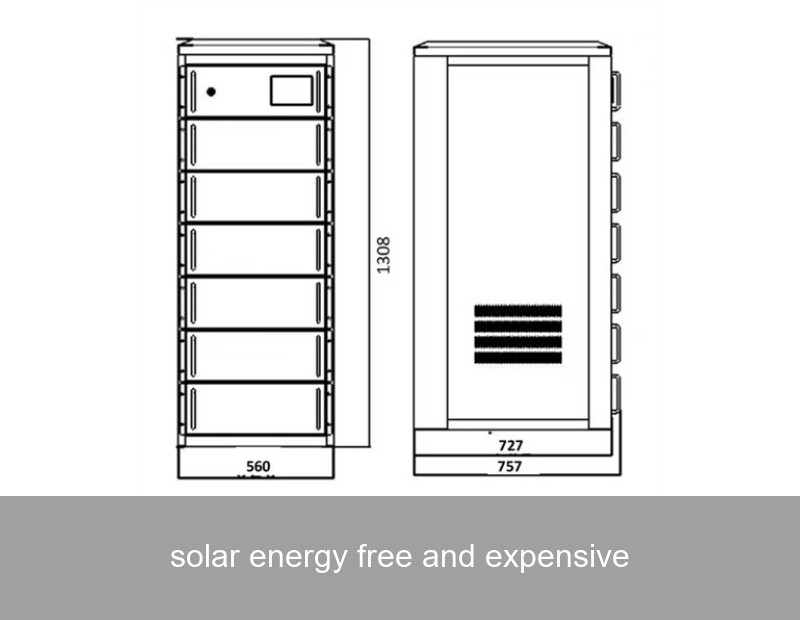
Let's start with a simple truth: the sunlight hitting our planet is abundant, free, and available to all. Yet, when we talk about using solar energy to power our homes and businesses, the conversation often turns to cost—installation costs, system costs, the price per kilowatt-hour. This is the central paradox: how can something with a free fuel source still feel expensive? The answer lies not in the sun itself, but in the bridge between capturing its power and using it reliably. This is where modern energy storage, particularly advanced battery systems, transforms the equation from an expensive alternative to a strategic asset.
Table of Contents
- The Core Issue: Intermittency is the True Cost
- The Data Reality: Price Peaks and Grid Strain
- Case Study: A German Manufacturing Plant's Solution
- The BESS Solution: Making Free Solar Power Truly Valuable
- Highjoule's Role: Intelligent Storage for a New Energy Paradigm
- The Future Landscape: Your Energy Independence

Image Source: Unsplash - Solar panels capture free fuel, but their true value is unlocked with storage.
The Core Issue: Intermittency is the True Cost
Think of the sun as a perfect, but part-time, employee. It works brilliant shifts during the day, especially at noon, but is completely off the clock at night and unreliable on cloudy days. Your energy needs, however, are a 24/7 operation. This mismatch—the technical term is intermittency—is the fundamental reason why "free" solar energy can lead to expensive challenges.
- For Homeowners: You export excess solar power to the grid at low, midday rates, only to buy it back in the evening at peak prices.
- For Businesses: Operations may peak in the morning or evening, missing the solar production window entirely, forcing reliance on grid power.
- For the Grid: A massive influx of midday solar can cause instability, requiring costly grid management and even leading to curtailment (wasting the free solar power).
So, the expense isn't in the fuel; it's in the logistics of time-shifting that free energy to when you actually need it. Without a solution, you're left with a system that generates cheap power expensively.
The Data Reality: Price Peaks and Grid Strain
The financial impact is measurable. In markets like California (CAISO) and Germany, the "duck curve" phenomenon graphically shows the steep ramp-up in grid demand and prices as solar generation plummets after sunset. According to the U.S. Department of Energy, while the cost of solar panels has fallen dramatically, the integration costs remain a focus. In Europe, high and volatile electricity prices, often driven by fossil fuel dependence during non-sunny hours, make this time-shift problem a critical financial issue.
| Challenge | Result Without Storage | Financial Impact |
|---|---|---|
| Midday Solar Overproduction | Low sell-back rates (or none), grid stress | Wasted asset, reduced ROI on solar |
| Evening Demand Peak | Reliance on grid power at peak rates | High electricity bills despite having solar |
| Grid Dependency | Vulnerability to outages & price spikes | Operational risk & unpredictable costs |
Case Study: A German Manufacturing Plant's Solution
Let's look at a real-world example. A mid-sized automotive parts manufacturer in Bavaria, Germany, installed a 500 kW rooftop solar array in 2020. Initially, they were only using about 35% of their solar generation directly, selling the rest to the grid at a modest feed-in tariff. Their energy bills remained high because their production lines ran heavily during early morning and late afternoon shifts.
In 2022, they integrated a 750 kWh Battery Energy Storage System (BESS). The system was programmed to:
- Store excess midday solar generation.
- Discharge during the high-price evening peak (4 PM - 9 PM).
- Provide backup power for critical processes.
The results after one year were clear:
- Self-consumption of solar power increased from 35% to over 85%.
- Grid electricity purchases during peak hours were reduced by 90%.
- Overall annual energy costs decreased by approximately €62,000.
- The system provided a predictable return on investment (ROI) and shielded the business from market volatility.
This case, mirrored by many across Europe and the U.S., illustrates that the value of solar is maximized only when paired with intelligent storage.

Image Source: Unsplash - A Battery Energy Storage System (BESS) is the key to time-shifting solar energy.
The BESS Solution: Making Free Solar Power Truly Valuable
A Battery Energy Storage System (BESS) is the indispensable counterpart to solar PV. It acts as a reservoir for your free solar fuel, allowing you to bank it for later use. Modern systems, like those developed by Highjoule, go far beyond simple storage. They are intelligent energy managers that:
- Optimize Economics: Automatically charge from solar or off-peak grid power and discharge during expensive peak periods, a process known as peak shaving or arbitrage.
- Ensure Reliability: Provide seamless backup power during grid outages, keeping essential loads running.
- Support the Grid: Advanced systems can offer grid services, potentially creating new revenue streams.
By solving the intermittency problem, a BESS transforms your solar array from a part-time generator into a 24/7 virtual power plant. The free fuel of the sun finally becomes freely usable—and valuable—on your schedule.
Highjoule's Role: Intelligent Storage for a New Energy Paradigm
Since 2005, Highjoule has been at the forefront of solving this exact paradox. We understand that the goal isn't just to store energy, but to make it work intelligently and economically for our clients. Our product suite is designed to bridge the gap between free solar generation and expensive, unreliable grid power.
For commercial and industrial applications, our HJ Cube Industrial series offers scalable, containerized solutions with advanced energy management software. It enables businesses like the German manufacturer to automate their energy costs savings and ensure operational resilience.
For residential and smaller commercial sites, the HJ Nexus Home system integrates seamlessly with existing solar installations. Its AI-driven software learns energy usage patterns to maximize self-consumption and protect homeowners from blackouts and price surges. Our systems are built with safety, longevity, and cycle life as core principles, ensuring that the investment delivers value for decades. By providing smart, efficient, and sustainable storage solutions, Highjoule turns the promise of free solar energy into a tangible, bill-slashing reality.
The Future Landscape: Your Energy Independence
The conversation is shifting. The question is no longer just "how many solar panels do I need?" but "how do I build a resilient, cost-effective, and independent energy system?" The synergy of solar + storage is the definitive answer. With the right storage partner, the initial capital expenditure is strategically deployed to eliminate a recurring operational expense (your high grid bill) for 20+ years.
As grid prices continue to fluctuate and extreme weather events test infrastructure reliability, the value of controlling your own energy supply only grows. Resources like the International Energy Agency's reports on storage highlight this critical trend.

Image Source: Unsplash - The complete picture: solar, storage, and electric transport for full energy independence.
Ready to Unlock the True Value of Your Solar Investment?
The paradox of "solar energy free and expensive" is solvable. The technology is proven, the economics are clear, and the need for energy independence is more pressing than ever. What is the single biggest energy cost challenge your home or business faces today that a smart, self-controlled power system could solve?
 Inquiry
 Online Chat