


Greenvolt International Power S.A. and the Rise of Global Renewable Energy Integration
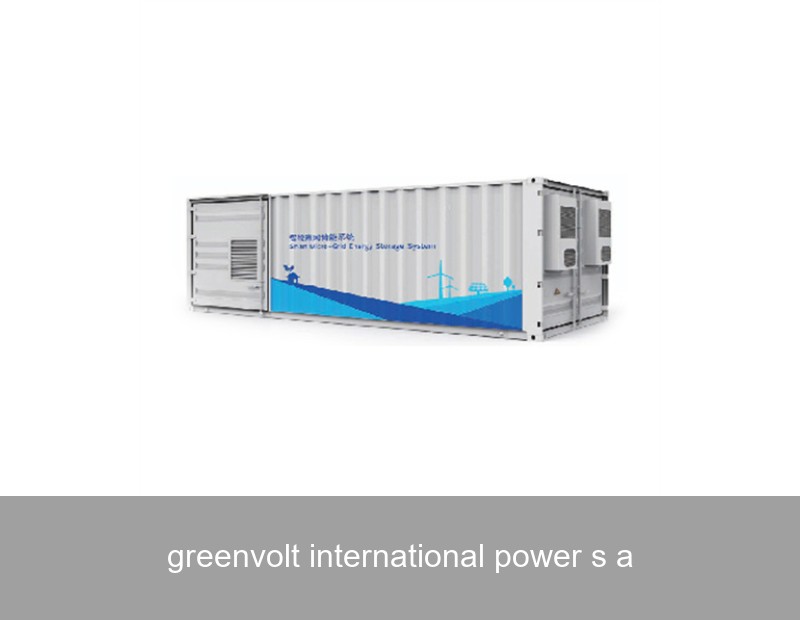
You’ve likely heard the ambitious targets: countries and corporations pledging to reach net-zero emissions. But between the pledge and the reality lies a complex challenge—how to reliably integrate vast amounts of intermittent renewable energy into our grids. This is where strategic players like Greenvolt International Power S.A. come into focus, developing and managing renewable energy assets worldwide. Their work, and that of the broader industry, hinges on a critical, often unsung hero: advanced energy storage. Let's explore how modern battery storage systems are transforming projects from Portugal to Poland, enabling pioneers like Greenvolt to deliver on the promise of a stable, green grid.
The Renewable Integration Challenge: More Than Just Generation
Companies such as Greenvolt International Power S.A. excel at developing solar PV and wind farms. However, the sun doesn't always shine, and the wind doesn't always blow. This variability creates a fundamental mismatch between energy production and energy demand. Without a solution, this leads to grid instability, curtailment (wasting excess renewable power), and reliance on fossil-fuel peaker plants during gaps—undermining the very goal of decarbonization.
According to the International Energy Agency (IEA), the world needs to add nearly 420 GW of grid-scale battery storage capacity by 2030 to meet climate goals—a staggering increase from today's levels. This isn't optional; it's the bedrock for a resilient renewable-powered future.

Image: The success of large-scale renewable projects depends on solving intermittency. Credit: Unsplash.
The Indispensable Role of Grid-Scale Storage
This is where Battery Energy Storage Systems (BESS) enter the equation. Think of them as a massive, grid-sized "power bank." They perform several vital functions:
- Frequency Regulation: Instantly injecting or absorbing power to keep the grid's frequency stable, a service crucial for preventing blackouts.
- Arbitrage: Storing cheap renewable energy when production is high and demand is low, then discharging it during expensive peak hours.
- Capacity Firming: Smoothing out the short-term fluctuations from a solar or wind farm, making its output predictable and reliable for grid operators.
- Deferring Grid Upgrades: Providing localized power support, which can delay costly investments in new transmission lines.
For a global developer, integrating a BESS isn't just an add-on; it's a value multiplier that enhances project economics, ensures grid compliance, and maximizes the utilization of every clean kilowatt-hour generated.
What Makes a Storage Solution "Grid-Ready"?
Not all battery systems are created equal for utility-scale applications. The partnership between energy developers and storage technology providers is key. At Highjoule, with nearly two decades of experience since 2005, we understand that a grid-ready BESS requires:
| Feature | Importance for Projects like Greenvolt's |
|---|---|
| High Energy Density & Scalability | Maximizes storage capacity within a limited footprint, essential for expanding portfolio. |
| Advanced Thermal Management | Ensures safety, longevity, and consistent performance in diverse climates from Southern Europe to the Nordics. |
| Grid-Forming Inverter Capability | Can actively stabilize the grid, a feature becoming mandatory in many markets. |
| Intelligent Energy Management System (EMS) | Optimizes revenue streams by deciding when to charge, discharge, or provide grid services. |
Our Highjoule HPS Series for commercial and industrial applications and the utility-scale GridMax Platform are engineered with these precise demands in mind, offering the intelligence and robustness needed to turn renewable energy plants into dependable grid assets.
Case Study: Stabilizing a European Wind Farm Portfolio
Let's look at a real-world scenario reminiscent of challenges faced by Greenvolt International Power S.A.. A developer in Central Europe operated a cluster of wind farms totaling 150 MW. While productive, the region's grid operator was increasingly concerned about rapid ramping events (sudden drops in wind output) causing frequency deviations.
The Solution: The developer partnered with Highjoule to deploy a 30 MW / 60 MWh BESS at a key grid interconnection point. Our GridMax system was configured for primary frequency response and ramp rate control.
The Data-Driven Outcome (12-month period):
- Grid Compliance: Achieved 99.8% availability for frequency response, exceeding grid code requirements.
- Curtailment Reduction: Captured and stored 18 GWh of otherwise curtailed wind energy, increasing revenue.
- Ancillary Service Revenue: The BESS generated significant secondary income by participating in the frequency regulation market.
- ROI Acceleration: The combined value streams shortened the projected payback period by an estimated 30%.

Image: Centralized control of a BESS is crucial for maximizing value. Credit: Unsplash.
This case illustrates the tangible benefits of viewing storage not as a cost, but as a strategic investment that unlocks both reliability and new revenue.
Beyond the Battery: The Intelligence Behind Storage
The hardware—the battery racks and inverters—is only half the story. The true differentiation lies in the software. A sophisticated EMS acts as the "brain," making real-time decisions based on weather forecasts, energy prices, grid signals, and asset health.
For an international operator managing a diverse portfolio, this intelligence must be accessible remotely and offer predictive analytics. Highjoule's Orion AI Cloud Platform provides exactly this, offering portfolio-level visibility and control. It can, for instance, automatically dispatch a storage system in Spain for price arbitrage while simultaneously configuring a system in Germany for frequency containment reserve, all from a single dashboard.
This level of integrated smart management is what allows developers to future-proof their assets against evolving market rules and maximize lifetime value, a critical consideration for sustained growth in competitive markets.
The Future Landscape for Developers and Consumers
The trajectory is clear. Regulatory bodies like the European Commission are actively designing markets to reward flexibility. In the U.S., the Inflation Reduction Act (IRA) provides powerful investment tax credits for standalone storage. The business case for storage is stronger than ever.
This evolution also trickles down to the consumer. As companies like Greenvolt International Power S.A. help build a more resilient and renewable grid, the stability benefits everyone. Furthermore, the technology pioneered at grid-scale is now making its way into commercial and residential settings. Highjoule's solutions for businesses and microgrids allow factories, data centers, and even communities to manage their energy costs, ensure backup power, and contribute to grid stability—a true democratization of energy resilience.
The Highjoule Partnership Model
We believe the energy transition is built on collaboration. Whether you are a global IPP like Greenvolt International Power S.A., a regional utility, or a large industrial energy user, our role is to provide more than just equipment. We offer a partnership—delivering tailored, intelligent storage solutions backed by deep system integration expertise and lifelong performance support. From initial feasibility studies to 24/7 monitoring, we ensure your storage asset delivers on its promise for decades.

Image: Grid-scale technology principles are enabling energy independence at all levels. Credit: Unsplash.
Your Turn to Engage
The narrative is shifting from simply generating green energy to intelligently managing it. As storage becomes the linchpin of this new paradigm, what specific grid challenge or market opportunity in your region do you believe presents the most immediate case for a large-scale battery storage investment?
 Inquiry
 Online Chat