


Solar Energy in Bangladesh: Powering Progress from the Ground Up
Imagine a nation where over 20 million people still live without reliable access to electricity. Now, imagine that same nation being bathed in abundant sunlight for most of the year. This isn't a hypothetical scenario; this is the reality and the incredible opportunity for solar energy in Bangladesh. For a country with a dense population and a grid struggling to meet soaring demand, the sun isn't just a celestial body—it's a national energy asset. The shift towards renewables isn't merely an environmental choice here; it's a fundamental strategy for economic growth, social equity, and energy security. But as Bangladesh charges ahead with one of the world's most ambitious solar home system programs, a critical question emerges: how do we ensure this solar power is available when it's needed most, after sunset or during monsoon clouds?
Beyond the Grid: The Critical Role of Energy Storage
The initial wave of solar adoption in Bangladesh has been phenomenal. The country has successfully installed over 6 million solar home systems (SHS), bringing basic electricity to remote, off-grid households. This is a monumental achievement. However, as the nation's aspirations grow, so do its energy needs. Basic SHS power a few lights and a phone charger, but they can't run a small business's machinery, refrigerate vital medicines in a clinic, or support digital learning in a school for hours on end. The inherent intermittency of solar power—its generation stops when the sun goes down—becomes the next major hurdle to clear.
This is where advanced energy storage systems (ESS) become the game-changer. Think of storage as a "solar battery bank" on a massive, sophisticated scale. It doesn't just store excess energy; it intelligently manages it to provide stable, dispatchable power. For solar energy in Bangladesh to evolve from providing basic lighting to fueling true economic development, pairing photovoltaic (PV) panels with high-capacity, reliable storage is no longer optional; it's essential. This combination, often called a solar-plus-storage system, creates microgrids and resilient power sources that can operate independently of the national grid.

The data supports this transition. According to the World Bank, Bangladesh aims to generate 40% of its power from renewable sources by 2041. To integrate such a high share of variable solar, grid stability services from storage are crucial. Furthermore, for commercial and industrial (C&I) businesses plagued by frequent load-shedding, a solar-plus-storage system isn't just about sustainability—it's about operational continuity and protecting the bottom line.
The Technical Leap: From Lead-Acid to Lithium-Ion & BMS
Many early SHS relied on lead-acid batteries. While they served a purpose, they have limitations: shorter lifespan (3-5 years), slower charging, lower depth of discharge, and environmental recycling challenges. The future lies in lithium-ion phosphate (LFP) battery technology, which is safer, lasts longer (10+ years), charges faster, and can be cycled more deeply. However, the true intelligence of a modern ESS isn't just in the battery chemistry; it's in the Battery Management System (BMS) and the overall system integration.
A superior BMS constantly monitors each cell for voltage, temperature, and current, ensuring safety, maximizing efficiency, and extending the system's life. For the challenging climate of Bangladesh—with high humidity, heat, and sometimes remote installations—this level of precision and durability is non-negotiable.
Case Study: Powering Resilience in the Sundarbans Region
Let's look at a real-world application that highlights both the potential and the necessity of integrated systems. In the remote villages of the Sundarbans, the world's largest mangrove forest, connection to the national grid is impossible. A project led by the Infrastructure Development Company Limited (IDCOL) established a solar-powered microgrid with battery storage for a community of 150 households and small businesses.
| Metric | Detail |
|---|---|
| Solar PV Capacity | 85 kW |
| Energy Storage Capacity | 250 kWh (Lithium-ion) |
| Key Loads Powered | Household lighting, fans, TVs, street lights, small rice mills, sewing cooperatives |
| Impact | 24/7 reliable power, 30% increase in local business productivity, enhanced evening study hours for children, replacement of kerosene lamps. |
This case underscores a vital lesson: the solar panels capture the energy, but it is the storage system that delivers value on demand. The 250 kWh battery bank stores excess daytime energy, releasing it during the high-demand evening hours and ensuring power continuity during periods of low solar generation. This model is replicable across thousands of "grid-edge" communities in Bangladesh and is equally relevant for hospitals, factories, and telecom towers on the mainland seeking energy independence.
Highjoule's Role: Delivering Intelligent Storage for a Resilient Future
This is precisely where a global leader like Highjoule enters the narrative. Since 2005, Highjoule has been at the forefront of designing and deploying advanced battery energy storage systems (BESS) for the world's most demanding environments. Our expertise is not just in supplying hardware, but in providing complete, intelligent power solutions that are scalable, efficient, and built to last.
For the specific challenges and opportunities presented by solar energy in Bangladesh, Highjoule's product suite offers compelling advantages:
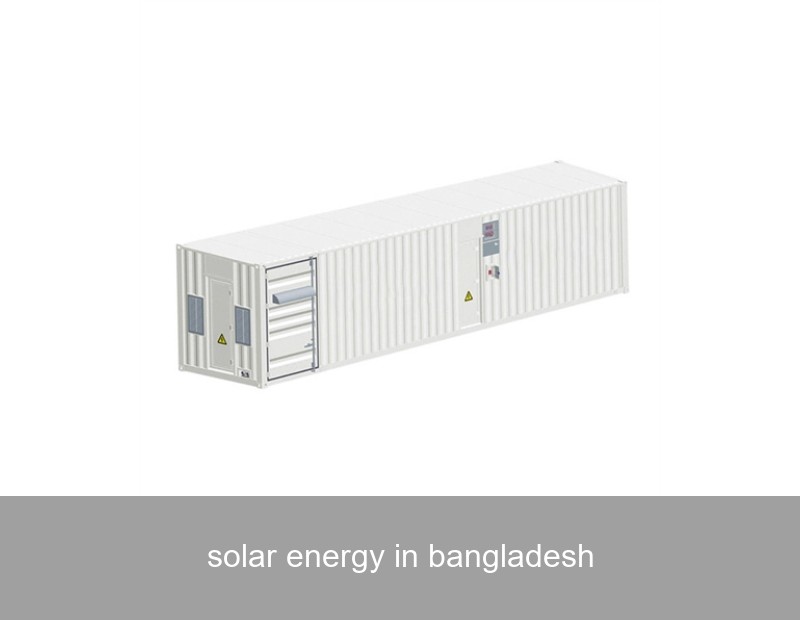
- Highjoule H-Series Commercial & Industrial (C&I) ESS: These modular, containerized solutions are ideal for factories, shopping malls, and large agricultural facilities. They seamlessly integrate with existing or new solar arrays to reduce peak demand charges, provide backup power during outages, and enable significant cost savings. Their advanced thermal management ensures optimal performance in Bangladesh's hot climate.
- Highjoule FlexiGrid Microgrid Solution: Tailor-made for off-grid and weak-grid communities like those in the Sundarbans. The FlexiGrid system combines our high-density LFP batteries with an intelligent energy management system (EMS) that can prioritize power for critical loads (like medical clinics) and manage distributed energy resources efficiently.
- Unmatched System Intelligence: Every Highjoule system is built around a proprietary, multi-layered BMS and an intuitive monitoring platform. This allows for remote diagnostics, performance optimization, and predictive maintenance—a crucial feature for managing distributed assets across a country.

Our approach is to partner with local EPC (Engineering, Procurement, and Construction) firms and developers in Bangladesh, transferring knowledge and ensuring our systems are perfectly adapted to local conditions. We don't just sell a product; we enable a reliable and sustainable energy infrastructure.
Future Horizons: What's Next for Solar in Bangladesh?
The journey for solar energy in Bangladesh is moving from decentralized, small-scale solutions to larger, grid-connected solar parks and sophisticated C&I installations. The government's vision, as outlined in the Sustainable and Renewable Energy Development Authority (SREDA) plans, is clear. The next phase will be defined by quality, intelligence, and system integration.
Floating solar on the country's numerous water bodies, agrivoltaics combining solar with agriculture, and large-scale storage to firm up utility-scale solar plants are all on the horizon. The success of these initiatives will hinge on the reliability and sophistication of the underlying storage technology. As battery costs continue to decline—a trend documented by sources like BloombergNEF—the economic case for solar-plus-storage becomes irrefutable.
The Open Challenge: Building a Local Ecosystem
The technological solutions exist. The greater challenge—and opportunity—lies in building a robust local ecosystem: training technicians, developing financing models for CAPEX-intensive storage, and establishing efficient recycling chains for end-of-life batteries. International providers like Highjoule have a key role to play in knowledge transfer and setting high standards for safety and performance.
So, as Bangladesh continues its remarkable ascent, powered by the ingenuity of its people and the light of its sun, one must ask: Is your organization ready to leverage not just solar panels, but a complete, intelligent energy system that can power progress reliably, day and night? What could your community or business achieve with power that doesn't just come from the sun, but is delivered on your terms?
 Inquiry
 Online Chat