


Your Complete Guide to Choosing the Best Solar Energy Kit for Home
Have you ever looked at your electricity bill and wondered, "What if I could generate my own power?" You're not alone. Across Europe and the US, homeowners are increasingly turning to residential solar power. But the journey from curiosity to a fully operational home solar system can seem complex. This guide will demystify the solar energy kit for home, explaining what it truly encompasses and how modern solutions from leading providers like Highjoule are making energy independence more accessible, intelligent, and efficient than ever before.
Table of Contents
- What is a Modern Solar Energy Kit for Home?
- Key Components of a High-Performance Home Solar Kit
- The Data: Why Home Solar is a Smart Investment Now
- Real-World Case Study: The Johnson Family in California
- Beyond the Basics: The Highjoule Intelligent Edge
- How to Get Started with Your Solar Project
What is a Modern Solar Energy Kit for Home?
Gone are the days of a simple "kit" being just a few panels and a cable. Today, a comprehensive solar energy kit for home is an integrated power ecosystem. At its core, it captures sunlight via photovoltaic (PV) panels, converts it into usable electricity with an inverter, and often includes a battery storage system to save excess energy for use at night or during outages. Leading providers like Highjoule elevate this further by integrating smart energy management software, turning a collection of components into a self-optimizing, grid-responsive home energy solution.

Image Source: Unsplash - Representative image of a modern home solar installation.
Key Components of a High-Performance Home Solar Kit
Understanding the parts will help you understand the whole. Here’s what a top-tier system includes:
- Solar Panels (PV Modules): The most visible part. Monocrystalline panels are the efficiency leaders, converting more sunlight per square meter.
- Inverter(s): The brain of the power conversion. It transforms the DC electricity from panels into the AC electricity your home uses. Microinverters or power optimizers (often used in Highjoule systems) maximize output per panel, especially useful in partially shaded conditions.
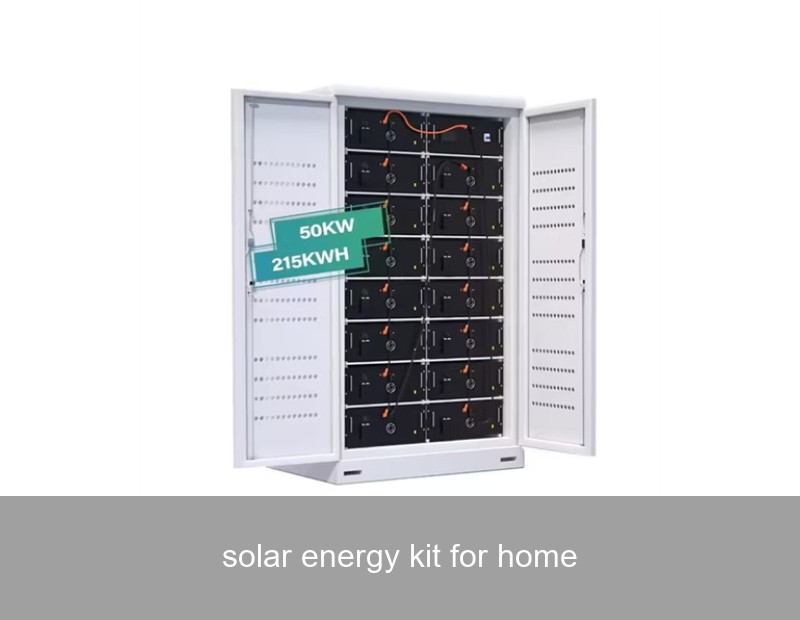
- Battery Storage System (ESS): This is the game-changer. A home battery, like Highjoule's H-Joule HomePower series, stores surplus solar energy instead of sending it all back to the grid. This is your key to true energy resilience and maximizing self-consumption.
- Mounting System & Hardware: The secure, often rail-based structure that attaches panels to your roof or ground, designed for durability and weather resistance.
- Monitoring & Energy Management System (EMS): The nervous system. Highjoule's SmartHub platform gives you real-time insights into production, consumption, and storage levels via a smartphone app, and can automatically optimize your energy flow based on tariffs, weather, and your habits.
The Phenomenon: Rising Energy Costs & Energy Consciousness
Let's address the elephant in the room. Whether you're in Germany facing high Strompreise or in Texas experiencing volatile grid prices, electricity costs are a significant household expense. Concurrently, climate awareness and a desire for self-reliance are growing. This creates a powerful driver: the wish to take control. A modern solar energy kit for home is no longer just an eco-statement; it's a strategic financial and practical decision for household stability.
The Data: Why Home Solar is a Smart Investment Now
The numbers tell a compelling story. According to the International Energy Agency (IEA), solar PV is now the cheapest source of electricity in history for many regions. Let's break down the economics for a typical household:
| Factor | Impact with Standard Solar | Impact with Solar + Storage (e.g., Highjoule) |
|---|---|---|
| Electricity Bill Reduction | 40-60% (daytime focus) | 70-90%+ (24/7 coverage) |
| Grid Independence | Low (system off at night/outages) | High (backup power for critical loads) |
| Return on Investment (ROI) Period | 6-10 years (varies by region/incentives) | 7-12 years, with added value of resilience |
| Increased Home Value | Yes (studies show ~4% increase) | Even greater appeal for buyers seeking modern energy solutions |
Furthermore, government incentives like the US Federal Investment Tax Credit (ITC) or various European Union grants and feed-in tariffs significantly lower the upfront cost. The financial case solidifies year after year as utility rates climb.
Real-World Case Study: The Johnson Family in California
Let's make this tangible. The Johnsons, a family of four in Sacramento, installed a 8.2 kW solar array with a Highjoule HomePower 10 battery (10 kWh capacity) in early 2022.
- Challenge: High summer AC bills (~$450/month) and concerns over Public Safety Power Shutoffs (PSPS) due to wildfire risk.
- Solution: A complete Highjoule solar energy kit for home, including 24 panels, hybrid inverters, and the integrated battery.
- Results (12-month period):
- Annual electricity bill reduced from $3,800 to $320 (primarily grid connection fees).
- System provided backup power during 3 short grid outages, keeping lights, refrigeration, and internet running seamlessly.
- Through the Highjoule SmartHub app, they optimized their usage, running pools and appliances during peak solar production.
- Their calculated payback period is projected at 8.5 years, factoring in the state and federal incentives they utilized.
"It's peace of mind," says Sarah Johnson. "We're not just saving money; we're in control of our power. During the last outage, our neighbors were in the dark, while our house just... kept going."

Image Source: Unsplash - Representative image of monitoring a home energy system.
Beyond the Basics: The Highjoule Intelligent Edge
As a global leader in advanced energy storage since 2005, Highjoule doesn't just sell components; we provide intelligent, sustainable power solutions. Our home systems are designed with the future in mind. What sets a Highjoule solar energy kit for home apart?
- Seamless Integration: Our batteries, inverters, and software are designed to work together perfectly, ensuring safety, efficiency, and a single point of support.
- Adaptive Energy AI: The SmartHub doesn't just monitor; it learns. It can predict weather patterns and your usage to decide when to store energy, when to use it, and when to sell back to the grid at the most profitable times (where applicable).
- Scalability: Start with one HomePower battery and add more later as your needs grow (e.g., adding an EV charger).
- Professional Support: We work with a certified network of installers across Europe and the US, ensuring your system is designed correctly and installed to the highest standards. You get a tailored solution, not an off-the-shelf box.
How to Get Started with Your Solar Project
Ready to explore your own energy independence? The path is clearer than you think.
- Assess Your Energy Profile: Look at your past year's electricity bills to understand your consumption patterns. The U.S. Department of Energy and the European Commission's energy pages offer great tools for initial education.
- Evaluate Your Site: A south-facing (in the Northern Hemisphere) roof with minimal shading is ideal. Many installers offer free satellite-based initial assessments.
- Seek Multiple Quotes: Engage with reputable installers who offer solutions from quality manufacturers. Ask specifically about battery storage options and smart management capabilities.
- Ask the Right Questions: Inquire about total system cost post-incentives, warranty terms (Highjoule offers up to 10 years on its integrated systems), and the specifics of the monitoring and control software.
- Plan for the Future: Consider your future needs—will you buy an electric vehicle, add a heat pump, or expand your home? Discuss scalability with your provider.
The journey to a resilient, cost-effective, and sustainable home begins with a single question: What would energy security look like for your family, not just today, but for the next 20 years?
 Inquiry
 Online Chat