


How Solar Energy Producing Companies Are Powering a Sustainable Future
For decades, solar energy producing companies have been the visible champions of the clean energy transition, installing vast fields of photovoltaic panels that turn sunlight into electricity. But as the energy landscape evolves, a new, more complex challenge has emerged: the sun doesn't shine on demand. This intermittency creates a mismatch between energy production and consumption that can strain grids and limit solar's potential. The true leaders in the sector are no longer just panel installers; they are becoming comprehensive energy solution architects, integrating advanced storage to deliver reliable, 24/7 clean power. This is where the next chapter of the solar revolution is being written.
Table of Contents
- The Storage Imperative: Beyond the Solar Peak
- Data Realities: The Grid's Balancing Act
- Case Study: A German Industrial Park's Journey to Energy Autonomy
- The Highjoule Role: Intelligent Storage for Solar Optimizers
- Future Trends: AI, VPPs, and the Self-Healing Grid
- What's Your Solar Energy Threshold?
The Storage Imperative: Beyond the Solar Peak
Imagine a typical sunny afternoon. A solar farm is operating at peak capacity, flooding the local grid with clean energy. Now, fast-forward to the evening, when demand peaks as people return home, but solar generation has plummeted. This "duck curve" phenomenon, famously identified in California, highlights a critical gap. Without a way to capture and time-shift that abundant afternoon energy, solar energy producing companies and grid operators must rely on fossil-fuel-powered "peaker" plants to bridge the gap, undermining the environmental and economic benefits of solar.
This is precisely why forward-thinking solar firms are making energy storage systems (ESS) a core part of their offerings. It transforms their value proposition from selling kilowatt-hours of intermittent power to delivering firm, dispatchable capacity. For commercial and industrial (C&I) clients, this means maximizing self-consumption of solar power, slashing demand charges from the utility, and ensuring critical operations during outages.

Credit: Photo by American Public Power Association on Unsplash. Solar farms generate vast power, but storage is key to using it when needed.
Data Realities: The Grid's Balancing Act
The numbers paint a clear picture of both the challenge and the opportunity. According to the U.S. Energy Information Administration (EIA), solar and wind are the fastest-growing electricity sources, but their variability is a grid integration challenge. In Europe, the European Commission's Joint Research Centre notes that high renewable penetration requires massive investment in grid flexibility.
Let's look at a tangible business case. A manufacturing facility with a 1 MW solar array might produce a surplus of 2 MWh during the midday lull. Without storage, that energy is sold back to the grid at a low, wholesale rate. However, if that same facility draws 1 MW from the grid during the evening peak, it faces exorbitant demand charges. By pairing the solar array with a suitably sized battery system, the company can store its midday surplus and discharge it during the peak, avoiding those charges. The financial payback period for such a system, especially with volatile energy prices, can be remarkably short.
Key Benefits of Integrating Storage with Solar:
- Maximized Self-Consumption: Use more of the solar power you generate on-site.
- Demand Charge Reduction: Cut peak grid draw, a major cost for C&I businesses.
- Enhanced Resilience: Provide backup power during grid outages.
- Grid Services: Participate in utility programs for frequency regulation and capacity.
Case Study: A German Industrial Park's Journey to Energy Autonomy
Consider the real-world example of a mid-sized industrial park in Bavaria, Germany. Home to several small manufacturing and logistics companies, the park management partnered with a progressive solar energy producing company to achieve two goals: reduce collective energy costs and improve sustainability credentials for tenants.
The Challenge: High, synchronized energy demand during operating hours, leading to substantial grid consumption despite having rooftop solar. Evening and early morning power needs were almost entirely met by the grid.
The Solution: The solar company designed a hybrid system featuring a 850 kWp rooftop solar installation coupled with a 1.2 MWh containerized battery energy storage system (BESS). The critical differentiator was the system's intelligence—a platform that could forecast solar generation and load patterns, then optimize charge/discharge cycles not just for self-consumption, but also to participate in Germany's lucrative primary control reserve (PCR) market.
The Results (Data after 12 months):
| Metric | Before System | After System |
|---|---|---|
| Grid Energy Consumption | 100% Baseline | Reduced by 68% |
| Solar Self-Consumption Rate | ~35% | Increased to 92% |
| Peak Demand from Grid | 1.4 MW | 0.6 MW |
| Additional Revenue from Grid Services | €0 | €41,000 annually |
This case demonstrates how the role of the solar provider evolved from installer to long-term energy partner, managing an asset that delivers continuous value.
The Highjoule Role: Intelligent Storage for Solar Optimizers
For solar energy producing companies aiming to deliver such outcomes, choosing the right storage technology partner is paramount. This is where Highjoule excels. Since 2005, we have moved beyond simply supplying battery hardware to providing fully integrated, intelligent storage solutions that act as the brain and brawn for modern solar installations.
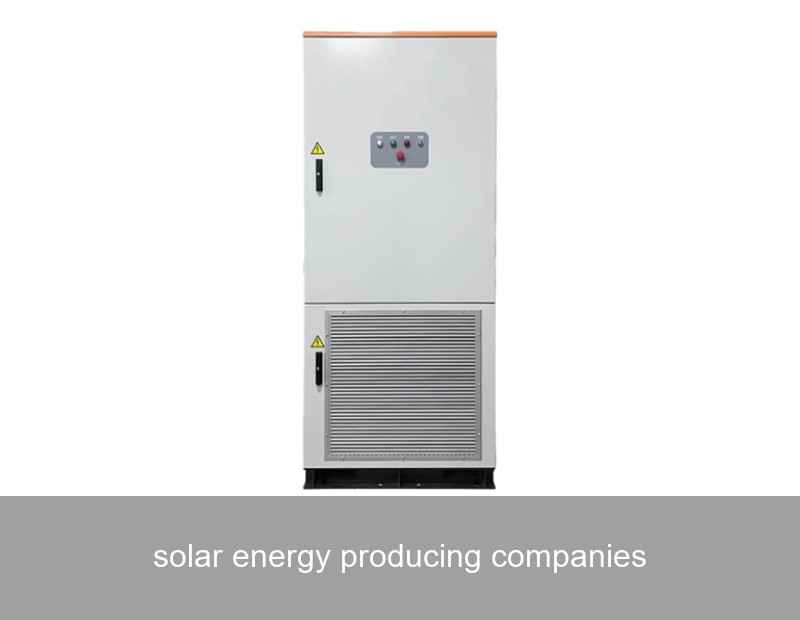
Our HPS Series (Hybrid Power Station) for commercial and industrial applications is a prime example. It's not just a battery cabinet; it's an all-in-one unit that combines high-density lithium-ion batteries, a bi-directional inverter, a thermal management system, and our proprietary EnergyOS™ software platform. For a solar company, this means simplified design, single-point procurement, and faster commissioning.
The real magic lies in EnergyOS™. It allows both the solar company and the end-customer to:
- Set and automate operational modes (max self-consumption, backup priority, grid services).
- Monitor system performance and savings in real-time via a user-friendly dashboard.
- Receive predictive maintenance alerts, ensuring system health and longevity.
For microgrid and larger community solar projects, our MGS (Microgrid System) solutions offer scalable, containerized storage that can seamlessly integrate with solar, wind, and existing generators. This allows solar developers to offer true energy-as-a-service models to communities or large campuses, guaranteeing a certain level of clean, reliable power.

Credit: Photo by Kindel Media on Pexels. Advanced, containerized BESS units like Highjoule's MGS enable scalable solar+storage solutions.
Future Trends: AI, VPPs, and the Self-Healing Grid
The partnership between solar energy producing companies and storage is set to deepen with artificial intelligence and virtual power plants (VPPs). AI can optimize storage dispatch down to the second, predicting weather, load shifts, and market prices with incredible accuracy. The National Renewable Energy Laboratory (NREL) highlights the potential of VPPs to aggregate thousands of distributed solar+storage systems, creating a flexible grid resource that can replace traditional power plants.
Imagine a future where a solar company doesn't just manage your rooftop system but enrolls it in a VPP. Your battery might earn revenue by providing stability to the local grid during a sudden cloud cover event over a neighboring solar farm, all without compromising your own backup security. This creates a new revenue stream for the customer and positions the solar company as an indispensable grid ally.
The Highjoule Advantage in This Future:
- Open API Architecture: Our EnergyOS™ platform is built to connect, making integration with third-party energy management systems and VPP aggregators straightforward.
- Technology Agnosticism: We work with leading battery cell chemistry providers, allowing us to tailor the storage solution for the specific duty cycle and climate of the project.
- Global Service Network: With projects across Europe and North America, we provide the local support solar companies need to build confidence with their clients.
What's Your Solar Energy Threshold?
The question for businesses and communities is no longer just "how much solar can we install?" but "how much intelligent, storable, and dispatchable solar energy can we harness?" The most successful solar energy producing companies are already asking their clients this, shifting the conversation from cost to value and resilience. When evaluating your next solar project or looking to upgrade an existing array, what level of energy independence and financial optimization are you aiming for? The answer likely points directly to the seamless integration of high-performance storage.
 Inquiry
 Online Chat