


Understanding Solar Energy Set Up Cost: A Realistic Breakdown for Homeowners
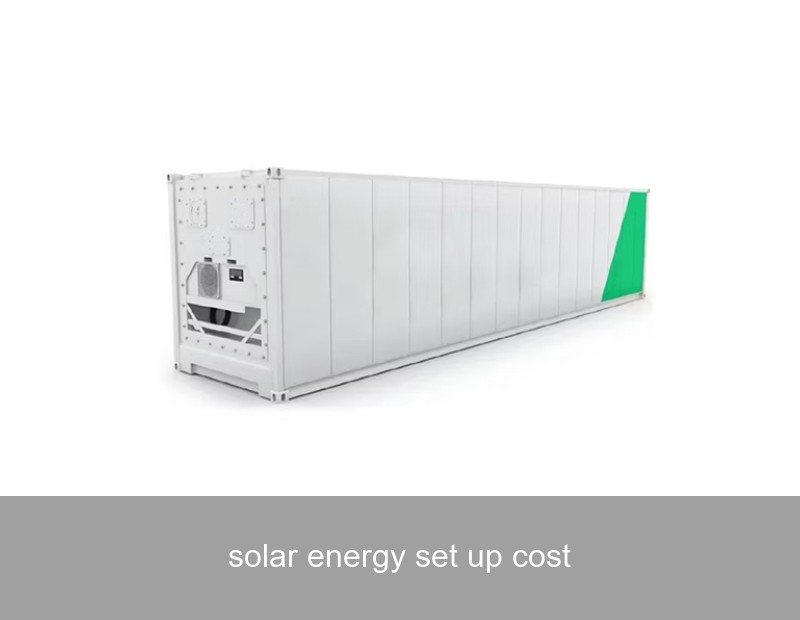
So, you're thinking about going solar. It's an exciting decision, promising energy independence and lower bills. But let's be honest, the first question that pops into almost everyone's mind is: "What's the real solar energy set up cost?" The initial price tag can seem daunting, often quoted as a large lump sum. However, when you break it down and understand what you're getting—a decades-long, clean power plant on your roof—the perspective shifts. This article will demystify the costs, explore the value, and show how modern technology from companies like Highjoule is making solar-plus-storage a smarter, more attainable investment than ever.
Table of Contents
What Makes Up the Solar Energy Set Up Cost?
Think of a solar installation not as a single product, but as a complete energy system. The solar energy set up cost encompasses several key components:
- Hardware (The Physical Equipment): This includes the solar panels, the inverter(s) that convert DC solar power to usable AC power, racking to secure everything to your roof, and all the electrical wiring. Panel efficiency and inverter technology significantly influence this portion.
- Soft Costs (The Expertise): Often 50-60% of the total! This covers site surveys, engineering, permitting fees, interconnection fees to your utility, and crucially, the labor for professional installation. This is where a reputable installer's experience pays off in system reliability and hassle-free paperwork.
- Additional Systems (The Upgrades): Many homeowners now opt for battery storage, like the Highjoule HES Series, to store excess solar energy for use at night or during outages. While this increases upfront cost, it dramatically increases energy independence and resilience.
The Data: Costs Are Dropping, Value is Rising
Here's the encouraging trend: while you might hear about rising costs for everything else, solar has been moving in the opposite direction for over a decade. According to the National Renewable Energy Laboratory (NREL), the average installed cost of residential solar photovoltaic (PV) systems has fallen by more than 50% since 2010. This is driven by cheaper, more efficient panels and streamlined installation processes.
Let's look at a typical range for a system before incentives, as of 2024:
| System Size | Typical Home | Average Gross Cost (U.S.) | Key Factors Affecting Price |
|---|---|---|---|
| 6 kW | Small to medium | $16,000 - $21,000 | Roof complexity, local labor rates |
| 10 kW | Larger home / high usage | $26,000 - $34,000 | Panel efficiency tier, electrical panel upgrade needs |
| 10 kW + Battery | Seeking full backup | $40,000 - $55,000+ | Battery capacity (kWh), inverter integration type |
Important: These figures are gross costs. The net cost after applying incentives like the U.S. federal Investment Tax Credit (ITC) or similar European grants can be 30% lower.
A Real-World Case: The Johnson Family in Arizona
Let's move beyond averages. The Johnson family in Phoenix, Arizona, decided to tackle their high summer cooling bills. Their goal was to offset 95% of their 11,000 kWh annual usage.
- System Installed (2023): A 9.8 kW solar array paired with a 13.5 kWh Highjoule HES battery.
- Gross Setup Cost: $38,500.
- After 30% Federal ITC: Net cost of $26,950.
- Outcome: Their first-year solar production was 14,200 kWh. They not only eliminated their electric bill for 10 months of the year but also have reliable backup power during the monsoon season's frequent grid outages. The battery system automatically kicks in, keeping their lights and refrigeration running seamlessly. Their calculated payback period is now under 8 years, and they have a 25-year warranty on the solar panels.
This case highlights the shift from viewing cost as an expense to viewing it as a capital investment in future energy stability.

Image: A modern home with a solar installation. A well-designed system integrates seamlessly while providing power. Source: Unsplash
The Game Changer: Adding Battery Storage
This is where the modern energy story gets exciting. Solar panels alone are a great financial saver, but they typically shut off during a grid blackout for safety reasons. Adding a battery storage system transforms your solar array into a personal microgrid.
Yes, it adds to the initial solar energy set up cost, but the benefits are profound:
- Backup Power: Keep essential loads running during outages.
- Energy Time-Shifting: Store cheap solar energy produced at noon and use it during expensive peak evening rates—a practice known as "peak shaving," which is hugely valuable in markets like California or parts of Europe with time-of-use tariffs.
- Increased Self-Consumption: In regions with lower feed-in tariffs (like most of Europe), it's more economical to use your own solar power than to sell it back to the grid at a low price.
How Highjoule's Smart Systems Maximize Your Investment
As a global leader in advanced energy storage since 2005, Highjoule's philosophy is that a solar system should be intelligent, efficient, and sustainable. We don't just sell hardware; we provide integrated power solutions that optimize every dollar of your setup cost.
Our HES (Home Energy System) series is designed specifically for residential and commercial applications. It features:
- AI-Powered Energy Management: Our system learns your usage patterns and automatically decides when to draw from solar, charge the battery, or pull from the grid to minimize your costs.
- Seamless Integration: The system works with leading solar inverter brands, making it a versatile addition to new or existing solar arrays.
- Scalable Design: Start with the capacity you need now and easily add more battery modules later as your needs grow, protecting your initial investment.
- Robust Safety & Warranty: Built with lithium iron phosphate (LFP) battery chemistry for enhanced safety and longevity, backed by a comprehensive 10-year warranty.
By choosing a solution like Highjoule's, you're not just buying a battery; you're buying a sophisticated energy asset that actively works to shorten the payback period of your entire solar investment.

Image: A sleek, wall-mounted home battery system. Modern systems like Highjoule's are compact and designed for easy integration. Source: Unsplash
The True Metric: Cost vs. Lifetime Value
Focusing solely on the upfront solar energy set up cost is like judging a car only by its sticker price without considering fuel, maintenance, and resale value. The critical financial metric for solar is the Levelized Cost of Energy (LCOE)—the average net present cost of electricity generation over the system's lifetime.
For a well-sited solar system today, the LCOE is often lower than the retail electricity rate from the utility. According to the Lazard's Levelized Cost of Energy Analysis 2023, unsubsidized utility-scale solar is one of the cheapest sources of new electricity generation. While residential systems have higher soft costs, the principle remains: you are locking in a fixed, predictable cost of energy for 25+ years, insulating yourself from volatile utility rate hikes.
When you factor in rising grid electricity prices (which have been trending upward in both the U.S. and Europe), the savings gap widens every year, making the initial investment pay off more quickly.
So, What's Your Next Step in the Energy Journey?
The conversation about solar is evolving from "Can I afford it?" to "Can I afford not to have it?" With costs at historic lows, incentives available, and technology like Highjoule's smart storage adding resilience and further savings, the equation has never been more favorable. Instead of just asking for a quote on panels, ask potential installers for a comprehensive lifetime energy analysis that includes storage options. What would it take to make your home not just solar-powered, but truly energy-independent?
 Inquiry
 Online Chat