


Solar Energy Storage Cabinet Germany: Your Key to Energy Independence
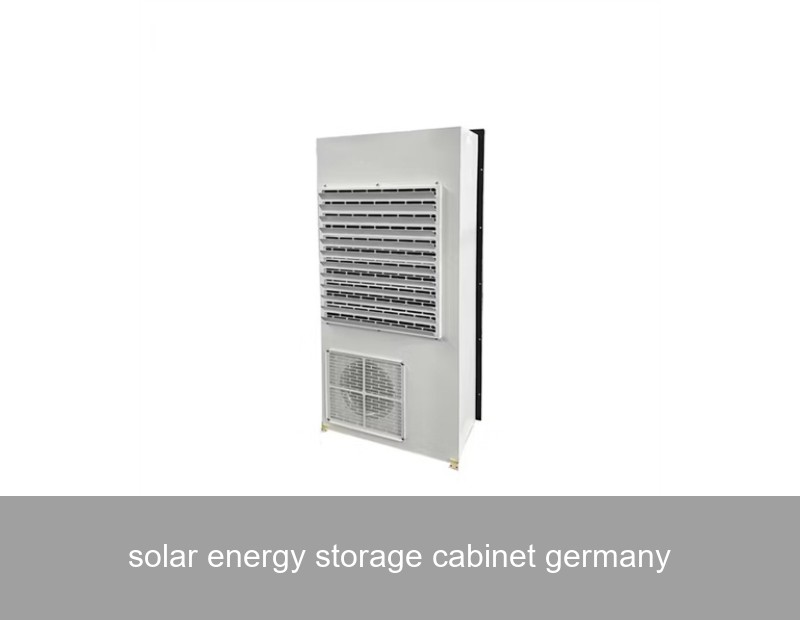
Have you ever looked at your electricity bill on a cloudy German winter day and wondered, "What happened to all the solar power from my summer surplus?" You're not alone. Across Germany and Europe, homeowners and businesses are generating unprecedented amounts of solar energy. Yet, a critical challenge remains: storing that abundant midday sun for use in the evening or during periods of low generation. This is where the solar energy storage cabinet Germany market comes into play, transforming photovoltaic systems from partial solutions into complete, round-the-clock power hubs. As a senior technical expert at Highjoule, I've seen how the right storage solution doesn't just save energy—it redefines your relationship with the grid, maximizes self-consumption, and provides crucial backup power. Let's explore why a solar battery cabinet is no longer a luxury, but a cornerstone of an intelligent, modern energy setup.
Table of Contents
- The Storage Imperative: Why Solar Panels Aren't Enough
- Inside the Cabinet: Technology and Safety Standards
- Choosing the Right Solution for Your Home or Business
- The Future of Storage in Germany and Beyond
The Storage Imperative: Why Solar Panels Aren't Enough
The energy landscape in Germany is a fascinating paradox. The country is a global leader in installed photovoltaic (PV) capacity, with over 70 gigawatts feeding into the grid. However, the natural mismatch between solar production peaks (midday) and energy consumption peaks (morning and evening) creates a massive "duck curve" challenge. Without storage, excess solar energy is fed back to the grid, often at low feed-in tariffs, only for consumers to buy back more expensive electricity from the grid later.
Consider this data: A typical German household with a 10 kWp solar system might only consume 30% of its generated electricity directly without storage. The remaining 70% is exported. By integrating a solar energy storage cabinet, self-consumption can soar to 70% or higher, dramatically reducing reliance on the public grid. This isn't just about economics; it's about grid stability. Decentralized storage solutions alleviate stress on transformers and power lines, helping to integrate more renewables seamlessly. Highjoule's approach focuses on this system-level thinking. Our HES Series residential storage cabinets are designed not as isolated boxes, but as intelligent nodes in a smarter energy network, capable of dynamic load management and seamless integration with home energy management systems.

For businesses, the equation includes additional factors like peak shaving—avoiding costly demand charges from utilities. A well-sized commercial storage cabinet can store solar energy to be discharged during short periods of maximum power draw, leading to significant savings on power bills.
Inside the Cabinet: Technology, Safety, and the Highjoule Difference
So, what exactly is a solar energy storage cabinet? Think of it as the heart of your personal power plant. It's a fully integrated unit, typically wall-mounted or floor-standing, that houses the battery cells, a battery management system (BMS), power electronics for DC/AC conversion, and sophisticated safety mechanisms.
Key components and considerations include:
- Battery Chemistry: While Lithium Iron Phosphate (LFP) has become the industry standard for its safety, longevity, and stability, not all LFP cells are created equal. Highjoule sources premium, automotive-grade LFP cells with a proven cycle life exceeding 6,000 cycles, ensuring your investment lasts for decades.
- Battery Management System (BMS): This is the brain of the operation. A high-quality BMS, like the one in our HES Pro Cabinet, actively monitors each cell for voltage, temperature, and state of charge. It ensures balanced charging, prevents dangerous conditions, and maximizes battery life.
- Safety First - The German Standard: Germany has some of the world's strictest safety standards for electrical equipment (VDE norms). A proper cabinet is more than an enclosure; it's a safety device. It must provide fire resistance, contain thermal runaway events, and ensure proper ventilation. Highjoule cabinets are designed and tested to exceed these rigorous norms, featuring passive safety architectures and multi-layer protection logic.
- Scalability and Integration: Your energy needs may grow. A modular cabinet design allows you to start with a capacity that fits your budget and expand later by simply adding more battery modules. Furthermore, seamless integration with major inverter brands and energy management platforms is non-negotiable for a hassle-free experience.
At Highjoule, we've spent nearly two decades refining this technology. Our IntelliCORE platform, embedded in every storage system, uses AI-driven algorithms to learn your consumption patterns, predict solar yield based on weather forecasts, and optimize charge/discharge cycles to deliver the highest possible financial and energetic return.
A German Case Study: The Müller Family Home in Bavaria
Let's move from theory to a real-world example. The Müller family, living in a detached house near Munich, installed a 12 kWp solar system in 2020. While their summer bills plummeted, winter months still saw high grid consumption. In early 2023, they decided to install a Highjoule HES-15 solar energy storage cabinet with a usable capacity of 15 kWh.
| Metric | Before Storage (2022 Avg.) | After Storage (2023 Avg.) | Change |
|---|---|---|---|
| Grid Electricity Purchased | 3,200 kWh/year | 850 kWh/year | -73% |
| Solar Self-Consumption Rate | 31% | 89% | +58% |
| Annual Electricity Cost | €1,150 | €310 | -€840 |
| Grid Independence (hours covered) | N/A | ~18 hours typical overnight & low-sun | Full backup capability |
"The decision wasn't just financial," explains Mr. Müller. "We wanted resilience. During a regional grid outage last December, our storage cabinet and solar panels kept the lights, refrigerator, and heating circulation running seamlessly. The system paid for itself faster than we calculated, especially with the rising electricity prices." This case underscores the triple benefit: economic savings, increased self-sufficiency, and reliable backup power.
Choosing the Right Solar Energy Storage Cabinet for Your Needs
Selecting a storage system can feel overwhelming. Here’s a simplified guide focusing on the German and European market context:
- Capacity (kWh): This is your "energy tank" size. A good rule of thumb is to aim for storage that can cover your household's consumption from evening until the next morning. For most German families, a capacity between 8 kWh and 15 kWh is a solid starting point. Highjoule's configurator tool, available through our installer network, provides a precise analysis based on your last 12 months of utility data.
- Power (kW): How much energy can the cabinet deliver at once? If you want to run high-power appliances like an electric oven, heat pump, or EV charger from your battery simultaneously, you need a unit with a high continuous power rating (e.g., 5 kW or more).
- Efficiency: Look for the "round-trip efficiency" percentage. This tells you how much energy you get back for every unit you put in. High-quality systems like ours achieve over 95% AC-coupled efficiency, meaning minimal energy is lost in the storage process.
- Warranty and Longevity: The warranty is a key indicator of manufacturer confidence. Highjoule offers a leading 10-year warranty, guaranteeing that the battery will retain at least 70% of its original capacity after a decade of use. This long-term performance is crucial for the investment's viability.
- Smart Features & Grid Services: Future-proof systems can participate in virtual power plants (VPPs) or provide grid-stabilizing services. While still evolving in Germany, choosing a cabinet with communication capabilities (like integrated Ethernet or cellular modems) opens doors to future revenue streams and enhanced grid support.
For commercial and industrial applications, Highjoule's CES Series offers containerized or large-scale cabinet solutions that can be scaled into the megawatt-hour range, often with advanced features for peak shaving and demand response programs.

The Future of Storage in Germany and the Role of Highjoule
The German solar energy storage cabinet market is at an inflection point. With the phase-out of nuclear power, the accelerated exit from fossil fuels, and ambitious climate targets (BMWK, 2023), storage is transitioning from a private optimization tool to a critical component of national energy security. Policy frameworks, like the reduced VAT on storage systems and various KfW funding programs, are actively encouraging adoption.
Technologically, we are moving towards more integrated ecosystems. The future home energy system will seamlessly combine solar, storage, electric vehicle charging, and heat pumps, all managed by an AI that prioritizes cost, carbon footprint, and comfort. Highjoule is pioneering this integration. Our systems are already compatible with major EV chargers and can be configured to prioritize charging your car with surplus solar energy, effectively turning your EV into an additional mobile storage unit.
Furthermore, the concept of citizen energy communities is gaining traction. In these models, neighborhoods can share locally produced solar power via peer-to-peer trading platforms. A robust, networked solar storage cabinet is the essential hardware that enables such decentralized, democratic energy models. For a deeper look at the technical potential, research institutions like Fraunhofer ISE provide excellent resources on grid integration studies.
Your Next Step Towards Energy Autonomy
The journey to energy independence starts with a question: What is your primary goal—maximizing self-consumption to slash bills, ensuring backup power for security, or contributing to a more stable and green grid? Perhaps it's all three. As you consider a solar energy storage cabinet in Germany, remember that you're not just buying a battery; you're investing in a platform for energy resilience for the next 20 years.
What specific energy challenge in your home or business would you most want a storage cabinet to solve, and how can we help you model its potential impact?
 Inquiry
 Online Chat