


Go Green Lithium Battery Price: Unlocking True Value Beyond the Initial Cost
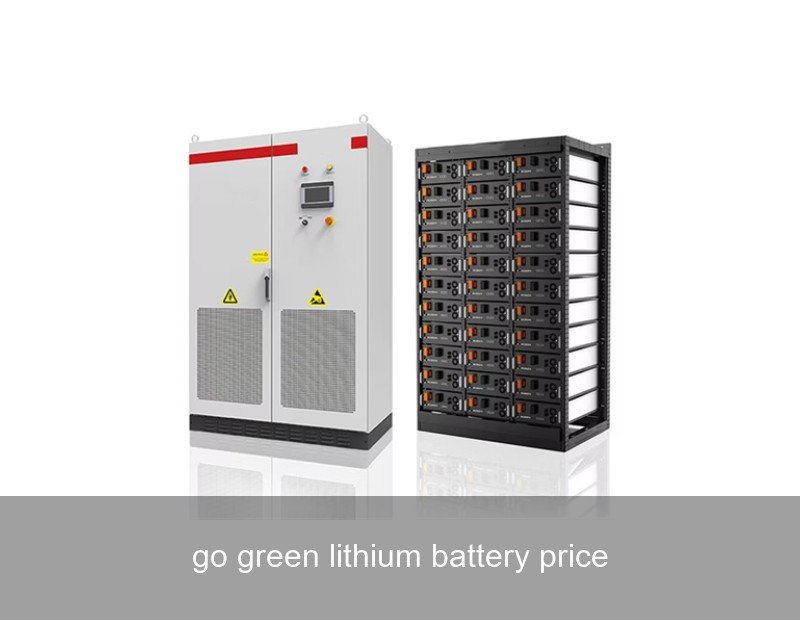
So, you've decided to go green. You're looking at solar panels for your roof or a backup system for your business, and naturally, your search leads you to one critical component: the lithium battery. A quick online search for "go green lithium battery price" can be overwhelming. Quotes range from surprisingly cheap to eye-wateringly expensive. What gives? If you're based in Europe or the US and are serious about sustainable energy, understanding this price spectrum isn't just about budgeting—it's about making an investment that pays off for decades. Let's peel back the layers and discover why the true cost of "going green" is measured in value, reliability, and peace of mind, not just the initial sticker price.
The Green Price Paradox: Why Go Green Lithium Battery Price is More Than a Number
The initial price of a lithium battery system is just the entry ticket. The real story is told over its 10 to 15+ year lifespan. Think of it like buying a car. The cheapest model might get you from A to B, but what about fuel efficiency, safety ratings, maintenance costs, and resale value? Similarly, a low upfront "go green lithium battery price" might hide significant long-term compromises: shorter lifespan, lower efficiency, poor thermal management, and minimal software intelligence. These factors directly impact your return on investment (ROI) and your system's ability to deliver on the promise of energy independence.
According to analysis from the U.S. Department of Energy's Solar Energy Technologies Office, the levelized cost of storage (LCOS)—a metric that accounts for total lifetime costs versus energy delivered—is the key figure for comparison. A battery with a higher initial price but superior cycle life, depth of discharge, and efficiency can have a significantly lower LCOS, making it the more economical and greener choice over time.

Image Source: Unsplash. A quality installation is part of the long-term value equation.
Decoding the Price Tag: What You're Really Paying For
When Highjoule engineers a system like our H-Joule Commercial ESS or Residential PowerStack, we build value into every layer. Here’s what contributes to a responsible and high-performing lithium battery price:
- Cell Chemistry & Quality: Not all lithium is created equal. High-quality, automotive-grade LiFePO4 (Lithium Iron Phosphate) cells, which we use extensively, offer superior safety, longevity (often over 6,000 cycles), and stability compared to lower-grade alternatives.
- Integrated Battery Management System (BMS): This is the brain of the operation. A sophisticated BMS, like the one in every Highjoule unit, meticulously monitors cell voltage, temperature, and health. It ensures safety, maximizes cycle life, and is your first line of defense against performance degradation.
- Thermal Management: A passive cooling system might be cheaper. An active, liquid-cooled thermal management system (featured in our high-power systems) maintains optimal temperature year-round, boosting efficiency and lifespan, especially in harsh Texan summers or chilly Scandinavian winters.
- Software & Grid Intelligence: The hardware stores energy; the software unlocks its potential. Our Highjoule Energy OS enables smart load shifting, peak shaving, and even grid services participation. This intelligence turns your battery from a backup device into a revenue-generating or cost-saving asset.
- Certifications & Safety: UL, IEC, CE—these certifications aren't free. They represent rigorous testing for safety and performance, non-negotiable for insurance and compliance, especially in the US and EU markets.
The True Cost of Going Cheap: A Cautionary Tale from California
Let's look at a real-world scenario. A mid-sized winery in Napa Valley, California, wanted to "go green" and reduce peak demand charges. In 2020, they opted for a low-cost, uncertified battery system based on an attractive initial "go green lithium battery price." The results were telling:
| Metric | Expected Performance (from supplier) | Actual Performance (after 2 years) | Financial & Operational Impact |
|---|---|---|---|
| Usable Capacity | 100 kWh | ~72 kWh (28% degradation) | Failed to meet peak shaving needs, leading to ongoing high utility bills. |
| Cycle Life | 4,500 cycles | Severe cell imbalance detected after ~800 cycles. | Required full system replacement much earlier than anticipated. |
| Software & Support | Basic monitoring app | App discontinued; no remote diagnostics available. | Inability to optimize or troubleshoot; vendor was unresponsive. |
| Total Cost of Ownership | Low upfront cost | Cost per kWh delivered was over 3x the initial estimate. | Poor ROI, operational disruption, and a failure to achieve sustainability goals. |
This case, echoed in reports from the California Public Utilities Commission on storage system performance, highlights the risk. The winery is now replacing the system with a certified, intelligent solution where total lifetime value was the key metric, not just the purchase order price.
Highjoule's Approach: Engineering Value for the Long Haul
At Highjoule, founded in 2005, we design our systems to avoid precisely these pitfalls. For a commercial client like that winery, we would have recommended our H-Joule C&I Modular Series. Its liquid-cooled design would handle Napa's heat, its advanced BMS would prevent premature degradation, and our Energy OS would automatically strategize discharge to slash demand charges at the most profitable times. The initial investment is calculated not as a cost, but as a capital expenditure with a clear, software-driven payback period.
For homeowners, our PowerStack residential system integrates seamlessly with major solar inverters. It's not just a battery; it's a home energy platform. The price encompasses the hardware, the lifetime of software updates that add new features, and access to our 24/7 monitoring platform that gives homeowners and installers peace of mind.

Image Source: Unsplash. Intelligent software is critical for maximizing the value of stored energy.
Future-Proofing Your Investment: The Smart Way to Go Green
The energy landscape is evolving rapidly. With IRENA highlighting the critical role of smart storage in grid decarbonization, your battery should be an asset that grows in capability. Will it support vehicle-to-grid (V2G) technology as electric vehicles proliferate? Can it adapt to new utility rate structures? Highjoule's modular architecture and software-upgradable platforms are designed with this future in mind.
So, when you evaluate that "go green lithium battery price," ask the deeper questions: What is the guaranteed cycle life and degradation profile? What certifications does it hold for my region? How does the software actively work to save me money? Who will be there to support the system in 10 years?
Your Next Step
Is your primary goal to achieve true energy independence, maximize financial savings from your solar investment, or ensure resilient backup power for your business? Defining this will help you calculate the true value of the system you need, far beyond its initial price tag.
 Inquiry
 Online Chat